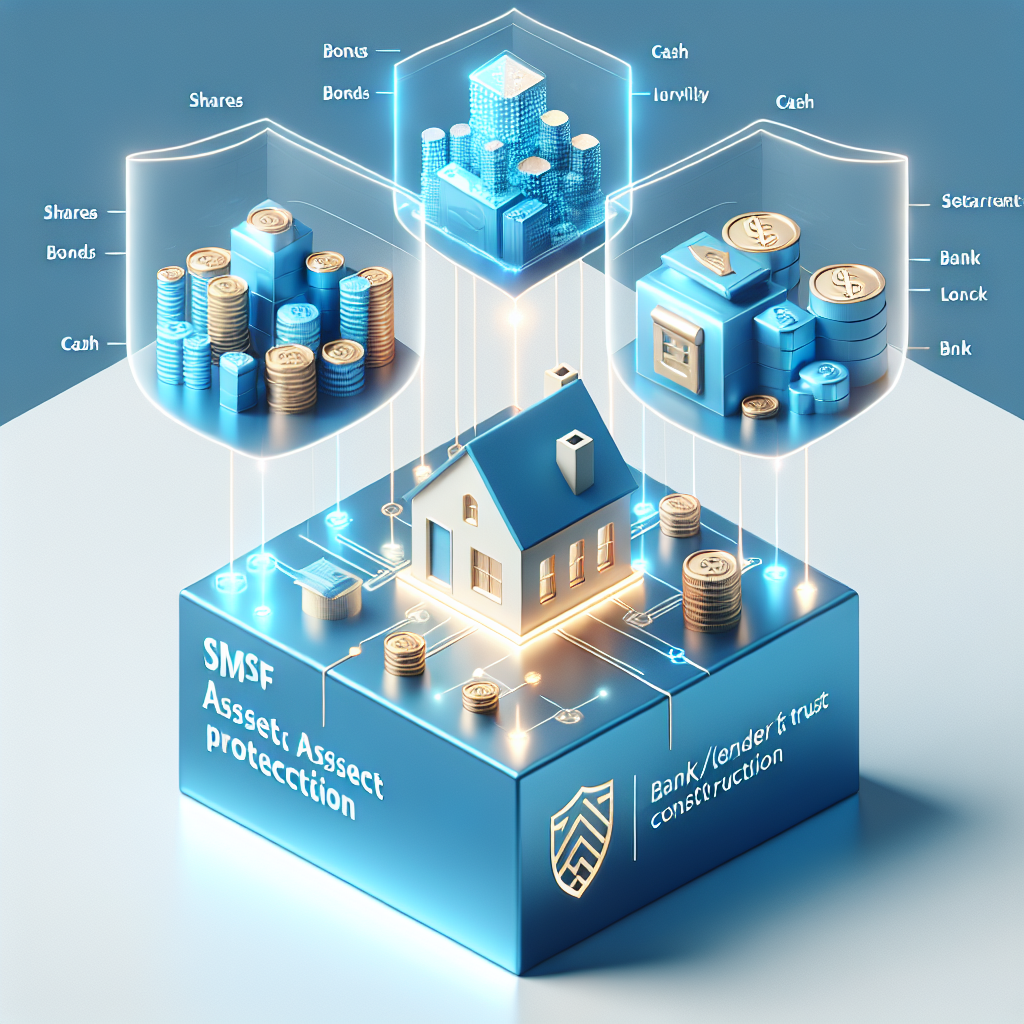
When you’re managing your own superannuation fund, every investment decision carries weight. Property investment through your SMSF can be a powerful wealth-building strategy, but it also introduces risks that could potentially jeopardize your entire retirement savings. This is where a Limited Recourse Borrowing Arrangement (LRBA) combined with a bare trust structure becomes not just helpful, but essential.
Understanding the LRBA: Your SMSF’s Financial Safety Net
A Limited Recourse Borrowing Arrangement is a specialized lending structure that allows your SMSF to borrow money to purchase a single asset—typically real estate—while protecting your other superannuation holdings. The defining feature of an LRBA is its “limited recourse” nature: if you default on the loan, the lender can only claim the asset purchased with that specific loan, not the other assets within your SMSF.
Think of it as a firewall for your retirement savings. If you’ve accumulated $800,000 in your SMSF and decide to borrow $500,000 to purchase an investment property, a properly structured LRBA ensures that if something goes wrong with that property investment, your original $800,000 remains protected. The lender’s recourse is limited to the property itself.
This protection mechanism distinguishes LRBA loans from traditional property loans. In conventional borrowing, lenders typically have recourse to all your assets if you default. With an LRBA, the risk is contained to the specific asset acquired, making property investment through your SMSF a more measured and strategic approach to building retirement wealth.
The LRBA framework was established under Sections 67A and 67B of the Superannuation Industry (Supervision) Act 1993, creating a legal pathway for SMSF trustees to leverage borrowed funds while maintaining compliance with superannuation law. This legislative foundation ensures that when structured correctly, your SMSF can participate in property markets without exposing your entire retirement nest egg to undue risk.

The Bare Trust Structure: Separating Legal Title from Economic Benefit
At the heart of every LRBA sits a bare trust, also known as a holding trust or custodian trust. This legal structure is the mechanism that enables the limited recourse feature to function effectively. Understanding how a bare trust operates is crucial for any SMSF trustee considering property investment.
A bare trust is a straightforward legal arrangement where a custodian trustee holds the legal title to the property on behalf of your SMSF. While the custodian holds the title, your SMSF retains all the beneficial ownership rights—meaning your fund receives all the economic benefits such as rental income, capital appreciation, and eventual sale proceeds.
Here’s how the structure works in practice: When your SMSF enters an LRBA to purchase property, a separate bare trust is established with a custodian trustee appointed to hold the property title. This custodian acts purely in an administrative capacity, following directions from your SMSF trustee regarding the property. The custodian has no decision-making authority over the asset; they simply hold the legal title until the loan is fully repaid.
This separation is legally significant. By placing the legal title in a bare trust separate from the SMSF’s other assets, you create the structural foundation for limited recourse. If the SMSF cannot meet its loan obligations, the lender’s claim is restricted to the asset held in that specific bare trust. Your SMSF’s other investments—whether shares, managed funds, or cash—remain completely isolated from the lender’s reach.
The bare trust arrangement also ensures compliance with superannuation regulations. The Superannuation Industry (Supervision) Regulations require that borrowed assets be held on trust until the loan is discharged, maintaining a clear legal distinction between the financed asset and the fund’s other holdings.
The LRBA Process: From Application to Ownership
Understanding the practical steps involved in establishing and managing an LRBA helps demystify what might initially seem like a complex arrangement. Let’s walk through a typical property investment scenario using an LRBA with a bare trust structure.
Step One: Establishing the Framework
Before purchasing property, your SMSF must first ensure its trust deed allows for borrowing. Many older SMSF trust deeds don’t include provisions for LRBAs, so you may need to amend your deed. Once confirmed, you’ll need to establish a bare trust deed that clearly defines the relationship between the custodian trustee and your SMSF as the beneficial owner.
Step Two: Securing Financing
You approach a specialized SMSF lender to arrange financing. Let’s say you’ve identified a $600,000 commercial property that fits your investment strategy. With your SMSF contributing $200,000 as a deposit, you need to borrow $400,000. The lender reviews your fund’s financial position, the property’s investment potential, and your capacity to service the loan from rental income and existing SMSF cash flow.
Step Three: Executing the Purchase
Once approved, the bare trust is formally established with a custodian trustee—this might be a related party or a professional trustee company. The custodian trustee enters into the property purchase contract and mortgage agreement with the lender. The property title is registered in the custodian trustee’s name, while your SMSF is documented as the beneficial owner receiving all economic benefits.
Step Four: Ongoing Management
During the loan term, rental income flows to your SMSF. Your fund makes regular loan repayments to the lender, while the custodian trustee manages the property title in accordance with your SMSF’s directions. You can claim deductions for loan interest, property expenses, and depreciation within your SMSF, potentially reducing the fund’s tax liability.
Step Five: Loan Discharge and Title Transfer
Once you’ve fully repaid the loan, the property title is transferred from the bare trust directly to your SMSF. At this point, your fund holds both legal and beneficial ownership, and the bare trust structure is no longer needed. The property becomes an unencumbered asset within your SMSF portfolio.
This process can typically take anywhere from a few weeks to several months depending on property searches, financing approvals, and legal documentation. Each property acquired through an LRBA requires its own separate bare trust—you cannot hold multiple properties in the same bare trust structure.

Legal Requirements and Compliance Considerations
The regulatory framework governing LRBAs is specific and non-negotiable. Failure to structure your arrangement correctly can result in severe penalties, including the entire LRBA being treated as a breach of superannuation law, with potential tax consequences of up to 45% on the asset’s value.
Asset Eligibility
Not all assets qualify for purchase through an LRBA. The borrowed funds must be used to acquire a “single acquirable asset.” For real estate, this generally means a single property title or multiple titles that constitute a single property (such as a house and land package). You cannot use LRBA funds to purchase multiple unrelated properties or to improve an asset beyond basic repairs and maintenance.
Arm’s Length Requirements
All transactions within an LRBA must occur on arm’s length terms, meaning the conditions must be equivalent to what unrelated parties would negotiate in the open market. This applies to the loan interest rate, property purchase price, rental arrangements, and any other financial aspects. The Australian Taxation Office scrutinizes related-party LRBAs particularly closely, so documentation proving arm’s length terms is essential.
Limited Recourse Provisions
Your loan agreement must explicitly state that the lender’s rights upon default are limited to the asset held in the bare trust. This limited recourse provision is what makes the arrangement compliant with superannuation law. Any agreement that gives the lender broader recourse to other SMSF assets would breach the LRBA requirements.
Documentation Requirements
Proper documentation is critical for compliance. You must maintain a written loan agreement detailing all terms and conditions, a bare trust deed establishing the custodian relationship, and documentation demonstrating that all transactions occurred at arm’s length. The ATO can request these documents during audits, and insufficient documentation can result in compliance issues even if the arrangement was structured correctly in practice.
Sole Purpose Test
Like all SMSF investments, an LRBA must satisfy the sole purpose test—the arrangement must be maintained solely to provide retirement benefits to members. Using the property for personal benefit before retirement, such as living in an SMSF-owned residence or renting to relatives at below-market rates, would breach this fundamental requirement.
Practical Considerations and Risk Management
While an LRBA with a bare trust structure offers significant protection, it’s not without challenges and costs. Understanding these practical considerations helps you make informed decisions about whether this strategy aligns with your SMSF’s circumstances.
Cost Considerations
Establishing an LRBA involves multiple professional fees. You’ll need legal advice to draft the bare trust deed and loan agreement, accounting support to ensure compliance, and potentially property valuation services to demonstrate arm’s length purchase prices. Ongoing costs include annual auditing of the LRBA arrangement, custodian trustee fees, and potentially higher interest rates compared to standard home loans.
SMSF loan interest rates typically start around 6.24% for principal and interest loans, which may be higher than owner-occupier mortgage rates but competitive given the specialized nature of SMSF lending. You’ll need to factor these costs into your investment return calculations to ensure the property investment remains viable.
Cash Flow and Serviceability
Your SMSF must maintain sufficient cash flow to meet loan repayments, particularly during vacancy periods when rental income stops. Unlike personal property investments where you can supplement shortfalls from employment income, an SMSF can only use fund resources—member contributions, existing fund income, and potentially selling other assets. This requires careful financial planning and maintenance of adequate liquidity buffers.
Governance Requirements
Managing an LRBA adds administrative complexity to your SMSF. You must ensure all transactions are properly documented, loan repayments are made on time, and the arrangement continues to meet compliance requirements. Your fund’s annual audit will specifically examine the LRBA structure, requiring clear record-keeping and governance procedures.
Market and Property Risks
Limited recourse protection doesn’t eliminate investment risk—it simply contains it. If property values decline or rental markets soften, your investment may underperform. The inability to quickly exit property investments means you need a long-term perspective and confidence in the property’s fundamentals.
Strategic Financing Conditions
Consider loan features that provide flexibility. Some SMSF lenders offer offset account facilities that can reduce interest costs while maintaining liquidity. Others provide the ability to make additional repayments, accelerating loan reduction during strong cash flow periods. These features can enhance your LRBA’s efficiency while maintaining compliance—the ATO has confirmed that properly structured offset accounts are permissible within LRBA arrangements.
Key Terms Explained
Understanding the terminology surrounding LRBAs helps you navigate discussions with financial advisors, lawyers, and lenders:
Self-Managed Super Fund (SMSF): A private superannuation fund that you manage yourself, giving you direct control over investment decisions within regulatory guidelines.
Limited Recourse Borrowing Arrangement (LRBA): A specialized loan structure that limits the lender’s recourse to the specific asset purchased with borrowed funds, protecting other SMSF assets from claims.
Bare Trust: A legal structure where a trustee holds legal title to property on behalf of a beneficiary who retains all beneficial ownership rights and economic benefits.
Beneficiary: In an LRBA context, your SMSF is the beneficiary of the bare trust, receiving all economic benefits from the property while the custodian holds legal title.
Recourse: The lender’s legal right to claim assets if you default on a loan. In an LRBA, recourse is limited to the specific asset purchased.
Custodian Trustee: The party appointed to hold legal title to the property within the bare trust structure, acting on directions from the SMSF trustee.
Acquirable Asset: An asset eligible for purchase through an LRBA, generally meaning a single property title or closely related titles that constitute one property.
Arm’s Length Transaction: A transaction conducted under terms equivalent to what unrelated parties would negotiate in an open market, ensuring fairness and compliance.
Building Wealth Through Strategic Investment
The limited recourse borrowing bare trust structure represents more than just a technical compliance mechanism—it’s a strategic tool that enables SMSF trustees to leverage property investment while maintaining prudent risk management. By isolating investment risk to specific assets, you can pursue growth opportunities without gambling your entire retirement savings on a single investment decision.
The benefits of this approach are substantial. You can access property markets that might otherwise be beyond your SMSF’s immediate purchasing power, potentially enhancing long-term returns through leverage. The tax advantages of holding investment property within a superannuation environment—where rental income is taxed at a maximum of 15% during accumulation phase and potentially tax-free in pension phase—can significantly accelerate wealth accumulation compared to holding property in your personal name.
The protection offered by limited recourse provides peace of mind. Market volatility, unexpected property issues, or economic downturns that affect a specific property won’t cascade through your entire retirement portfolio. This containment of risk allows for more confident, strategic investment decisions aligned with your long-term retirement objectives.
Your Strategic Partner in SMSF Property Investment
At Aries Financial, we understand that navigating SMSF lending requires more than just competitive rates—it demands expertise, integrity, and a genuine commitment to empowering our clients’ financial futures. As one of Australia’s premier non-bank lenders specializing exclusively in SMSF financing, we’ve built our reputation on helping SMSF trustees structure compliant, strategic property investments through properly established LRBA arrangements.
Our philosophy centers on three core principles: integrity in every interaction, expertise in SMSF regulations and property investment strategies, and empowerment through education and guidance. We don’t just provide loans—we partner with you to ensure your investment decisions are informed, strategic, and aligned with your retirement goals.
With SMSF loan solutions starting from 6.24% principal and interest and fast approvals within 1-3 business days, we remove the barriers that often delay property investment opportunities. Our in-depth knowledge of LRBA compliance requirements means you can proceed with confidence, knowing your arrangement is structured correctly from the outset.
Before your next property purchase, ensure your SMSF has the protection and strategic structure it deserves. A limited recourse borrowing bare trust isn’t just a legal requirement—it’s your safety net, your risk management tool, and your pathway to strategic wealth building through property investment. When structured correctly and managed professionally, it becomes one of the most powerful tools available to SMSF trustees seeking to maximize their retirement investment potential.
Your financial future deserves more than generic lending solutions. It deserves the specialized expertise, competitive rates, and committed partnership that only a dedicated SMSF lending specialist can provide.