Self-Managed Super Funds have revolutionized how Australians approach retirement planning. Over the past decade, SMSFs have surged in popularity, with more than 600,000 funds now managing over $800 billion in retirement savings. This growth isn’t coincidental—trustees, property investors, and entrepreneurs are discovering that SMSFs offer unparalleled control and flexibility in building wealth for retirement.
The appeal is straightforward: while traditional super funds make investment decisions on your behalf, SMSFs put you in the driver’s seat. You decide where your retirement savings go—whether that’s residential property, commercial real estate, shares, or other approved investments. But with this control comes responsibility, particularly around tax optimization and compliance.
For many SMSF trustees, property investment represents the cornerstone of their retirement strategy. Australia’s robust property market has historically delivered solid returns, and the ability to leverage superannuation savings to purchase investment property is an opportunity that savvy investors don’t overlook. However, before signing on the dotted line for an SMSF loan, understanding the tax optimization strategies available can mean the difference between moderate returns and exceptional wealth accumulation.
The tax advantages within the SMSF structure are substantial. Investment income is taxed at a maximum rate of 15% during the accumulation phase—significantly lower than most individuals’ marginal tax rates, which can reach 47% including the Medicare levy. For members in pension phase over 60, the benefits are even more compelling: investment earnings can be entirely tax-free. This creates a powerful wealth-building environment, but only if trustees navigate the borrowing and investment rules correctly.

Understanding Limited Recourse Borrowing Arrangements: Your Strategic Advantage
When it comes to leveraging your SMSF to purchase property, Limited Recourse Borrowing Arrangements represent a game-changing tool that every trustee should understand thoroughly. An LRBA allows your SMSF to borrow money to acquire a single asset—typically property—while containing risk through a specific legal structure.
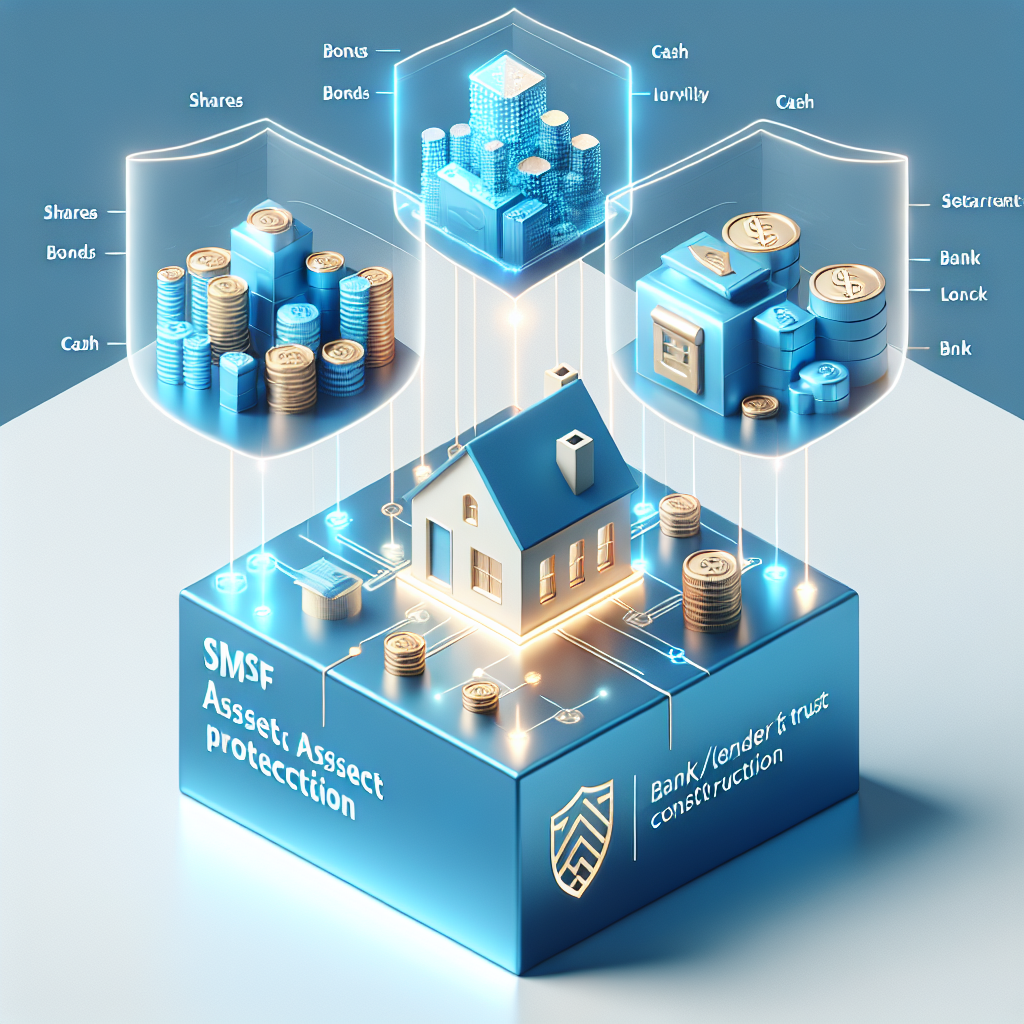
Here’s how it works: when your SMSF borrows under an LRBA, the purchased asset is held in a separate trust (called a holding trust or bare trust) until the loan is fully repaid. If something goes wrong and your SMSF can’t meet its loan obligations, the lender’s recourse is limited to the asset held in the trust. This means the other assets in your SMSF remain protected—your shares, cash reserves, and other investments can’t be seized to satisfy the debt.
This risk containment feature makes LRBAs particularly attractive for property investors looking to expand their SMSF portfolio. Consider Sarah, a Melbourne-based business owner who used an LRBA to purchase a $500,000 investment property through her SMSF. When the property market softened temporarily, she faced rental vacancy for several months. While stressful, the LRBA structure meant that even in a worst-case scenario, only the investment property itself was at risk—not the $300,000 in shares and managed funds her SMSF also held.
However, the tax optimization benefits of an LRBA extend beyond risk management. The loan interest and associated costs are typically tax-deductible expenses for your SMSF, reducing your fund’s taxable income. During the accumulation phase, this means you’re paying just 15% tax on investment returns after claiming these deductions. Once you transition to pension phase, those same rental income streams and eventual capital gains can become entirely tax-free.
But there’s a critical compliance requirement that every trustee must understand: the loan must be conducted on arm’s length terms. This means the interest rate, loan terms, and repayment structure must reflect what you’d receive from an unrelated commercial lender. Why does this matter? Because the Australian Taxation Office closely scrutinizes SMSF borrowings for non-arm’s length income (NALI) and non-arm’s length expenses (NALE).
If your LRBA doesn’t meet arm’s length standards—perhaps you’ve secured an unrealistically low interest rate from a related party—the ATO can tax the income derived from that asset at the highest marginal rate of 47%, stripping away your SMSF’s tax advantages entirely. This is where working with specialized SMSF lenders becomes crucial. At Aries Financial, we structure LRBA loans that are fully compliant with arm’s length requirements, with competitive rates starting from 6.24% PI that reflect genuine market conditions while optimizing your tax position.
The documentation requirements for LRBAs are equally important. You need a properly executed loan agreement, a separate holding trust deed, and clear evidence that all transactions occur at market rates. Many trustees make the costly mistake of treating LRBA documentation casually, only to face significant tax penalties during an ATO audit. The reality is simple: proper documentation isn’t bureaucracy—it’s your protection and proof of compliance.
Navigating the In-House Asset Rules: The 5% Threshold That Matters
Beyond borrowing arrangements, understanding in-house asset rules is fundamental to SMSF tax optimization. These rules exist to prevent SMSFs from becoming vehicles for inappropriate related-party transactions, but when managed correctly, they also create opportunities for strategic investment while maintaining full tax benefits.
The core principle is straightforward: your SMSF cannot hold more than 5% of its total assets as in-house assets at the end of each financial year. But what exactly qualifies as an in-house asset? Essentially, these are investments in, or loans to, related parties—including fund members, their relatives, or businesses they control.
Let’s break this down with a practical example. James runs a successful construction company and has an SMSF valued at $1.2 million. He’s considering having his SMSF loan $80,000 to his business for equipment purchases. While this might seem like a smart way to reduce business borrowing costs, it would breach the in-house asset rule—$80,000 represents 6.67% of his SMSF’s total assets, exceeding the 5% threshold.
The consequences of breaching this rule are serious. Not only does the excess amount become a non-deductible breach, but it can also trigger significant tax penalties and potentially disqualify your fund from the concessional tax treatment that makes SMSFs so attractive. In James’s case, he would need to reduce the loan to no more than $60,000 to stay within the 5% limit, or alternatively, grow his SMSF’s total assets to bring the percentage back into compliance.
There’s an important exception that property investors should know: real property leased to related parties on arm’s length commercial terms is specifically excluded from the in-house asset definition. This means your SMSF can own a commercial property and lease it to your business, provided you’re paying genuine market rent and have proper lease documentation in place. This creates powerful tax optimization opportunities—your business pays tax-deductible rent to your SMSF, which receives that income at only 15% tax (or tax-free in pension phase).
Market fluctuations can inadvertently push you over the 5% threshold even if you start within compliance. Imagine your SMSF holds an in-house loan of $45,000 when total assets are $1 million (4.5% compliance). If the share market crashes and your SMSF’s total value drops to $800,000, suddenly that same $45,000 loan represents 5.625% of assets—a breach.
The ATO provides a 12-month rectification period to address such breaches caused by market movements. However, proactive monitoring is essential. Smart trustees conduct quarterly valuations of their in-house assets and total fund value, allowing them to take corrective action before year-end. This might involve making additional contributions to increase total assets, or reducing the in-house asset value to restore compliance.
Financial advisors working with SMSF clients should emphasize regular compliance reviews. At Aries Financial, we understand that tax optimization isn’t just about maximizing returns—it’s about maintaining the compliant structure that allows those tax advantages to persist long-term. That’s why we recommend trustees work with specialized accountants who can monitor in-house asset exposure and flag potential issues before they become costly problems.
Tax Treatment Across SMSF Phases: Maximizing Your Advantage
Understanding how taxation applies differently across your SMSF’s lifecycle is where sophisticated tax optimization truly begins. The Australian superannuation system offers different tax treatments during accumulation phase versus pension phase, and strategic trustees leverage these differences to maximize wealth accumulation.
During accumulation phase—while you’re still working and contributing to your SMSF—investment income is taxed at 15%. This includes rental income from investment properties, dividends from shares, and interest from cash holdings. While 15% is substantially lower than most marginal tax rates, capital gains receive even more favorable treatment: if you hold an asset for more than 12 months before selling, you receive a one-third discount on the capital gain, effectively reducing the tax rate to 10%.
Consider Michael, who purchased an investment property through his SMSF using an LRBA in 2019 for $450,000. By 2024, the property’s value had increased to $650,000. If he sells during accumulation phase after holding for more than 12 months, the $200,000 capital gain is first reduced by one-third to $133,333, then taxed at 15%—resulting in approximately $20,000 tax. Compare this to selling the same property in his personal name at a 45% marginal rate, which would generate around $60,000 in capital gains tax even with the 50% CGT discount—triple the tax liability.
But the real tax optimization magic happens when members transition into pension phase after reaching preservation age and meeting a condition of release. For members aged 60 and above drawing a pension from their SMSF, investment income becomes entirely tax-free. That rental income that was taxed at 15%? Now tax-free. Those capital gains? Also tax-free.

This creates a powerful incentive to hold appreciating assets within your SMSF long-term and time their sale strategically. Using Michael’s example again, if he waited to sell that investment property until after commencing a pension at age 60, the entire $200,000 capital gain would be tax-free—saving $20,000 in tax compared to selling during accumulation phase.
However, there’s a crucial limitation trustees must understand: the Transfer Balance Cap. As of 2024, this cap sits at $1.9 million per individual, limiting how much superannuation can be transferred into the tax-free pension phase. Amounts exceeding this cap must remain in accumulation phase, where the 15% tax continues to apply.
This creates a tax optimization puzzle for high-balance SMSFs. If your fund holds $3 million in assets and you’re the sole member, only $1.9 million can enjoy pension-phase tax benefits. The remaining $1.1 million stays in accumulation phase paying 15% tax. Smart trustees address this through strategic planning: potentially starting pensions earlier to maximize time in the tax-free environment, or structuring their SMSF with multiple members (such as spouses) to utilize multiple Transfer Balance Caps.
The interaction between LRBAs and pension phase deserves special attention. When you have an outstanding LRBA loan, the net asset value (property value minus outstanding loan) counts toward your Transfer Balance Cap, not the gross property value. This means you can potentially commence a pension with a larger LRBA-acquired property while staying within the cap, then benefit from tax-free rental income and capital growth as the loan is paid down.
There’s also sophisticated planning around the timing of loan repayments. Accelerating LRBA repayments during accumulation phase—when you’re receiving tax-deductible contribution benefits—can set you up for maximum pension-phase benefits later. The loan interest you’re paying is tax-deductible at 15%, and once the loan is cleared, all property income becomes tax-free in pension phase.
Compliance and Risk Considerations: Protecting Your Tax Benefits
All the tax optimization strategies in the world mean nothing if your SMSF falls foul of compliance requirements. The ATO’s scrutiny of SMSFs has intensified significantly in recent years, with particular attention paid to borrowing arrangements and related-party transactions. Understanding compliance requirements isn’t optional—it’s fundamental to preserving your tax advantages.
For LRBAs specifically, documentation is your primary defense against ATO challenges. Every loan must have a written loan agreement that clearly specifies the interest rate, loan term, repayment schedule, and security arrangements. This agreement must be executed before the funds are advanced—retrospective documentation rarely satisfies ATO requirements.
The holding trust deed is equally critical. This document establishes the bare trust that holds the property while your LRBA loan remains outstanding. The trust must give your SMSF trustee the beneficial interest in the property and the right to acquire legal ownership once the loan is repaid. Deficient holding trust documentation has been the downfall of many otherwise well-structured LRBAs.
Regular property valuations represent another compliance essential that trustees often overlook. Your SMSF’s financial statements must reflect the current market value of all assets, including property held under LRBAs. Using outdated purchase prices or optimistic estimates doesn’t just risk ATO penalties—it can distort your understanding of the fund’s true position regarding in-house asset limits and Transfer Balance Cap calculations.
Professional valuations should occur at least every three years for investment properties, with more frequent valuations if market conditions change significantly. Yes, this represents an additional cost, but it’s modest compared to the penalties for non-compliance or the tax advantages you’re protecting.
In-house asset compliance requires equal vigilance. Many trustees make the mistake of checking compliance only at year-end, but quarterly monitoring is far more effective. If you’re approaching the 5% threshold, you can take corrective action—perhaps by making additional contributions to increase total assets, or by restructuring related-party arrangements to reduce exposure.
Record-keeping for related-party transactions must be meticulous. If your SMSF leases commercial property to your business, maintain comprehensive documentation: formal lease agreements at market rates, evidence of market rent research, records of rent payments, and evidence that property expenses are properly allocated. The ATO looks for any indication that arrangements aren’t genuinely commercial, so treating every related-party transaction with the same formality as an unrelated commercial deal is essential.
The consequences of compliance failures extend beyond immediate penalties. If the ATO determines your SMSF is non-compliant, the fund can lose its concessional tax treatment entirely, with all income taxed at the highest marginal rate. For a substantial SMSF, this could mean hundreds of thousands of dollars in additional tax—far exceeding the cost of proper professional advice and compliance systems.
Practical Takeaways for Tax Optimization Success
Translating technical knowledge into actionable strategies is where tax optimization becomes real. Here are the practical steps every SMSF trustee should implement before and after taking out an SMSF loan.
First, leverage LRBAs strategically for growth assets, particularly property. The ability to borrow and acquire appreciating assets while maintaining limited recourse protection and tax-deductible interest makes LRBAs one of the most powerful wealth-building tools available to SMSF trustees. However, ensure you’re borrowing through a specialized SMSF lender who understands compliance requirements and can structure loans on proper arm’s length terms.
Second, maintain rigorous compliance with in-house asset limits. Implement quarterly reviews of your SMSF’s total asset value and any in-house asset exposure. If you’re approaching the 5% threshold, consider increasing superannuation contributions to grow total assets, or restructure arrangements to reduce in-house exposure. Remember that prevention is far less costly than rectification.
Third, plan strategically for pension-phase benefits. As you approach retirement, work with your financial advisor to model when commencing a pension maximizes tax benefits. Consider the interaction between your Transfer Balance Cap, outstanding LRBA loans, and projected asset growth. Sometimes commencing a pension earlier, even if you don’t need the income, can lock in years of additional tax-free earnings.
Fourth, time asset sales to maximize tax advantages. Where possible, hold investment properties and other appreciating assets until pension phase when capital gains become tax-free. This single strategy can save tens of thousands of dollars in tax for high-value properties. However, balance this against investment fundamentals—don’t hold a poor-performing asset solely for tax reasons.
Fifth, maintain impeccable documentation for all LRBA and related-party arrangements. Invest in proper legal documentation from the outset, conduct regular property valuations, and retain comprehensive records of all transactions. This documentation is your insurance policy against ATO challenges and the foundation of your compliance position.
Finally—and perhaps most importantly—seek professional advice tailored to your specific circumstances. While general principles apply broadly, every SMSF trustee’s situation is unique, with different asset holdings, retirement timelines, and financial goals. A specialized SMSF accountant and financial advisor can identify optimization opportunities specific to your position.
Your Path to Optimized SMSF Lending
Tax optimization within your SMSF isn’t about aggressive schemes or risky strategies—it’s about understanding the legitimate benefits available within Australia’s superannuation framework and implementing them intelligently. The combination of favorable tax rates, strategic borrowing through LRBAs, and careful compliance creates a powerful environment for building retirement wealth.
At Aries Financial, our philosophy centers on empowering SMSF trustees with the knowledge and tools to make informed decisions. We believe that every trustee deserves access to expertise that simplifies complex regulations while maintaining the highest standards of compliance and transparency. Our specialized SMSF lending solutions, with competitive rates from 6.24% PI and fast approvals within 1-3 business days, are designed to help you leverage your retirement investments strategically without sacrificing compliance or security.
The opportunities within SMSF lending are substantial, but so are the compliance requirements. Understanding the tax implications before taking out an SMSF loan—from LRBA structuring to in-house asset rules to pension-phase planning—can mean the difference between adequate retirement savings and exceptional wealth accumulation. The tax advantages are there for those who approach SMSF investing with integrity, expertise, and a commitment to getting the details right.
Your retirement future deserves more than generic financial products and one-size-fits-all advice. It deserves specialized expertise, transparent communication, and strategic planning that aligns with your long-term goals. Whether you’re considering your first SMSF property purchase or refinancing existing LRBA arrangements, taking the time to understand tax optimization strategies positions you for success.
The path to optimized SMSF lending begins with education, continues with professional guidance, and succeeds through strategic implementation. By understanding these tax optimization secrets and working with specialists who prioritize your compliance and success, you’re not just building a retirement fund—you’re creating a legacy of financial security built on knowledge, integrity, and smart decision-making.