Self-Managed Super Fund (SMSF) trustees seeking to expand their investment portfolios often explore borrowing strategies to acquire property and other assets. Among these options, the Limited Recourse Borrowing Arrangement (LRBA) stands out as a legitimate method for SMSFs to leverage debt while maintaining compliance with Australian superannuation laws. For many SMSF trustees, property investors, and business owners, the prospect of borrowing from a related party—such as a family member or associated entity—presents an attractive alternative to traditional bank financing.
An LRBA allows your SMSF to borrow money to purchase a single acquirable asset, with the lender’s recourse limited solely to that asset in the event of default. This structure protects the broader SMSF portfolio from creditor claims while enabling trustees to strategically invest in growth assets. Financial advisors and mortgage brokers frequently recommend LRBAs to clients who understand the power of leverage in building retirement wealth. For entrepreneurs and business owners with substantial personal capital, providing an LRBA loan to their own SMSF can offer flexibility, potentially better terms, and simplified approval processes compared to conventional lenders.
The advantages extend beyond convenience. Related party lending within an LRBA framework can facilitate faster transactions, customized repayment structures, and competitive interest rates that align with the borrower’s financial circumstances. However, these benefits come with stringent regulatory requirements. The Australian Taxation Office (ATO) and the Superannuation Industry (Supervision) Act 1993 (SIS Act) impose strict rules to prevent SMSFs from gaining unfair advantages or engaging in arrangements that compromise the sole purpose test—ensuring superannuation funds exist primarily to provide retirement benefits.

Understanding who can serve as a lender and how to structure these arrangements properly forms the foundation of compliant SMSF borrowing from related parties.
Understanding Related Party Lenders and Arm’s Length Requirements
When establishing an LRBA, your SMSF can borrow from various sources, including banks, non-bank lenders, or related parties. Related parties encompass a broad category under superannuation law, including SMSF members, their relatives (such as spouses, children, parents, and siblings), business partners, family trusts, and associated companies. This flexibility means that a business owner could potentially lend funds from their family trust to their SMSF, or parents could provide financing to their children’s super funds for property acquisition.
The critical requirement governing SMSF borrowing from related party arrangements centers on the arm’s length principle. Every aspect of the loan agreement must reflect terms and conditions that unrelated parties would negotiate in a commercial transaction. This means the interest rate, repayment schedule, loan security, and all documentation must mirror what you would expect from a traditional lender operating in the current market environment.
The ATO provides safe harbour interest rate benchmarks annually to guide trustees and their advisors. For the 2025/26 financial year, the safe harbour rate stands at 8.95% for property purchases and 10.95% for listed securities. These rates serve as minimum benchmarks—charging below these rates without compelling commercial justification risks triggering non-arm’s length income (NALI) provisions, which subject the SMSF to punitive tax rates of up to 45% on income derived from the arrangement.
If your related party loan uses interest rates below the safe harbour benchmarks, you must maintain comprehensive documentation demonstrating the commercial nature of the arrangement. This documentation might include independent valuations, evidence of the lender’s financial circumstances limiting their capacity to charge market rates, or detailed analysis showing comparable loans offered by unrelated parties under similar conditions.
Beyond interest rates, arm’s length terms extend to loan-to-value ratios, repayment frequency, fees, and default provisions. A loan offering 100% financing with no deposit, interest-only payments indefinitely, and no recourse provisions beyond the bare minimum required by LRBA legislation would likely fail the arm’s length test. Instead, structure your agreement to include realistic loan-to-value ratios (typically 70-80%), principal and interest payments where commercially appropriate, and fees that reflect genuine lending costs.
The consequences of failing to maintain arm’s length terms extend beyond NALI taxation. The ATO may determine that the arrangement constitutes financial assistance to members or their relatives, which is explicitly prohibited under the SIS Act. Such violations can result in administrative penalties, directions to rectify the contravention, and potential disqualification of trustees. For this reason, mortgage brokers and financial advisors consistently emphasize the importance of proper documentation and independent verification of loan terms.
The Bare Trust Structure: Legal Framework for LRBA Assets
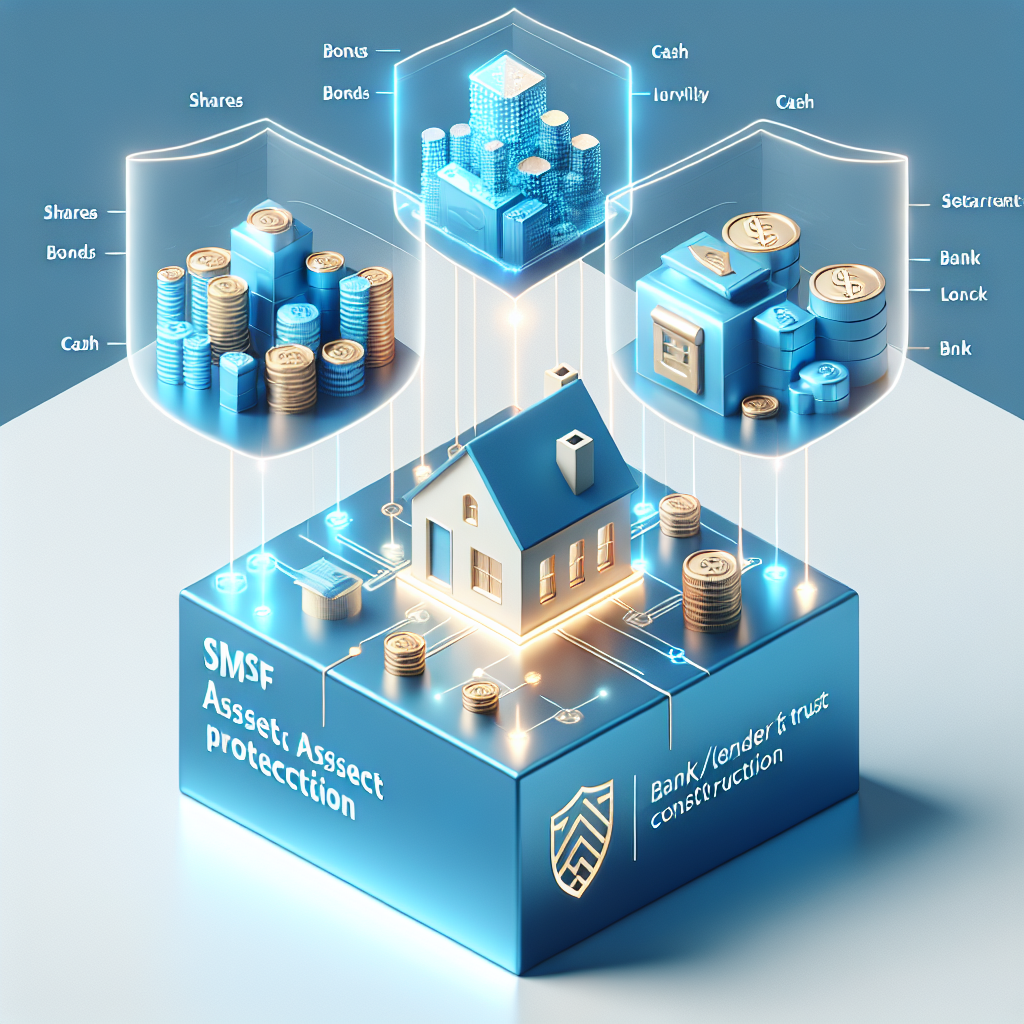
Every LRBA requires a specific legal structure involving a bare trust (also known as a holding trust) to hold the acquired asset on behalf of the SMSF. This arrangement separates the legal ownership from beneficial ownership, protecting both the lender and the broader SMSF portfolio while complying with borrowing restrictions.
Under a bare trust structure, the holding trustee holds legal title to the asset purchased with borrowed funds, while your SMSF retains beneficial ownership and all rights to income and capital gains generated by the asset. The bare trustee acts solely as a nominee, with no discretionary powers or independent decision-making authority. This limited role ensures the asset remains under the SMSF’s effective control while satisfying the legislative requirement that borrowed funds be used to acquire a single acquirable asset held in a separate trust.
The bare trust deed must clearly articulate these relationships and include specific provisions required by the SIS Act. Each property or asset acquired through an LRBA needs its own separate bare trust—you cannot hold multiple properties in the same bare trust arrangement. This separation ensures that lender recourse remains limited to the specific asset securing each individual loan, preventing cross-contamination between different LRBA transactions.
When SMSF borrowing from related party structures involves property purchases, additional restrictions apply regarding asset security. For arrangements entered into after July 7, 2010, the related party lender cannot use the asset your SMSF is acquiring as security for their own borrowing. This prevents circular security arrangements that could compromise the limited recourse nature of the loan or create conflicts of interest.
For example, if your family trust lends money to your SMSF to purchase a commercial property, the trust cannot then borrow against that same property from a bank to fund the SMSF loan. Such arrangements would violate the prohibition on using the LRBA asset as security for the lender’s borrowing. The related party lender can, however, provide personal guarantees to third-party financiers, provided their recourse remains limited to the asset held in the bare trust.
Asset restrictions become even more stringent when the SMSF purchases from a related party using borrowed funds. While SMSFs can generally acquire business real property, listed securities, and certain other assets from related parties, these transactions must occur at market value. Independent valuations become mandatory for related party acquisitions, ensuring the SMSF pays a fair price that protects members’ retirement benefits from being eroded through unfavorable transactions.
Residential property transactions between SMSFs and related parties remain prohibited regardless of whether borrowing is involved. Your SMSF cannot purchase your family home, your child’s rental property, or any residential property from related parties, even if the transaction occurs at full market value and uses LRBA financing. This absolute prohibition aims to prevent SMSFs from being used as vehicles for personal benefit rather than retirement savings.
The in-house asset rules add another layer of complexity when borrowing from related parties. Generally, in-house assets—including loans to related parties—cannot exceed 5% of the SMSF’s total market value. However, assets acquired through compliant LRBAs are exempt from this calculation provided they meet all structural and documentation requirements. This exemption underscores the importance of establishing and maintaining proper LRBA arrangements rather than attempting to structure related party transactions outside the LRBA framework.

Compliance Frameworks and Documentation Requirements
Navigating the regulatory landscape of SMSF borrowing from related party arrangements demands meticulous attention to compliance frameworks and comprehensive documentation. The foundation of any compliant LRBA begins with properly drafted legal agreements that satisfy both superannuation law and general commercial lending standards.
Your loan agreement must be documented in writing before any funds change hands or property settlements occur. Verbal agreements or informal arrangements have no standing under superannuation law and will not satisfy auditor requirements. The loan agreement should specify the loan amount, interest rate, repayment terms, security arrangements, default provisions, and the rights and responsibilities of all parties. Financial advisors working with SMSFs should engage solicitors experienced in superannuation law to draft these documents, as standard commercial loan agreements may not address SMSF-specific requirements.
The bare trust deed constitutes another essential document, establishing the legal framework for holding the acquired asset. This deed must clearly identify the SMSF as the beneficial owner, specify the holding trustee’s limited role, and include provisions allowing the SMSF to exercise all rights associated with the asset, including receiving rental income, claiming capital gains, and ultimately directing the transfer of legal title once the loan is repaid.
Market valuations play a crucial role in demonstrating compliance, particularly when related party transactions are involved. Independent, qualified valuers should assess property values at the time of purchase to establish that the SMSF pays market price. These valuations serve as critical evidence during audits, protecting trustees from allegations of acquiring assets at non-arm’s length prices. Property investors should retain these valuation reports alongside purchase contracts and settlement statements to create a comprehensive audit trail.
Record-keeping extends beyond initial transaction documents to encompass ongoing loan management. SMSFs must maintain detailed records of all loan payments, interest charges, principal reductions, and any variations to loan terms. When related parties are involved, this documentation provides evidence that the arrangement continues to operate on arm’s length terms throughout its duration. Annual statements from the lender showing loan balances, interest charged, and payment histories become essential components of the SMSF’s compliance framework.
The ATO’s guidelines on related party loans and LRBAs evolve as regulators identify emerging compliance issues and structural concerns. Trustees should regularly review their arrangements against current guidance to ensure ongoing compliance. The Tax Office provides detailed information through practice statements, rulings, and guidance notes that clarify their expectations regarding documentation standards, arm’s length benchmarks, and acceptable lending structures.
Professional advice becomes invaluable when establishing and managing related party LRBAs. SMSF accountants bring technical expertise in taxation and compliance requirements, ensuring annual tax returns correctly report loan arrangements and interest deductions. SMSF auditors provide independent verification that arrangements comply with the SIS Act, identifying potential issues before they attract regulatory attention. Mortgage brokers specializing in SMSF lending can structure loan terms that balance commercial viability with regulatory compliance, while financial advisors help trustees evaluate whether borrowing aligns with their overall retirement strategy.
The investment in professional guidance typically proves far more cost-effective than addressing compliance failures after they occur. Rectifying breaches may require repaying loans, unwinding transactions, or paying significant tax penalties—outcomes that can materially damage retirement savings and undermine the purpose of establishing an SMSF.
Common Pitfalls and How to Avoid Them
Despite clear regulatory frameworks, SMSF trustees frequently encounter compliance issues when implementing related party borrowing arrangements. Understanding these common pitfalls enables proactive risk management and helps preserve the integrity of your retirement savings strategy.
Prohibited asset acquisitions represent one of the most serious violations in SMSF lending. Trustees sometimes mistakenly believe they can purchase residential property from related parties using LRBA financing, not realizing this combination violates fundamental superannuation rules. The prohibition on acquiring residential property from related parties applies regardless of the financing structure—whether purchased with cash or debt. Business owners considering related party transactions must verify that proposed assets fall within permissible categories, such as business real property or listed securities, before proceeding with any acquisition discussions.
Non-arm’s length loan terms create another frequent compliance failure. Family lending arrangements often lack the formality of commercial transactions, leading trustees to establish unrealistic repayment schedules, charge below-market interest rates to reduce costs, or omit essential loan covenants. An SMSF borrowing from parents might charge 5% interest when market rates sit above 8%, rationalized as family assistance rather than commercial lending. However, the ATO views such arrangements as providing financial assistance to members or accessing super benefits early, triggering NALI taxation and potential trustee penalties.
To avoid this pitfall, benchmark every aspect of your loan against current market conditions. Review safe harbour rates annually and adjust interest charges accordingly. If circumstances justify rates below safe harbour levels, document the commercial rationale thoroughly. Consider engaging mortgage brokers to provide evidence of comparable loan products available in the market, strengthening your position that the related party loan reflects genuine commercial terms.
Inadequate documentation undermines even well-intentioned compliance efforts. Trustees might establish verbal agreements with family lenders, draft simple one-page loan contracts without legal review, or fail to update documents when loan terms change. When auditors request evidence of loan arrangements, insufficient documentation makes it impossible to demonstrate compliance, resulting in qualified audit reports that attract ATO scrutiny.
Implement robust documentation practices from the outset. Engage solicitors to prepare comprehensive loan agreements and bare trust deeds before completing any transactions. Maintain organized files containing all agreements, valuations, payment records, and correspondence related to the LRBA. When loan terms change—such as extending repayment periods or adjusting interest rates—document these variations formally through written amendments that all parties sign and date.
Failure to maintain separate bare trusts for multiple acquisitions creates structural violations that can invalidate entire LRBA arrangements. Some trustees attempt to purchase several properties under a single bare trust to reduce establishment costs, not realizing this breaches the requirement that each LRBA involve a single acquirable asset. Similarly, replacing an asset held in a bare trust before fully repaying the loan creates a new acquisition that requires its own separate structure.
Property investors planning multiple acquisitions should budget for separate bare trusts and legal costs for each property. While this increases upfront expenses, the additional cost pales compared to the consequences of structural non-compliance. Each bare trust should clearly identify the specific property it holds, the related loan agreement, and the SMSF as beneficial owner.
Inadequate planning for loan repayments and SMSF cash flow poses practical challenges even when documentation meets compliance standards. Related party lenders might offer flexible repayment terms that don’t require regular payments, creating an impression that the SMSF can defer loan servicing indefinitely. However, failure to make scheduled payments can indicate the loan operates on non-commercial terms, while cash flow shortfalls might force the SMSF to breach contribution caps or sell assets at inopportune times.
Before establishing an LRBA, model your SMSF’s projected cash flows, including rental income from acquired properties, member contributions, and required loan repayments. Ensure sustainable debt servicing without requiring excessive contributions that might breach annual caps. Business owners with variable income should build contingency buffers, recognizing that difficult financial periods may limit their capacity to make personal contributions while loan obligations continue.
Audit preparation often reveals compliance gaps that could have been addressed proactively. SMSF auditors must verify that LRBAs comply with all legislative requirements, examining loan documentation, payment records, valuation evidence, and asset classifications. Qualified audit reports damage the SMSF’s reputation and trigger regulatory reviews that can consume significant time and professional fees.
Schedule regular compliance reviews with your SMSF accountant, ideally quarterly, to identify and rectify potential issues before annual audits. Maintain communication with your auditor throughout the year, seeking clarification on documentation requirements or emerging compliance concerns. This proactive approach demonstrates good governance and typically results in smoother audit processes.
Building Wealth Through Compliant SMSF Lending
The complexity of SMSF borrowing from related party arrangements reflects the careful balance regulators seek between enabling strategic investment opportunities and protecting retirement savings from exploitation. When structured properly, these arrangements offer legitimate pathways for SMSF trustees to leverage family capital, acquire growth assets, and build substantial retirement wealth through property investment.
At Aries Financial Pty Ltd, our philosophy of integrity, expertise, and empowerment guides our approach to SMSF lending solutions. We recognize that every trustee’s circumstances differ, requiring personalized strategies that balance regulatory compliance with investment objectives. Our commitment to transparency ensures clients fully understand the requirements, risks, and opportunities associated with SMSF borrowing, whether from related parties or through our competitive loan products starting from 6.24% principal and interest.
Our expertise in SMSF lending compliance enables us to guide trustees through the intricate regulatory landscape, helping structure arrangements that withstand audit scrutiny while supporting strategic property acquisition. We believe education empowers better decision-making—trustees who understand the rules can confidently pursue investment opportunities while maintaining the integrity of their retirement savings.
The fast approval processes we offer, typically within 1-3 business days, reflect our streamlined approach to SMSF lending. We recognize that property markets move quickly and opportunities require decisive action supported by reliable financing. Whether you’re considering related party borrowing or seeking competitive third-party SMSF loans, our specialist team provides the guidance needed to navigate complex transactions successfully.
For financial advisors, mortgage brokers, and property investors working with SMSFs, partnering with specialized lenders who understand superannuation law creates significant value for clients. The technical requirements of LRBA arrangements demand expertise that general commercial lenders often lack. Our focus on SMSF lending exclusively means we stay current with regulatory developments, audit expectations, and best practices that protect trustees while enabling strategic investment.
Business owners and entrepreneurs exploring related party lending should approach these arrangements with the same diligence they apply to commercial ventures. Document thoroughly, seek professional advice, maintain arm’s length terms, and build compliance frameworks that demonstrate good governance. The investment in proper structure and ongoing management protects not just your SMSF’s tax concessions, but the retirement security of all fund members.
As you consider SMSF borrowing strategies, remember that compliance and investment success are not competing objectives—they are complementary elements of sustainable wealth building. The regulatory framework exists to ensure superannuation serves its fundamental purpose: providing financial security in retirement. By working within these rules, you access tax-effective investment opportunities while protecting the retirement benefits that motivated establishing your SMSF in the first place.
Whether you proceed with related party borrowing or explore alternative financing structures, trust in specialized expertise, maintain rigorous documentation standards, and ensure every decision aligns with both regulatory requirements and your long-term retirement objectives. Your super fund’s success depends on this balanced approach to strategic property investment and compliance excellence.