For many Australians, their Self-Managed Super Fund represents their largest financial asset and the cornerstone of their retirement planning. When trustees decide to leverage this asset through property investment, they enter the world of Limited Recourse Borrowing Arrangements—a powerful but complex financial structure that demands precision, compliance, and careful attention to detail.
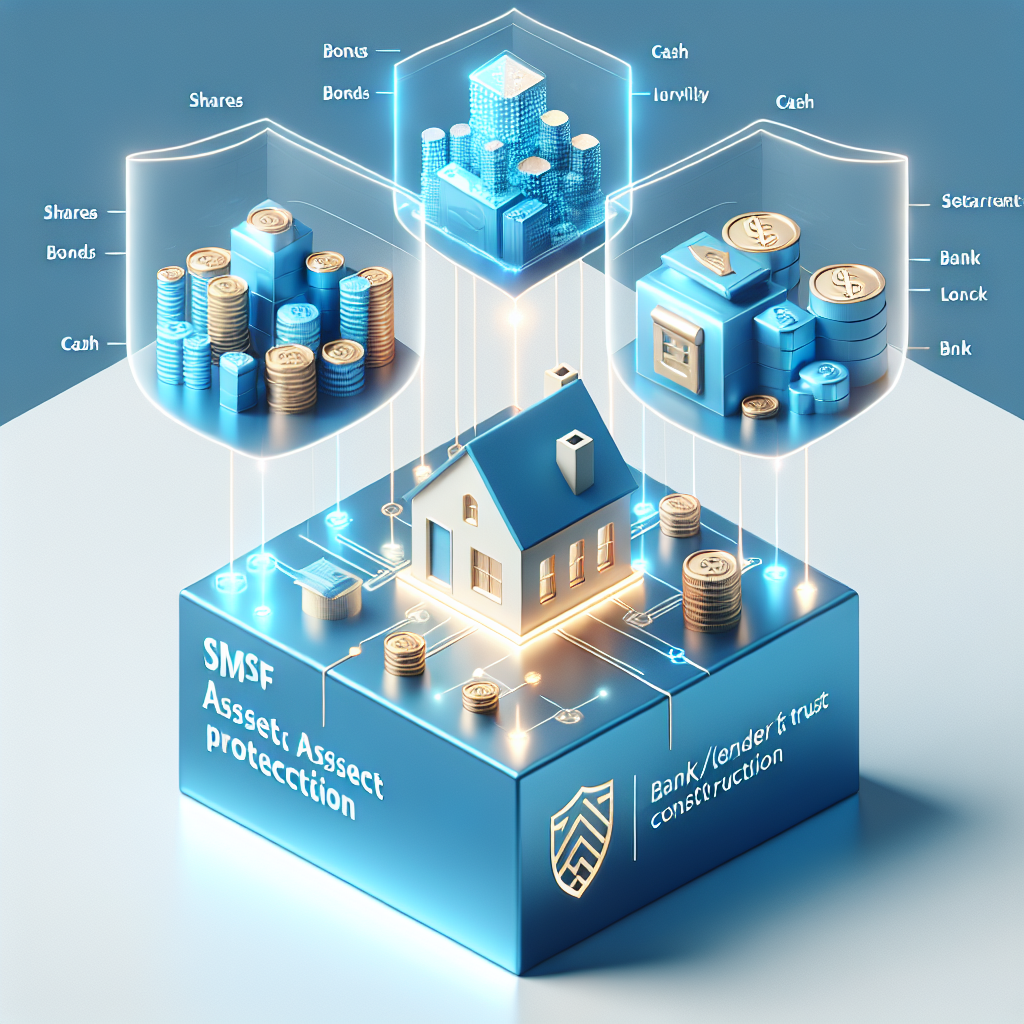
A Limited Recourse Borrowing Arrangement, commonly known as an LRBA, is a specialized borrowing mechanism that allows SMSF trustees to acquire property assets using borrowed funds while maintaining crucial protections for the fund’s other assets. Unlike traditional property loans, an LRBA creates a legal firewall: if something goes wrong and the loan defaults, the lender’s claim is restricted solely to the property purchased with those borrowed funds. Your other superannuation assets—your shares, cash reserves, and alternative investments—remain protected from the lender’s reach.
This structure has opened doors for thousands of SMSF trustees who recognize that strategic property investment can accelerate wealth accumulation during their working years. With competitive rates starting from 5.99% and the ability to leverage retirement savings, LRBAs represent an opportunity to build substantial property portfolios within the tax-advantaged environment of superannuation.
However, the very features that make LRBAs attractive also make them vulnerable to documentation failures and compliance missteps. The Australian Taxation Office maintains strict requirements for these arrangements, and a single poorly drafted clause or overlooked provision can transform a strategic investment into a regulatory nightmare. The consequences of getting it wrong extend far beyond inconvenience—they can include loss of limited recourse protection, tax penalties, and even the disqualification of your entire SMSF as a complying fund.
Understanding the critical clauses within an LRBA isn’t just about ticking compliance boxes. It’s about protecting decades of careful retirement planning and ensuring that your property investment strategy delivers the financial security you’ve worked toward. Let’s examine the three essential documents and their key clauses that form the foundation of every successful LRBA.

The Three Pillars: Understanding Critical LRBA Documentation
Every properly structured limited recourse borrowing agreement rests on three fundamental documents, each containing clauses that must work in harmony to create a compliant and effective borrowing arrangement. These documents—the Loan Agreement, the Bare Trust Deed, and the Security Documentation—form an interconnected legal framework that determines whether your SMSF property investment succeeds or fails.
The Loan Agreement: Your LRBA’s Commercial Foundation
The Loan Agreement represents the commercial heart of your limited recourse borrowing arrangement. This document establishes the relationship between your SMSF and the lender, setting out the terms under which funds are advanced and repaid. However, this isn’t a standard mortgage agreement—it must incorporate specific provisions that satisfy both commercial lending standards and superannuation law requirements.
The most critical clause within your Loan Agreement is the limited recourse provision itself. This clause explicitly restricts the lender’s rights to recover funds solely from the asset purchased with the loan. In practical terms, if your SMSF borrows $400,000 to purchase a residential investment property and circumstances lead to default, the lender can only claim against that specific property. Your SMSF’s other assets—perhaps $200,000 in Australian shares or $100,000 in cash—remain completely beyond the lender’s reach.
But documenting limited recourse protection is only the beginning. The Loan Agreement must also satisfy the arm’s length requirement, a fundamental principle of SMSF compliance that demands all transactions occur on terms that unrelated parties would reasonably accept. This means your interest rate, loan-to-value ratio, repayment schedule, and default provisions must reflect genuine commercial conditions.
Consider a real-world example: Michael, an experienced property investor, established an LRBA with his self-managed super fund to purchase a $500,000 investment property. Excited by the opportunity and eager to minimize costs, he arranged vendor financing from the property seller at an interest rate of just 3%—well below the market rate of 6% at the time. While this seemed like a shrewd negotiation, the arrangement failed the arm’s length test. The ATO determined that no independent lender would offer such favorable terms, resulting in the LRBA being deemed non-compliant and triggering significant tax penalties for Michael’s fund.
Your Loan Agreement should clearly specify the interest rate, calculation method, and payment frequency. Whether you’re paying principal and interest or interest-only during the loan term, these terms must be documented with precision. The agreement should also establish a realistic repayment schedule that your SMSF can sustain from rental income and, where necessary, member contributions within the annual contribution caps.
Default provisions deserve particular attention. While no trustee enters an LRBA expecting difficulties, market downturns, vacancy periods, or unexpected maintenance costs can strain cash flow. Your Loan Agreement should clearly define what constitutes default, the lender’s notification requirements, and any opportunity for remedy before enforcement action begins. These clauses protect both parties and reduce the risk of disputes that could threaten your investment strategy.
The Bare Trust Deed: Holding Structure and Compliance Gateway
The Bare Trust Deed addresses a fundamental challenge in SMSF property investment: superannuation law prohibits SMSFs from directly holding assets subject to security interests. In other words, your SMSF cannot own a property with a mortgage against it. The bare trust structure solves this problem by creating a separate legal entity—the bare trustee—that holds legal title to the property on behalf of your SMSF until the loan is fully repaid.
This might sound like adding unnecessary complexity, but the bare trust serves a crucial compliance function. It allows your SMSF to acquire beneficial ownership and enjoy all the economic benefits of the property—rental income, capital growth, and tax advantages—while the bare trustee holds the legal title that can be offered as security to the lender.
The Bare Trust Deed must clearly identify three key parties: the appointor (your SMSF trustee), the bare trustee (often a corporate trustee established specifically for this purpose), and the beneficiary (your SMSF itself). The document should explicitly state that the bare trustee holds the property solely for the benefit of your SMSF and has no discretion to act other than on the directions of your SMSF trustee.
One of the most common errors in bare trust documentation involves insufficient trustee powers. The Bare Trust Deed must grant the bare trustee appropriate powers to execute the lender’s security documents, manage title registration, and facilitate the property’s eventual transfer to your SMSF once the loan is repaid. Without these powers clearly documented, administrative tasks like refinancing or property improvements can become legal quagmires.
Rebecca’s experience illustrates this risk. Her SMSF purchased a commercial property through an LRBA, and after five years of strong rental returns, she decided to refinance to a lower interest rate. However, her Bare Trust Deed lacked explicit provisions for refinancing transactions. The original lender required the new lender’s consent to discharge their security, but the deed provided no clear mechanism for the bare trustee to execute new security documents without first transferring title to the SMSF—which couldn’t occur until the original loan was repaid. This documentation gap cost Rebecca $15,000 in legal fees to restructure the arrangement and delayed her refinancing by four months.
The Bare Trust Deed should also address the bare trustee’s administrative responsibilities, including obligations to maintain property insurance, pay rates and taxes, and comply with the SMSF trustee’s directions regarding property management. These provisions ensure smooth operational management throughout the loan term.
Security Documentation: Protecting All Parties’ Interests
The Security Documentation—typically comprising a mortgage or charge over the property—gives the lender enforceable rights against the acquired asset while maintaining the limited recourse boundary. This documentation must align precisely with both the Loan Agreement and Bare Trust Deed to create a coherent legal framework.
Your security documents should explicitly reference the limited recourse nature of the arrangement, confirming that the lender’s rights extend only to the property held by the bare trustee. This protection represents one of the LRBA’s greatest advantages: even in default scenarios, your SMSF’s other assets remain completely quarantined from the lender’s claims.
The security documentation must also clearly establish priority of securities if multiple lenders are involved. While most SMSFs use a single lender for property acquisition, some arrangements include multiple facilities for purchase price and improvement costs. In these situations, the relative priority of each lender’s security interests must be explicitly documented to avoid disputes and ensure enforceability.
These documents should specify the circumstances under which the lender can enforce their security, the notice requirements before enforcement action, and the process for property sale in default scenarios. Clear enforcement provisions protect both the lender’s legitimate interests and your SMSF’s rights to fair treatment in difficult circumstances.

Navigating Common Pitfalls: Where LRBAs Go Wrong
Despite the opportunities LRBAs create, numerous trustees discover—often too late—that small documentation errors or compliance oversights can derail their entire investment strategy. Understanding these common pitfalls helps you avoid expensive mistakes and protects your retirement savings.
Non-Arm’s Length Terms: The Compliance Trap
The arm’s length requirement causes more LRBA failures than any other single issue. The ATO scrutinizes these arrangements precisely because the related-party nature of many SMSF transactions creates opportunities for advantageous treatment that wouldn’t occur between independent parties.
Non-arm’s length terms appear in various forms. Interest rates significantly below market levels, overly generous repayment schedules, or absent default provisions all raise red flags. Understanding related party borrowing rules is essential for trustees considering family loans. Even arrangements that seem commercially reasonable can fail the test if they include terms that favor the SMSF beyond what normal commercial practice would allow.
Consider the case of David and Susan, who structured an LRBA for their SMSF to purchase a property from David’s family trust. To facilitate the transaction, they agreed on an interest-only loan with no fixed repayment date and the option for the SMSF to ““repay when convenient”.” While this flexibility seemed helpful, it failed to reflect commercial lending standards. Banks don’t offer indefinite loan terms with discretionary repayment timing. The ATO deemed the arrangement non-compliant, and the resulting tax consequences cost the couple more than $50,000 in additional tax and penalties.
Protecting yourself from arm’s length failures requires honest comparison with equivalent commercial arrangements. What interest rate would a non-bank lender charge for a similar property investment? What loan-to-value ratio and repayment terms would apply? Would a commercial lender accept similar default provisions and security arrangements? If your LRBA terms wouldn’t pass muster with an independent lender, they probably won’t satisfy the arm’s length requirement.
Documentation Gaps: The Silent Investment Killer
Inadequate documentation represents another frequent failure point. Trustees sometimes proceed with verbal agreements, incomplete paperwork, or documents downloaded from generic online sources without proper legal review. These shortcuts create enormous risks.
Every aspect of your LRBA requires written documentation that clearly establishes the parties’ rights and obligations. Verbal agreements about repayment schedules, undocumented changes to loan terms, or informal arrangements regarding property management create ambiguity that can prove fatal during ATO audits or if disputes arise.
The consequences extend beyond compliance concerns. Inadequate documentation can void your limited recourse protection, leaving your SMSF’s other assets exposed to lender claims. If the Bare Trust Deed fails to properly establish the trust relationship or the Loan Agreement doesn’t clearly specify limited recourse terms, courts may determine that standard debtor-creditor relationships apply—allowing lenders to pursue all your superannuation assets.
Mark’s experience demonstrates these risks. His SMSF borrowed $350,000 to purchase an investment property, and his accountant helped him draft basic loan documents. However, the Loan Agreement failed to explicitly state that the loan was limited recourse to the acquired property. When market conditions deteriorated and rental income couldn’t cover loan repayments, the lender initiated action to recover from the SMSF’s other assets. Mark’s legal team argued that the arrangement was intended as a limited recourse borrowing, but without explicit documentation, the court found insufficient evidence. The resulting judgment exposed Mark’s entire superannuation balance to the lender’s claims—a catastrophic outcome that proper documentation would have prevented entirely.
Practical Protection Strategies: Building Bulletproof LRBAs
Avoiding these pitfalls requires systematic attention to documentation quality and ongoing compliance management. Start by engaging specialists with specific SMSF lending expertise. While general legal advice has value, LRBA structuring demands knowledge of both property law and superannuation regulations. The modest additional cost of specialist advice—typically $2,000 to $5,000 for comprehensive documentation—represents excellent insurance against the far greater costs of compliance failures.
Maintain rigorous record-keeping from day one. Create a dedicated file for your LRBA containing all loan documents, trust deeds, security documentation, correspondence with lenders, property valuations, and records of all payments. Document every decision your SMSF trustee makes regarding the property investment, including the rationale for purchase price, selection of lenders, and approval of loan terms.
Review your LRBA documentation annually as part of your broader SMSF compliance process. Superannuation law evolves, ATO interpretation guidance changes, and your own circumstances shift over time. An annual review ensures your arrangements remain compliant and identifies opportunities for optimization—perhaps through refinancing to better rates or restructuring to accommodate changed investment strategies.
Consider working with non-bank lenders who specialize in SMSF lending and understand the unique compliance requirements these arrangements demand. Specialist lenders structure their loan products to satisfy both commercial lending standards and superannuation law requirements, reducing documentation risks and streamlining approval processes. With fast approvals achievable within one to three business days, specialist lenders combine compliance expertise with service efficiency.
Finally, maintain clear separation between your personal financial affairs and your SMSF property investment. Don’t use personal funds for SMSF property expenses, don’t commingle rental income with personal accounts, and ensure all transactions flow through properly documented trustee resolutions. This separation protects both your compliance position and the integrity of your retirement savings.
Building Your Property Investment Future With Confidence
The complexity of limited recourse borrowing arrangements shouldn’t deter you from accessing the significant wealth-building opportunities that SMSF property investment offers. Rather, it should reinforce the importance of approaching these strategies with proper planning, professional guidance, and meticulous attention to documentation requirements.
At Aries Financial Pty Ltd, we’ve built our reputation as Australia’s trusted SMSF lending specialist by understanding that successful property investment through superannuation demands more than competitive interest rates. It requires integrity in every transaction, ensuring that all arrangements satisfy both commercial lending standards and superannuation compliance requirements. Our expertise in SMSF regulations and property investment strategies means our clients receive solutions that work not just on day one, but throughout their entire investment journey.
We believe in empowering SMSF trustees to make informed investment decisions by providing clear guidance through every stage of the borrowing process. From initial loan structure through to settlement and ongoing management, our team ensures you understand exactly how your limited recourse borrowing agreement protects your interests and aligns with your broader retirement strategy.
Our commitment to fast approvals—typically within one to three business days—reflects our deep familiarity with LRBA documentation requirements and compliance standards. We’ve structured our processes to identify potential issues early, resolve documentation concerns quickly, and get you from application to property settlement efficiently. This speed doesn’t come at the expense of quality; rather, it demonstrates the efficiency that specialist expertise delivers.
When you work with a specialist SMSF lender, you’re not just securing financing—you’re gaining a partner who understands the stakes involved in retirement investment and who shares your commitment to building long-term financial security. With loan products starting from 5.99% principal and interest, Aries Financial combines competitive pricing with the specialized knowledge that complex SMSF lending demands.
The three critical clauses we’ve explored—the limited recourse provisions in your Loan Agreement, the trust structure established by your Bare Trust Deed, and the security protections in your mortgage documentation—form the foundation of successful SMSF property investment. Get these elements right, maintain rigorous compliance standards, and seek specialist guidance when you need it, and you’ll position your self-managed super fund to build substantial wealth through strategic property acquisition.
Your retirement deserves the protection that only properly structured, meticulously documented limited recourse borrowing arrangements can provide. Ready to explore your SMSF property investment options? Contact our specialists today for expert guidance tailored to your retirement goals. The time you invest in understanding these critical clauses today will pay dividends throughout your investment journey and into your retirement years.