Property investment through your Self-Managed Super Fund has never been more attractive. With interest rates stabilizing and rental yields climbing in key Australian markets, SMSF trustees are increasingly looking to leverage their retirement savings to build substantial property portfolios. But here’s the challenge: how do you borrow funds to acquire property through your SMSF while protecting your existing super assets from potential risks?
Enter the bare trust structure—a legal framework that’s becoming the go-to solution for sophisticated property investors who understand that wealth protection is just as important as wealth creation. This arrangement allows your SMSF to borrow money for property acquisition while legally isolating the purchased asset from your fund’s other holdings. It’s not just clever structuring; it’s a strategic approach that aligns with both regulatory requirements and sound risk management principles.
The beauty of bare trust SMSF borrowing lies in its elegant simplicity. Your SMSF maintains beneficial ownership of the property—meaning all rental income, tax benefits, and capital growth flow directly to your super fund. Meanwhile, a separate bare trustee holds the legal title until you’ve paid off the loan. This separation creates a protective barrier: if something goes wrong with the property investment, lenders can only pursue that specific asset, not the shares, managed funds, or other properties already sitting in your SMSF.
For SMSF trustees serious about building retirement wealth through property, understanding how this structure works isn’t optional—it’s essential. Let’s dive into the mechanics, benefits, and practical considerations that make bare trust borrowing such a powerful tool in the modern property investor’s arsenal.
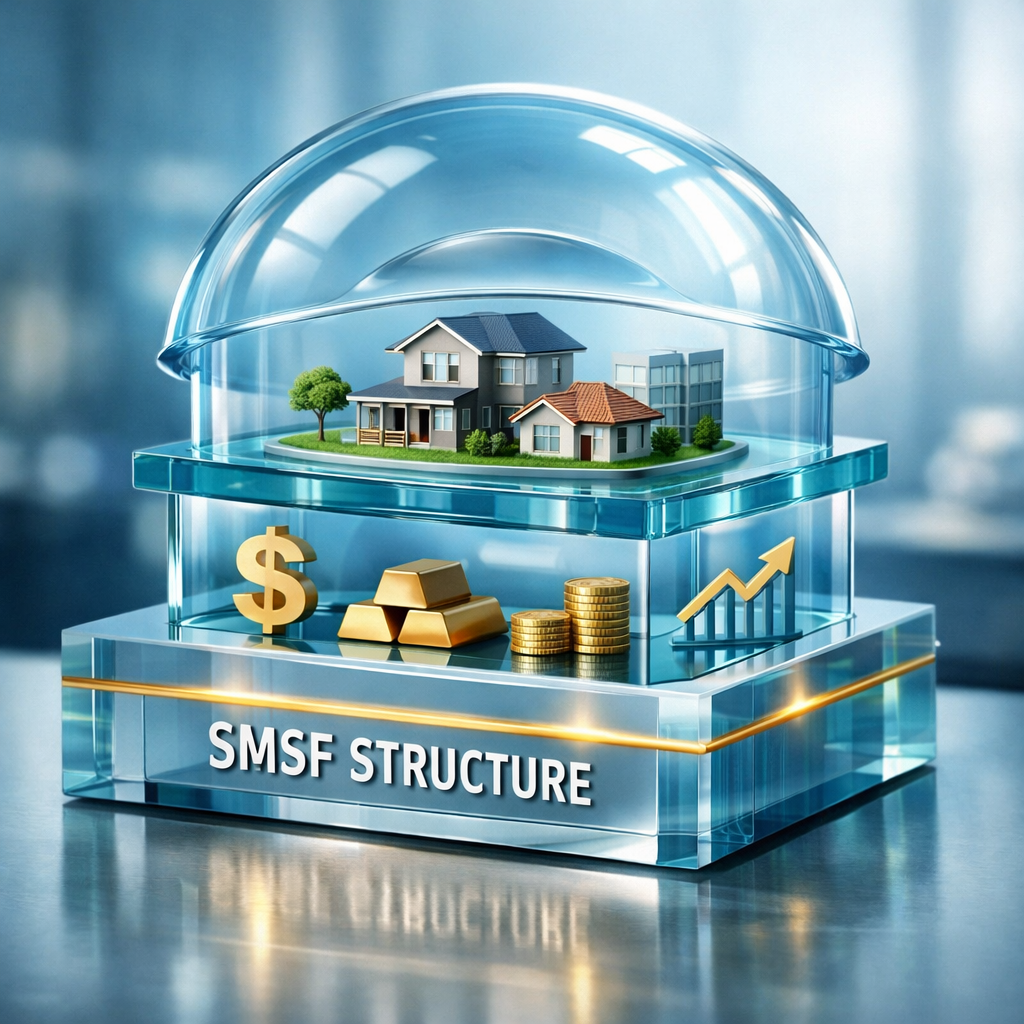
Understanding the Core Structure: How Bare Trusts Work with SMSF Lending
At its heart, a bare trust is remarkably straightforward—it’s a legal arrangement where one party (the bare trustee) holds an asset’s legal title for the sole benefit of another party (your SMSF). Unlike discretionary or unit trusts where trustees have decision-making powers about distributions, a bare trustee has no discretion whatsoever. They’re simply the legal title holder, following your SMSF’s instructions to the letter.
This structure becomes necessary when your SMSF enters into a Limited Recourse Borrowing Arrangement (LRBA). Under Australian superannuation law, SMSFs can borrow funds to acquire a single asset, but specific conditions must be met. The LRBA framework ensures that if your SMSF defaults on the loan, the lender’s recourse is limited exclusively to the asset purchased with those borrowed funds. Your other SMSF assets remain completely protected—they cannot be touched to satisfy the debt.
Here’s where the pieces connect: the bare trust holds legal ownership of the property while your SMSF holds the beneficial ownership. Your SMSF receives all the economic benefits—rental income flows to your fund, you claim tax deductions for interest and expenses, and any capital appreciation belongs entirely to your super. The bare trustee’s role is purely administrative, holding the title as security for the lender until the loan is fully repaid.
Think of it like this: when you buy a property with a standard home loan, the bank holds a mortgage over your property but you still own it. With bare trust SMSF borrowing, the structure goes a step further—the bare trustee holds the actual title, your SMSF holds all beneficial rights, and the lender’s security is limited to just that one asset. This three-way arrangement satisfies regulatory requirements while providing robust asset protection.
The distinction between legal and beneficial ownership is critical. Legal ownership means your name (or entity) appears on the title deed—you have the formal rights recognized by law. Beneficial ownership means you enjoy all the actual benefits of owning the asset—income, growth, and control over how it’s used. In a bare trust SMSF structure, these two types of ownership are deliberately separated, but the beneficial owner (your SMSF) always remains firmly in control.
The Step-by-Step Journey: From Property Selection to Full Ownership
The process of acquiring property through a bare trust SMSF structure follows a carefully orchestrated sequence designed to maintain compliance while achieving your investment objectives. Understanding each step helps you anticipate requirements and avoid costly delays.
Step One: Investment Strategy and Property Identification
Your journey begins with your SMSF’s investment strategy—a legal requirement that documents your fund’s investment objectives, risk tolerance, and asset allocation targets. This strategy must specifically authorize property investment and borrowing. Once approved by all trustees, you can begin identifying suitable properties that align with your fund’s goals and your budget.
Remember, the property must meet the “single acquirable asset” test. Generally, this means one property on one title, though some exceptions exist for properties bought as a set (like a house with a separate title for a garage, provided they’re purchased together).
Step Two: Establishing the Bare Trust
Before you can proceed with the purchase, you need to establish the bare trust. This involves preparing a bare trust deed (also called a holding trust deed) that clearly outlines the relationship between the bare trustee, your SMSF, and the property. The deed must specify that the bare trustee holds legal title solely for your SMSF’s benefit, with no discretionary powers.
You’ll need to appoint a bare trustee—this can be an individual (often the SMSF trustees themselves) or a corporate trustee. Many investors prefer using a separate corporate entity to add another layer of separation and professionalism to the structure.
Step Three: Loan Application and Approval
With your bare trust established, your SMSF applies for the loan. The lender evaluates your application based on the property’s serviceability and your SMSF’s capacity to make repayments from rental income and any additional contributions. Unlike personal loans, lenders assess SMSF loans based on the fund’s financial position, not your personal income.
This is where working with a specialist SMSF lender like Aries Financial makes a significant difference. Generic lenders often struggle with the nuances of SMSF compliance, leading to delays or inappropriate loan structures. Specialist lenders understand the regulatory framework and can structure loans that maximize your borrowing capacity while maintaining full compliance.
Step Four: Property Purchase and Title Registration
Once your loan is approved, the property purchase proceeds like any other real estate transaction, with one key difference: the property title is registered in the bare trustee’s name, not your SMSF’s name directly. The contract of sale, however, clearly identifies that the bare trustee is purchasing “as trustee for [your SMSF name].”
Your SMSF provides the deposit (from existing super savings or recent contributions), and the loan funds cover the balance. All purchase costs—stamp duty, legal fees, inspection costs—must be paid by your SMSF using either super savings or borrowed funds included in the loan amount.
Step Five: Ongoing Management and Loan Repayment
From this point forward, your SMSF manages the property as a rental investment. Rental income flows to your SMSF’s bank account, and your SMSF makes loan repayments to the lender. You can claim tax deductions for interest, property management fees, maintenance, and other property-related expenses—just like any property investor, but with the significant advantage of the SMSF’s preferential 15% tax rate on rental income.
The bare trustee’s role during this phase is minimal—they hold the legal title and may need to sign documents related to property management or improvements, but all decisions are made by your SMSF trustees.
Step Six: Final Transfer to Direct SMSF Ownership
The ultimate goal is reached when your SMSF pays off the loan in full. At this point, the legal title transfers from the bare trustee directly to your SMSF. The property now sits in your fund with no encumbrances, and the bare trust can be wound up. The asset has successfully moved from the protected bare trust structure into your SMSF’s direct ownership.
This strategic progression—from leveraged acquisition through protective holding to unencumbered ownership—represents one of the most powerful wealth-building pathways available to Australian super fund members.

Staying Compliant: The Rules That Govern SMSF Property Borrowing
The bare trust LRBA structure exists within a comprehensive regulatory framework designed to protect super fund members while allowing strategic investment. Understanding these rules isn’t just about avoiding penalties—it’s about maximizing the benefits available to compliant funds.
The Australian Taxation Office provides clear guidance on Limited Recourse Borrowing Arrangements. The fundamental requirement is that the borrowed funds must be used to acquire a single acquirable asset. The loan must be limited recourse, meaning the lender’s rights if you default are restricted to the asset purchased with the borrowed funds—they cannot pursue other SMSF assets.
The borrowing must be on arm’s-length terms. This means the interest rate, fees, and loan conditions must reflect what an unrelated party would offer in a commercial transaction. You cannot have your adult children lend to your SMSF at 2% interest when the market rate is 6%—this violates the arm’s-length requirement and could trigger significant penalties.
There are also restrictions on who can lend to your SMSF. Related party lending is permitted under strict conditions, but borrowing from SMSF members or their relatives is prohibited in most circumstances. Most SMSF property investors use commercial lenders or specialist SMSF lending institutions that understand the compliance requirements thoroughly.
Your SMSF’s investment strategy must specifically authorize property investment and borrowing. This isn’t a mere formality—trustees who acquire property without proper authorization in their investment strategy have faced serious regulatory consequences.
The in-house asset rules remain crucial. Generally, more than 5% of your SMSF’s total assets cannot be in-house assets (essentially, investments in related parties). Property held under an LRBA isn’t typically classified as an in-house asset, but you must remain vigilant about this threshold across your entire portfolio.
Importantly, you cannot use SMSF property for personal benefit before retirement. This means you cannot live in a residential property owned by your SMSF, even if you pay market rent. You cannot rent SMSF property to related parties unless it’s commercial or business real property. These restrictions are non-negotiable and strictly enforced.
Documentation is paramount. You need a comprehensive paper trail showing that all transactions occurred at arm’s length, all decisions were properly authorized by trustees, and all regulatory requirements were met. This includes the bare trust deed, loan agreements, property management agreements, and detailed trustee meeting minutes.
The penalty for non-compliance can be severe. Your SMSF could lose its complying status, resulting in the fund being taxed at the top marginal rate rather than the concessional 15% rate. Learn more about SMSF compliance requirements. In serious cases, trustees can face personal penalties and disqualification from managing superannuation funds.
Navigating the Risks: What Every SMSF Trustee Should Consider
Like any investment strategy, bare trust SMSF borrowing carries risks that require careful consideration and management. Understanding these potential pitfalls allows you to implement appropriate safeguards and make informed decisions.
Structural Complexity and Documentation Requirements
The bare trust LRBA structure is more complex than direct property ownership. You’re managing relationships between your SMSF, the bare trustee, the lender, and potentially property managers and other service providers. Each relationship requires proper documentation, and any gaps can create compliance issues or disputes down the track.
The solution is engaging experienced professionals from the outset. A specialist SMSF administrator, a lawyer familiar with superannuation law, and an accountant with SMSF expertise are not optional extras—they’re essential team members who ensure your structure is established correctly and maintained properly.
Compliance Risks and Regulatory Scrutiny
The ATO actively monitors SMSF property transactions and has increasingly sophisticated data-matching capabilities. Transactions that don’t comply with superannuation law or appear to provide personal benefits to trustees attract immediate scrutiny.
Mitigation requires scrupulous attention to compliance requirements. Every decision should be documented in trustee meeting minutes. Every transaction should be at arm’s length with appropriate valuations and market-rate pricing. Regular reviews with your SMSF advisor help identify and address potential issues before they become regulatory problems.
Market Fluctuation and Property-Specific Risks
Property markets can be volatile, and individual properties can experience significant value declines. If your property value falls below the loan balance (negative equity), you’re still obligated to service the debt. Unlike a diversified managed fund where losses in one holding might be offset by gains elsewhere, property investment concentrates your risk in a single asset.
Smart property selection, thorough due diligence, and maintaining adequate cash reserves in your SMSF help manage this risk. Your investment strategy should account for vacancy periods, unexpected maintenance costs, and potential rental income shortfalls.
Limited Flexibility During the Borrowing Period
While the property remains under the bare trust (with an outstanding loan), your ability to modify or replace the asset is restricted. Significant improvements that change the asset’s character are generally not permitted. If you want to sell and purchase a different property, you’ll need to pay out the existing loan first or arrange complex refinancing.
This limitation makes property selection even more critical. You need to be confident that the property will meet your investment needs throughout the loan term, which might be 15 to 30 years. Location, property type, and long-term area prospects all deserve careful analysis.
Cashflow Management Challenges
Your SMSF must be able to service the loan from rental income and allowable contributions. If rental income falls short, you’ll need to make additional super contributions to cover the gap—but contribution caps limit how much you can contribute annually. A prolonged vacancy or unexpected major repair could create serious cashflow pressure.
Building a cash buffer within your SMSF before acquiring property provides breathing room. Many experienced SMSF property investors aim to maintain at least six to twelve months’ worth of loan repayments in cash reserves.
Your Practical Setup Checklist: Making It Happen
If you’re convinced that bare trust SMSF borrowing aligns with your wealth-building strategy, here’s a practical checklist to guide your implementation:
Professional Team Assembly: Engage a specialist SMSF administrator, a lawyer experienced in superannuation law, and an accountant with SMSF expertise. Choose a lender who specializes in SMSF loans and understands the compliance requirements thoroughly.
Investment Strategy Update: Review and update your SMSF’s investment strategy to specifically authorize property investment, borrowing, and the use of limited recourse borrowing arrangements. Have all trustees formally approve the updated strategy.
Bare Trust Establishment: Have your lawyer prepare a comprehensive bare trust deed that clearly defines the relationship between the bare trustee and your SMSF. Appoint your bare trustee (individual or corporate entity) and ensure they understand their role and obligations.
Property Selection and Due Diligence: Identify properties that meet the single acquirable asset test and align with your investment objectives. Conduct thorough due diligence including building inspections, pest inspections, market analysis, and rental appraisals.
Loan Application: Apply for your SMSF loan with all required documentation including your SMSF’s financial statements, investment strategy, trust deed, and property details. Review our comprehensive application guide for step-by-step assistance. Work closely with your lender to address any questions or requirements promptly.
Purchase Execution: Once your loan is approved, proceed with the property purchase ensuring the contract correctly identifies the bare trustee as purchaser “as trustee for [your SMSF].” Ensure your SMSF has sufficient funds available for the deposit and purchase costs.
Ongoing Compliance Monitoring: Establish systems for regular compliance reviews, maintain detailed records of all transactions and decisions, conduct annual valuations, and ensure your SMSF’s financials are prepared by a qualified professional.
Regular Strategy Reviews: Schedule annual reviews of your SMSF’s investment strategy and performance. As your circumstances change—approaching retirement, shifting income levels, or changing risk tolerance—ensure your property investment remains appropriate.
Key Terms Explained: Your SMSF Borrowing Glossary
Bare Trust: A simple trust arrangement where the trustee holds assets solely for the benefit of another party (your SMSF) without any discretionary powers or independent decision-making authority.
Limited Recourse Borrowing Arrangement (LRBA): A loan structure where an SMSF borrows money to acquire an asset, with the lender’s recourse limited exclusively to the purchased asset if the SMSF defaults—other SMSF assets are protected.
Beneficial Ownership: The right to enjoy all benefits of owning an asset (income, capital growth, use rights) even though legal title may be held by another party.
Legal Title: The formal, registered ownership of an asset that appears on official documents like property titles—in a bare trust LRBA, the bare trustee holds legal title.
Single Acquirable Asset: An asset that can be purchased as a distinct item—generally one property on one title, though some exceptions exist for assets bought as a complete set.
Arm’s Length Transaction: A transaction conducted on commercial terms that would be acceptable to unrelated parties—required for all SMSF dealings to prevent improper benefits to members.
In-House Asset: An investment by an SMSF in a related party or related trust—generally limited to 5% of the fund’s total assets to prevent improper self-dealing.
Investment Strategy: A formal document required for all SMSFs that outlines investment objectives, risk management, asset allocation, insurance needs, and liquidity requirements.
Complying Fund Status: The ATO classification confirming an SMSF meets all regulatory requirements—complying funds receive concessional tax treatment while non-complying funds are taxed at the top marginal rate.
At Aries Financial, we’ve built our reputation on helping SMSF trustees navigate these complex structures with confidence. Our philosophy centers on empowering investors with the knowledge and specialized lending solutions they need to maximize their retirement potential. We don’t just provide loans—we partner with you to ensure your SMSF property investment is structured correctly, complies fully with regulations, and aligns with your long-term wealth-building objectives.
With competitive SMSF loan rates starting from 5.99% PI and approval times of just 1-3 business days, we combine speed with expertise. We understand that bare trust SMSF borrowing isn’t just about acquiring property—it’s about protecting your retirement savings while strategically building wealth for your future.
The structure might seem complex at first, but with the right guidance and professional support, bare trust SMSF borrowing becomes a powerful tool for sophisticated investors who understand that true wealth creation requires both opportunity and protection. Your super represents decades of savings—investing it wisely through properly structured property acquisition could be the difference between a comfortable retirement and true financial freedom.