For many Australian investors, self-managed superannuation funds represent more than just a retirement savings vehicle—they’re a pathway to building substantial wealth through strategic property investment. Yet one question consistently arises among SMSF trustees: how can you acquire high-value assets when your fund’s current balance falls short? The answer lies in a specialized financing structure known as a Limited Recourse Borrowing Arrangement, or LRBA.
Consider Sarah, a property investor from Melbourne who identified a promising commercial property valued at $800,000. Her SMSF held $300,000 in assets—substantial, but insufficient for the purchase. Through an LRBA, Sarah’s fund borrowed the remaining $500,000, securing the property while protecting her other SMSF assets from potential loan default. Today, that property generates consistent rental income for her retirement fund while appreciating in value. Sarah’s story illustrates the transformative potential of borrowing through SMSF structures when executed correctly.
Understanding LRBAs isn’t just about accessing capital—it’s about expanding your investment horizons while maintaining compliance with superannuation law. For SMSF trustees, financial advisors, and mortgage brokers navigating this landscape, grasping the fundamentals of SMSF borrowing arrangements proves essential for maximizing retirement investment potential.

Understanding the LRBA Framework: Structure and Protection
At its core, a Limited Recourse Borrowing Arrangement represents a carefully structured exception to the general prohibition against SMSFs borrowing money. The legislation recognizes that strategic borrowing can enhance retirement outcomes, provided specific safeguards protect fund members and maintain the integrity of the superannuation system.
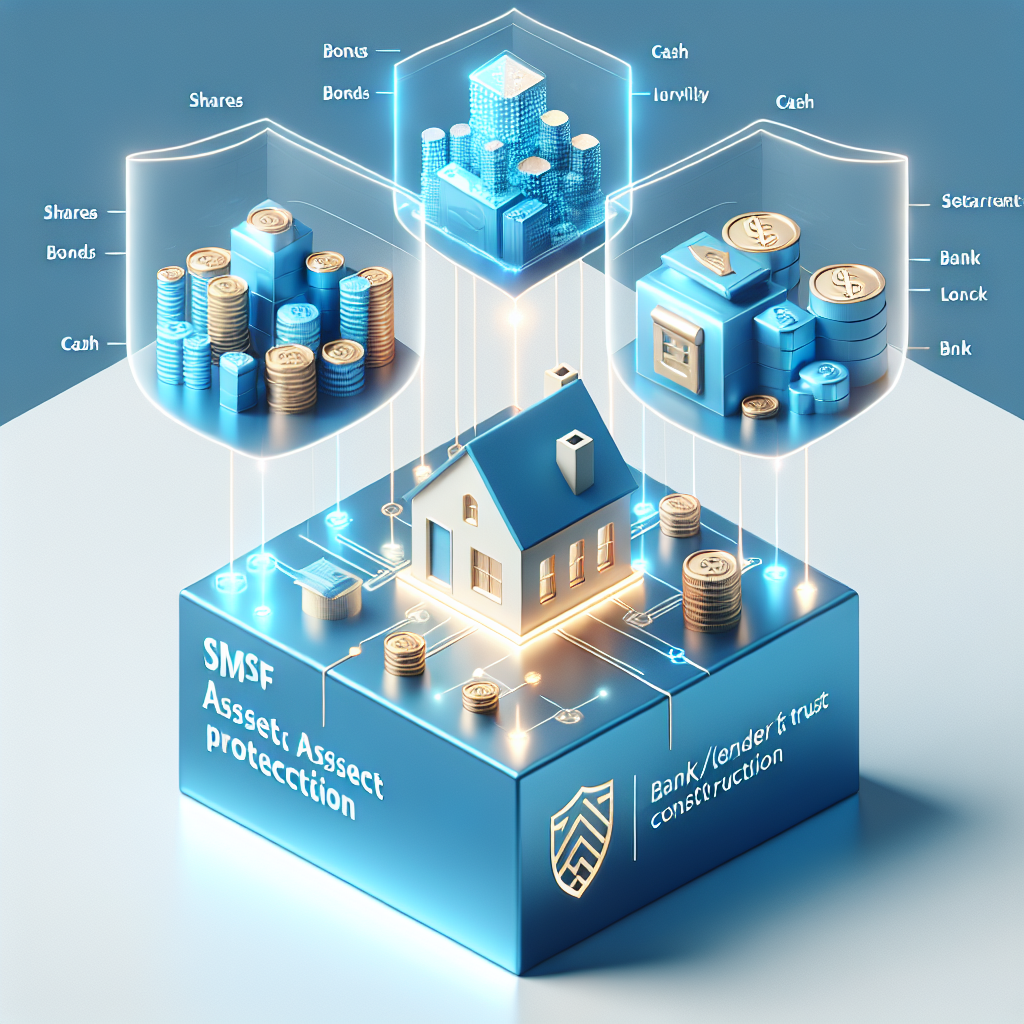
The defining characteristic of an LRBA lies in its “limited recourse” nature. Unlike conventional loans where lenders can pursue all borrower assets in case of default, LRBA lenders can only claim the specific asset purchased with the borrowed funds. This protection proves invaluable for SMSF trustees because it quarantines the purchased asset from the fund’s other investments. If property values decline and the fund cannot service the debt, the lender’s recourse remains limited to the mortgaged property alone—your fund’s shares, cash reserves, and other properties remain untouchable.
This protection mechanism operates through a bare trust arrangement, which forms the structural backbone of every LRBA. Under this structure, a bare trustee—often a related party or specialized trust company—holds legal title to the acquired asset on behalf of the SMSF. The SMSF retains beneficial ownership, meaning your fund enjoys all the economic benefits of asset ownership: rental income, capital growth, and eventual sale proceeds. The bare trustee simply holds the legal title as security for the lender.
For financial advisors and mortgage brokers guiding clients through SMSF borrowing, understanding bare trust arrangements proves critical. Each acquired asset under an LRBA must be held in a separate bare trust. If your SMSF purchases multiple properties through separate LRBAs, each property requires its own distinct bare trust arrangement. This separation ensures clear asset identification and maintains the limited recourse protection that defines these arrangements.
The bare trust structure also creates important administrative responsibilities. While the bare trustee holds legal title, the SMSF trustee retains all management decisions and responsibilities. Your fund decides whether to lease the property, sets rental terms, arranges maintenance, and ultimately determines when to sell. The bare trustee’s role remains purely custodial until the loan is fully repaid, at which point legal title transfers to the SMSF trustee, completing the ownership transition.
Navigating Asset Eligibility and Compliance Requirements
Not every asset qualifies for acquisition through borrowing through SMSF structures, and understanding these limitations prevents costly compliance errors. Superannuation law specifies that LRBAs can only be used to acquire “single acquirable assets”—a term requiring careful interpretation.
Real estate dominates LRBA applications, with both residential and commercial properties qualifying as single acquirable assets. A house and its surrounding land constitute one acquirable asset, as do commercial premises. However, complexity emerges with developments and subdivisions. Purchasing vacant land for future development generally qualifies, but the development itself cannot be funded through the original LRBA. Similarly, acquiring an apartment complex might qualify, while purchasing multiple separate properties in one transaction typically does not.
Listed securities and managed investment schemes also qualify for LRBA acquisition, though practical considerations often make property the preferred option. The “single asset” requirement means purchasing a diversified portfolio of shares through one LRBA becomes problematic, whereas acquiring shares in a single company or units in a single trust aligns with the legislation.
Business owners and entrepreneurs exploring SMSF investment strategies must also navigate the related-party transaction rules. Your SMSF cannot borrow to purchase assets from fund members or their relatives, with one significant exception: business real property. If you own commercial premises personally and want to transfer ownership to your SMSF, your fund can borrow to purchase that property at market value, provided it’s used exclusively for business purposes.
Before entering any LRBA, trustees must verify that their SMSF trust deed permits borrowing. Older deeds established before 2007 may lack appropriate borrowing provisions, requiring deed amendments before proceeding. This verification step protects trustees from inadvertent breaches that could jeopardize the fund’s complying status.
Compliance extends beyond initial acquisition to ongoing asset management. The asset acquired through an LRBA must remain a “single acquirable asset” throughout the borrowing period. Off-the-plan purchases require particular attention—if you commit to purchasing an apartment under construction, the contract must specify that a single, identifiable apartment is being acquired, not merely a right to have an apartment built.
Understanding Regulatory Limits and Compliance Basics
While LRBAs open doors to property investment, they operate within strict regulatory boundaries designed to protect retirement savings. SMSF trustees must understand these limits to maintain compliance and avoid severe penalties.
The legislation imposes no specific borrowing cap, meaning your fund can theoretically borrow substantial amounts relative to its asset base. However, practical limits emerge from lenders’ risk assessments and serviceability calculations. Most SMSF lenders require loan-to-value ratios (LVRs) between 60% and 80%, meaning your fund must contribute 20-40% of the property’s purchase price. This requirement ensures funds maintain adequate equity buffers against market fluctuations.
When related parties provide LRBA financing—such as members lending to their own SMSF—stringent arm’s-length requirements apply. The loan terms must mirror what an independent commercial lender would offer in similar circumstances. This includes market-rate interest, commercially reasonable repayment schedules, and appropriate security arrangements.
The concept of “safe harbour” interest rates provides guidance for related-party loans. If your loan terms meet these benchmarks, the ATO generally accepts the arrangement as arm’s-length. Currently, safe harbour rates offer a reasonable framework for establishing compliant related-party LRBAs, though trustees should document why chosen rates reflect commercial reality.
Non-arm’s-length income (NALI) provisions pose significant risks for poorly structured LRBAs. If your fund borrows from a related party at below-market interest rates, the income generated by the acquired asset may be taxed at the top marginal rate rather than the concessional 15% superannuation rate. This dramatic tax differential can eliminate the financial benefits of SMSF property investment entirely.
Benefit payment rules add another layer of complexity. The legislation prohibits “replacing” or “refinancing” the asset during the LRBA period. While you can refinance the debt itself—switching lenders or renegotiating terms—the underlying asset must remain unchanged. Renovating the property becomes permissible only if improvements don’t fundamentally alter its character. Adding a bedroom to a house typically passes this test; subdividing the land does not.
The Seven-Step SMSF Borrowing Process
Successfully implementing an LRBA requires methodical execution across seven critical stages. Understanding this process empowers SMSF trustees to navigate borrowing arrangements confidently while maintaining compliance.

Step 1: Confirm Asset Eligibility
Begin by verifying that your intended purchase qualifies as a single acquirable asset under superannuation law. Review your SMSF trust deed to confirm borrowing provisions exist. If purchasing from a related party, ensure the property qualifies as business real property. Document this analysis thoroughly—your fund’s auditor will scrutinize these decisions during annual compliance reviews.
For property investors, this stage includes conducting standard due diligence: building inspections, title searches, and market valuations. Remember that your SMSF must be able to demonstrate the purchase price reflects genuine market value, particularly for related-party transactions.
Step 2: Obtain Finance Pre-Approval
Engage with SMSF-specialist lenders before committing to property purchases. Traditional residential lenders often lack expertise in SMSF lending, leading to delays or declined applications. Specialists like Aries Financial understand the unique compliance requirements and can provide accurate pre-approval assessments.
Prepare financial documentation demonstrating your fund’s capacity to service the debt. Lenders assess rental income projections, existing fund cash flow, and projected contribution patterns. Many SMSF trustees underestimate serviceability requirements—your fund must demonstrate ability to meet all loan repayments from fund resources without requiring special contributions.
Securing pre-approval provides negotiating confidence when making purchase offers and ensures you pursue properties within your fund’s realistic borrowing capacity. Fast approval processes, achievable within 1-3 business days with specialized lenders, prevent missed investment opportunities in competitive markets.
Step 3: Establish the Bare Trust
Once you’ve identified a specific property and secured loan pre-approval, establish the bare trust that will hold legal title. This requires preparing a bare trust deed that clearly identifies:
- The SMSF as beneficial owner
- The bare trustee (often a corporate trustee structure)
- The specific asset being acquired
- The terms governing the custodial arrangement
Each LRBA requires a separate bare trust. If your fund borrows for multiple properties, establish distinct bare trusts for each acquisition. This separation maintains the limited recourse protection and satisfies regulatory requirements.
Some states impose stamp duty on bare trust establishments, adding to transaction costs. However, concessions often apply for SMSF bare trusts, reducing this burden. Engage experienced SMSF administrators to ensure proper documentation and cost-effective structuring.
Step 4: Execute the Loan and Complete Purchase
With the bare trust established and finance formally approved, proceed to settlement. The loan contracts should clearly specify:
- The SMSF trustee as borrower
- The bare trustee as legal owner providing security
- Loan terms meeting arm’s-length requirements
- Limited recourse provisions protecting other SMSF assets
During settlement, funds flow from the lender to complete the property purchase, with the bare trustee taking legal title. The SMSF begins its journey as beneficial owner, responsible for all property management decisions, maintenance costs, and loan repayments.
Step 5: Align Ownership and Registration
Post-settlement, ensure all ownership registrations align with the LRBA structure. Property title registers in the bare trustee’s name, with appropriate notations indicating the trust arrangement. Insurance policies must reflect the correct ownership structure—the bare trustee as legal owner and the SMSF as beneficial owner.
Update your SMSF’s asset register to reflect the new investment, recording the property at market value and noting the associated loan liability. This transparency ensures accurate financial reporting and facilitates auditor reviews.
Step 6: Maintain Ongoing Compliance
LRBA compliance represents an ongoing responsibility, not a one-time achievement. Your fund must service loan repayments consistently, with cash flow coming from existing fund assets, member contributions, or rental income from the acquired property. Making loan repayments from personal funds outside the SMSF creates contribution issues requiring careful management.
Document all property-related expenses and income meticulously. Maintain arm’s-length relationships with related parties, charging market rent if leasing to businesses you control. Annual valuations ensure your fund’s financial statements reflect current market conditions.
Conduct regular reviews with your SMSF auditor and financial advisor, addressing compliance concerns proactively rather than reactively. This disciplined approach prevents minor oversights from escalating into serious breaches.
Step 7: Plan Your Exit Strategy
Every LRBA should commence with a clear exit strategy. Most commonly, trustees repay loans over 10-15 years, at which point legal title transfers from the bare trustee to the SMSF trustee, completing the ownership transition. Some trustees plan to sell properties upon loan repayment, crystallizing capital gains for reinvestment or member benefit payments.
Understanding your fund’s demographic composition influences exit planning. Younger members prioritize long-term growth, potentially holding properties for decades. Funds with members approaching retirement must consider how borrowed assets support transition to pension phase, where investment income becomes tax-free.
The Aries Financial Advantage: Integrity, Expertise, and Empowerment
Throughout this seven-step journey, the complexity of borrowing through SMSF structures becomes apparent. Regulations demand precision, compliance requires vigilance, and strategic decisions impact decades of retirement outcomes. This reality underscores the value of partnering with specialists who understand both the technical requirements and the broader wealth-building objectives driving SMSF investment strategies.
At Aries Financial, we’ve built our reputation on three foundational principles that guide every client interaction. Integrity means providing transparent advice about what’s achievable and appropriate for your specific circumstances—not just what’s profitable for us. We refuse to recommend LRBA structures when simpler alternatives better serve your interests, and we proactively disclose all costs and risks before you commit.
Expertise in SMSF lending compliance distinguishes specialized lenders from general mortgage providers. Our team understands the nuances of bare trust arrangements, the implications of NALI provisions, and the strategic considerations that make LRBAs powerful wealth-building tools. This knowledge translates into competitive SMSF loan solutions starting from 5.99% PI, terms that recognize the security these arrangements provide while respecting the unique nature of superannuation investment.
Perhaps most importantly, we believe in empowerment through education. Understanding the mechanics of LRBAs, the compliance obligations they create, and the strategic opportunities they unlock enables SMSF trustees to make informed investment decisions that maximize their financial future. We guide clients through each step of the borrowing process, ensuring they comprehend not just what’s happening, but why specific structures and requirements exist.
For SMSF trustees, property investors, financial advisors, and business owners exploring borrowing through SMSF arrangements, the path forward needn’t be overwhelming. With clear processes, expert guidance, and commitment to compliance, LRBAs transform from complex regulatory structures into practical tools for building wealth through strategic property investment. The seven-step framework outlined here provides the roadmap—executing it successfully requires partners who share your commitment to long-term financial security and compliant wealth accumulation.