Picture this: You’re sitting at your kitchen table, reviewing your SMSF’s investment portfolio. The property market looks promising, but your fund doesn’t have enough cash on hand to purchase that commercial property you’ve been eyeing. You know borrowing could unlock significant growth potential, but you’re worried about putting your entire retirement savings at risk. This is where a Limited Recourse Borrowing Arrangement comes into play—a strategy that could transform your SMSF’s investment capabilities while keeping your hard-earned retirement assets protected.
For many SMSF trustees across Australia, the journey toward building a robust retirement fund often involves strategic property investment. Yet the question that keeps them up at night is simple: How can I leverage my SMSF’s buying power without gambling with my retirement security? A limited recourse borrowing arrangement offers an answer that’s both powerful and prudent.
Understanding the LRBA Framework
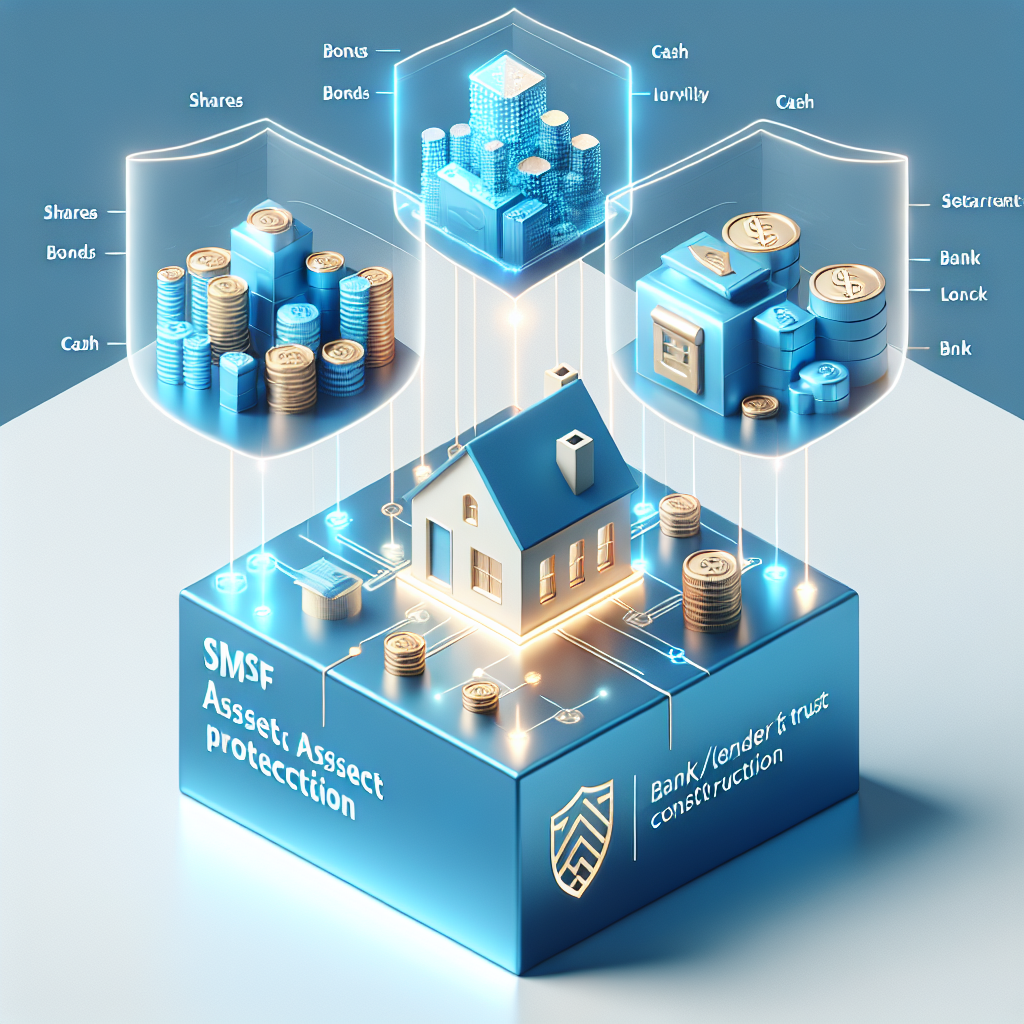
A limited recourse borrowing arrangement is essentially a specialized loan structure designed specifically for SMSFs. Under this arrangement, your SMSF trustee obtains a loan to purchase what’s called an “acquirable asset”—typically real estate. What makes this borrowing strategy particularly attractive is the built-in protection mechanism. If something goes wrong and your SMSF defaults on the loan, the lender’s claim is limited exclusively to the asset purchased with those borrowed funds. Your other SMSF assets remain completely protected, safely quarantined from the lender’s reach.
Think of it as a financial firewall. Sarah, a property investor from Melbourne, used an LRBA to purchase a commercial warehouse for her SMSF. When market conditions shifted unexpectedly and rental income dropped, she faced potential default. However, because she’d structured the purchase through an LRBA, her SMSF’s other investments—including shares, cash holdings, and a second property purchased without borrowing—remained completely untouchable by the lender. The limited recourse nature of the arrangement meant the lender could only look to the warehouse itself for recovery.
This protective feature makes LRBAs fundamentally different from traditional loans. In a standard borrowing arrangement, lenders have full recourse to all your assets if you default. With an LRBA, that recourse is deliberately limited, creating a buffer zone that protects the broader health of your retirement fund. For SMSF trustees who understand the power of leverage but respect the importance of risk management, this structure offers the best of both worlds.
The numbers tell a compelling story. According to industry data, limited recourse borrowing arrangements represent approximately 2.7% of total SMSF assets across Australia. While this might seem modest, it reflects thousands of trustees who’ve recognized that strategic borrowing—when done correctly—can accelerate their path to financial independence. These arrangements allow SMSFs to acquire assets they couldn’t afford outright, creating opportunities for diversification and growth that would otherwise remain out of reach.
The Critical Role of the Holding Trust
At the heart of every limited recourse borrowing arrangement sits a structure that many SMSF trustees initially find confusing: the holding trust, sometimes called a bare trust. Understanding this component is absolutely essential because it’s what makes the “limited recourse” aspect legally enforceable.
Here’s how it works. When your SMSF borrows money through an LRBA to purchase property, the legal title to that asset isn’t immediately held by your SMSF trustee. Instead, it’s held by a separate entity—the holding trust. Your SMSF trustee receives what’s called a “beneficial interest” in the asset, meaning your fund has all the economic benefits of ownership: rental income, capital appreciation, and the right to eventually acquire full legal title once the loan is repaid.
Why go through this seemingly complicated structure? The holding trust creates the legal separation necessary to limit the lender’s recourse. If the asset is held directly by your SMSF and you default, distinguishing between borrowed and non-borrowed assets becomes murky. The holding trust keeps everything crystal clear. The lender knows exactly which asset secures the loan, and that asset alone becomes the limit of their claim.
Let me paint a practical picture. David, an experienced SMSF trustee from Brisbane, wanted to purchase a residential investment property for his fund. He set up a bare trust to hold legal title to the property. The trust deed specified that the trustee of the bare trust held the property solely for the benefit of David’s SMSF. Meanwhile, David’s SMSF trustee gained the right to receive all rental income and would acquire legal ownership once the loan was fully repaid. This structure meant that when David’s SMSF paid down the loan over seven years, the lender’s security interest remained confined to that single property. His SMSF’s shares, bonds, and cash reserves were never exposed to lender claims.
However, compliance with superannuation laws demands careful attention to detail. The holding trust must be structured correctly from day one. The trust deed needs to clearly articulate that the custodian trustee holds legal title with no beneficial interest, while your SMSF holds the beneficial interest. Any deviation from this structure could jeopardize the limited recourse protection or create compliance issues with the Australian Taxation Office.
Asset restrictions also require careful consideration. Under current superannuation law, the asset acquired through an LRBA must remain a “single acquirable asset.” You can’t use the borrowed funds to purchase multiple separate properties or mix and match different asset types within the same LRBA structure. If you’re buying a commercial building, that’s your single asset. You can’t later add an adjacent parking lot under the same borrowing arrangement without potentially breaching compliance requirements.
The definition of “single asset” has some flexibility, though. If you’re purchasing a property that comes with fixed improvements—like a building permanently attached to the land—these generally count as part of the single asset. However, moveable items like furnishings or equipment typically don’t qualify as part of the acquirable asset under the LRBA. This distinction becomes particularly relevant when we examine borrowing restrictions and what you can actually finance.
Purpose and Practical Application of Borrowing Restrictions
Why does the law impose restrictions on SMSF borrowing in the first place? The answer lies in risk mitigation and the fundamental purpose of superannuation. Your super exists to provide for your retirement, not to serve as a speculative investment vehicle with unlimited leverage. The limited recourse borrowing arrangement framework acknowledges that controlled borrowing can enhance retirement outcomes while ensuring trustees can’t pile on excessive debt that threatens their financial security.
These borrowing restrictions create guardrails that benefit both trustees and the broader superannuation system. By limiting lender recourse to the purchased asset alone, the law ensures that an investment mistake doesn’t devastate your entire retirement nest egg. This protection becomes particularly valuable during economic downturns when property values may temporarily decline or rental income may drop.
Let’s walk through a real-world example to see how this plays out. Imagine you’re considering using an LRBA to purchase a residential investment property for your SMSF. You find a property listed at $600,000. Your SMSF has $200,000 available, and you plan to borrow the remaining $400,000 through a limited recourse borrowing arrangement.
First, you establish the holding trust structure with a bare trustee to hold legal title. You then apply for an SMSF loan from a specialized lender who understands the compliance requirements around limited recourse borrowing arrangements. Once approved, the lender advances $400,000, which combined with your SMSF’s $200,000 contribution, allows you to complete the purchase.
The property title is registered in the name of the bare trustee, but your SMSF trustee has the beneficial interest and controls all decisions about the property. You begin receiving rental income, which flows to your SMSF (not the bare trustee), and you use this income along with other SMSF contributions to service the loan repayments.
Now here’s where the furnishings question becomes important. The property comes with built-in wardrobes, kitchen cabinets, and fixed light fittings—these are all part of the single acquirable asset because they’re permanently attached. However, if you want to furnish the property with moveable items like sofas, beds, or freestanding appliances to increase rental appeal, you cannot use the LRBA borrowing to purchase these items. Why? Because they’re not part of the single acquirable asset structure. If you want to add furnishings, your SMSF would need to purchase them separately using existing fund cash, not borrowed money.
This restriction might seem frustrating at first, but it actually serves a protective purpose. By limiting what you can purchase with borrowed funds, the law ensures you maintain adequate liquidity within your SMSF to handle unexpected expenses, market fluctuations, or loan servicing challenges. It prevents over-leveraging and encourages prudent cash flow management.
The strategic approach to managing an LRBA involves careful planning around these restrictions. Successful SMSF investors budget not just for the property purchase but also for the ancillary costs they’ll need to cover from existing fund resources. They maintain cash reserves for property maintenance, insurance, council rates, and any furnishings or improvements that fall outside the single asset definition.
Aligning with Expertise and Empowerment
When navigating the complexities of limited recourse borrowing arrangements, the quality of your lending partner makes all the difference. This is where specialized SMSF lenders demonstrate their value through deep expertise, transparent practices, and genuine commitment to client success.
Consider the principles that should guide any quality SMSF lending relationship. Integrity means your lender provides honest assessments of what you can afford and whether an LRBA aligns with your overall retirement strategy. They don’t push products that generate commissions but fail to serve your interests. Instead, they take time to understand your financial situation, investment goals, and risk tolerance before recommending borrowing strategies.
Expertise becomes particularly crucial in the SMSF lending space because the regulatory environment is complex and constantly evolving. A lender with deep knowledge of SMSF compliance requirements can help you avoid costly mistakes that could trigger penalties from the ATO or compromise your fund’s complying status. They understand the nuances of holding trust structures, recognize what constitutes an acquirable asset, and can guide you through the documentation requirements that make your LRBA bulletproof from a compliance perspective.
For instance, when the ATO releases updated guidance on safe harbor rates for related party LRBA loans, specialized lenders immediately understand the implications. The 2025-26 safe harbor rates of 8.95% for real property and 10.95% for listed securities LRBAs aren’t just numbers—they’re benchmarks that help trustees avoid non-arm’s length income (NALI) compliance issues. A lender who stays current with these developments protects your interests proactively rather than reactively.
Empowerment through education represents another critical dimension. The best SMSF lending relationships involve continuous learning. Your lender should help you understand not just the mechanics of your current borrowing arrangement but also how market conditions, regulatory changes, or life circumstances might affect your strategy going forward.
This educational approach transforms the lending relationship from a simple transaction into an ongoing partnership. You’re not just getting a loan; you’re gaining a trusted advisor who helps you make informed decisions at every stage of your investment journey. When questions arise about refinancing, property improvements, or even unwinding an LRBA structure, you have expert guidance readily available.
The competitive advantage of working with specialized SMSF lenders extends to practical benefits like fast approval times. When your lender focuses exclusively on SMSF loans, they’ve streamlined their assessment processes around the specific documentation and criteria relevant to self-managed super funds. This specialization can translate to approval decisions within one to three business days rather than the weeks that traditional banks might require.
Moreover, specialized lenders often offer more competitive rates precisely because they understand the risk profile of SMSF lending. They recognize that SMSF trustees tend to be sophisticated investors with strong commitment to loan servicing. This understanding allows them to price loans more favorably. Competitive SMSF loan solutions starting from 6.24% principal and interest give trustees the financial flexibility to maximize their investment returns while maintaining manageable repayment obligations.
The relationship between specialized lending expertise and successful SMSF investing becomes clear when you look at outcomes. Trustees who work with knowledgeable lenders tend to structure their LRBAs more effectively, maintain better compliance records, and achieve stronger long-term investment performance. They benefit from advice that extends beyond the loan itself to encompass the broader strategy of building wealth through property investment within a compliant SMSF framework.
Building Your Strategic Property Investment Future
As we’ve explored throughout this article, limited recourse borrowing arrangements represent a sophisticated strategy that, when properly understood and executed, can significantly enhance your SMSF’s investment capabilities. The combination of leverage and protection they offer is difficult to replicate through other investment structures.
For SMSF trustees serious about building wealth through strategic property investment, LRBAs open doors that would otherwise remain closed. They allow you to acquire quality assets today rather than waiting years to accumulate sufficient cash. They enable diversification, letting you spread your retirement savings across multiple asset classes rather than keeping everything in equities or cash. And crucially, they provide this growth potential while maintaining the risk protections that should underpin every retirement investment strategy.
The success of your LRBA strategy hinges on several factors. First, careful property selection ensures you’re investing in assets with strong fundamentals—good location, solid rental demand, and potential for capital appreciation. Second, conservative loan-to-value ratios keep your debt servicing manageable even when income or market conditions fluctuate. Third, maintaining adequate cash reserves within your SMSF provides the buffer you need to handle unexpected costs or temporary rental vacancies.
Perhaps most importantly, success requires partnering with specialists who bring deep SMSF lending expertise to the table. The compliance landscape around limited recourse borrowing arrangements demands attention to detail that only comes from focused experience. Working with lenders who specialize in SMSF loans means accessing not just funding but also strategic guidance that protects your interests and maximizes your opportunities.
When you partner with specialists who embody integrity, expertise, and empowerment, you’re not just taking out a loan—you’re building a relationship that supports your financial goals over the long term. These partners understand that every SMSF trustee’s situation is unique, with different risk tolerances, time horizons, and investment objectives. They take time to craft solutions tailored to your specific circumstances rather than offering one-size-fits-all products.
The journey toward a comfortable retirement requires strategic thinking, careful planning, and sometimes the courage to leverage opportunities when they arise. Limited recourse borrowing arrangements provide the tool; specialized lending partners provide the expertise; and you, as an informed SMSF trustee, provide the vision for what you want your retirement to look like.
As you consider whether an LRBA might fit within your SMSF’s investment strategy, remember that the goal isn’t just to borrow money—it’s to strategically enhance your fund’s growth potential while maintaining the security your retirement deserves. For personalized guidance on structuring your LRBA, contact our SMSF lending specialists today. With proper structure, prudent property selection, and the right lending partner, a limited recourse borrowing arrangement can become the smart SMSF strategy that transforms your retirement fund from good to exceptional.
The path to financial independence in retirement isn’t always straightforward, but with the right tools and trusted partners, it becomes significantly more navigable. Whether you’re a seasoned property investor or exploring your first SMSF property purchase, understanding and properly implementing limited recourse borrowing arrangements can make all the difference in achieving the retirement lifestyle you’ve worked so hard to build.