For many Australian SMSF trustees, the ability to borrow money through their super fund represents an attractive opportunity to accelerate wealth creation. Limited Recourse Borrowing Arrangements, commonly known as LRBAs, allow Self-Managed Super Funds to leverage their existing capital to acquire investment assets—typically property—that might otherwise be beyond their immediate reach. But while the potential for enhanced returns sounds appealing, the question remains: is leveraging your super through limited recourse borrowing SMSF arrangements truly worth the risk?
Understanding Limited Recourse Borrowing Arrangements
At its core, a Limited Recourse Borrowing Arrangement is a specialized borrowing structure that enables an SMSF to take out a loan to purchase a single acquirable asset. The arrangement gets its name from the “limited recourse” nature of the loan—if the SMSF defaults, the lender can only recover the specific asset purchased with the borrowed funds, not the other assets held within the super fund.
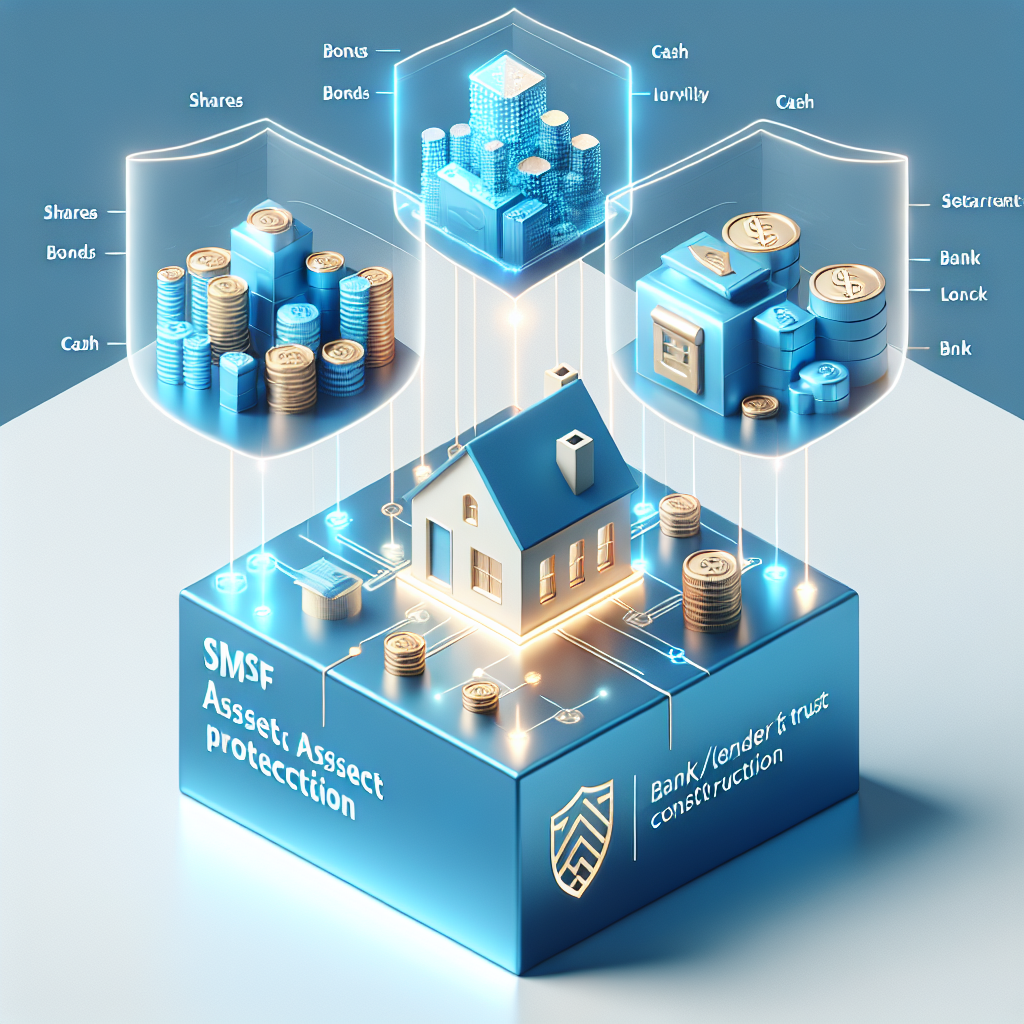
The structural components of an LRBA involve three key parties: the SMSF trustee (the borrower), a lender (often a specialist non-bank lender or bank), and a holding trust arrangement. The purchased asset must be held in a separate custodian trust until the loan is fully repaid. Once the debt is cleared, the asset transfers to the SMSF proper, becoming part of the fund’s overall investment portfolio.
This structure isn’t simply a creative financial engineering exercise. Every LRBA must align with the SMSF’s documented investment strategy and comply with the sole purpose test—the fundamental requirement that all super fund activities exist solely to provide retirement benefits to members. This means trustees cannot use limited recourse borrowing SMSF arrangements for personal gain or short-term speculation. The investment must demonstrate a clear connection to the fund’s long-term objective of building retirement wealth.
Consider Sarah, a 48-year-old business owner who established her SMSF five years ago. Her fund had accumulated $350,000, but property prices in her target investment area started at $600,000. Through a properly structured LRBA, Sarah’s fund borrowed $300,000 to purchase a commercial property, with the rental income covering loan repayments while building equity for her retirement. The arrangement worked because it aligned with her documented strategy of diversifying into property to generate stable income streams for her eventual retirement.
Navigating Legal and Compliance Requirements
The complexity of limited recourse borrowing SMSF arrangements demands meticulous attention to legal and compliance requirements. The Superannuation Industry (Supervision) Act 1993 (SIS Act) sets strict parameters around how these arrangements can be structured and maintained.
Before entering any LRBA, trustees must ensure their SMSF trust deed explicitly permits borrowing. Not all trust deeds include this provision, and attempting to borrow without proper authorization creates immediate compliance breaches. The trustee resolution authorizing the borrowing must be documented and retained as part of the fund’s records.
One of the most critical requirements involves maintaining arms-length transactions. Section 109 of the SIS Act requires that any investment transaction be conducted on an arm’s length basis—meaning the terms and conditions must reflect what independent parties would agree to in an open market. This becomes particularly important when dealing with related-party loans, where a family member or associated entity provides financing to the SMSF.
Take the example of Michael, who attempted to help his SMSF by providing a loan at an artificially low interest rate of 3% when market rates sat at 6.5%. While his intentions were good, the Australian Taxation Office identified this as a non-arm’s length arrangement. The rental income from the property purchased with this loan became subject to Non-Arm’s Length Income (NALI) provisions, taxed at the highest marginal rate of 45% rather than the concessional 15% SMSF rate. This single mistake cost Michael’s fund tens of thousands in additional tax.
The separate title requirement adds another layer of complexity. The asset purchased through an LRBA must be held in a custodian trust with its own separate title until the loan is fully repaid. This legal separation protects the SMSF’s other assets from creditor claims if the borrowing arrangement fails. The bare trust deed must be properly established, clearly identifying the SMSF as the beneficial owner while the trustee holds legal title.
Documentation extends beyond the initial setup. Trustees must maintain comprehensive records of all loan agreements, property valuations, rental arrangements, loan repayments, and any modifications to terms. Annual financial statements must separately identify LRBA-related assets and liabilities, and the fund’s investment strategy should be reviewed regularly to confirm ongoing alignment with the borrowing arrangement.
Weighing Benefits Against Risks
The appeal of limited recourse borrowing SMSF arrangements lies in several compelling advantages. Leverage allows trustees to control a larger asset with a smaller initial capital outlay, potentially amplifying returns when property values increase. If an SMSF with $400,000 borrows another $400,000 to purchase an $800,000 property that appreciates 5% annually, the gain of $40,000 represents a 10% return on the fund’s actual capital contribution.
Asset protection represents another significant benefit. The limited recourse nature means that if circumstances force a default, creditors cannot pursue the SMSF’s other assets—only the specific property securing the loan faces recovery action. This contrasts sharply with personal borrowing, where lenders typically can pursue all available assets to recover their money.
Control remains firmly with SMSF trustees, who make all decisions about property management, tenant selection, and eventual sale timing. This autonomy allows trustees to implement investment strategies that align precisely with their retirement timelines and income needs. When structured correctly, the arrangement also offers tax efficiency, with rental income taxed at just 15% in the accumulation phase and potentially tax-free once the fund enters pension phase.
Estate planning opportunities emerge as well. Property held within an SMSF passes to nominated beneficiaries according to binding death benefit nominations, potentially providing more control and tax advantages compared to property held in personal names.
However, these benefits come with substantial risks that demand careful consideration. Default risk sits at the forefront—if rental income proves insufficient to cover loan repayments and the fund lacks other liquid assets to bridge the gap, the SMSF may default, losing both the property and all equity contributed. Unlike personal mortgages where owners might negotiate hardship arrangements, SMSF lending operates in a more rigid regulatory environment.
The same leverage that amplifies gains also magnifies losses. If that $800,000 property drops 10% in value, the SMSF’s $400,000 equity shrinks to $320,000—a 20% loss on the actual capital invested. During the 2008 financial crisis, some Australian SMSF trustees watched their property investments decline sharply while still obligated to service their loans, creating severe financial stress.
Liquidity constraints pose ongoing challenges. Unlike shares that can be sold quickly, property transactions take months to complete. If the SMSF needs funds to meet benefit payments to retiring members, a property held under an LRBA cannot be easily accessed. The requirement to maintain sufficient liquid assets to cover both loan repayments and potential member benefits adds complexity to cash flow management.
Compliance challenges multiply under borrowing arrangements. The ATO actively monitors SMSF borrowing, and any missteps—whether in documentation, arms-length requirements, or investment strategy alignment—can trigger audits, penalties, and potential loss of the fund’s concessional tax treatment. The consequences of non-compliance can be devastating, with trustees facing personal penalties and members potentially losing access to their superannuation.
Higher costs accompany LRBA arrangements compared to traditional SMSF investments. Interest rates on SMSF loans typically run 1-2% higher than standard home loans, reflecting the specialized nature of the lending. Establishment fees, ongoing loan maintenance fees, additional accounting and audit costs, and legal fees for setting up holding trusts all erode returns. When these costs combine with property expenses like maintenance, insurance, and property management fees, the investment requires strong performance just to break even.
Related-party transactions introduce additional complexity and scrutiny. While purchasing property from a related party isn’t prohibited, the transaction must occur at market value, documented by independent valuation, with all terms reflecting arms-length conditions. The ATO’s increased focus on these arrangements means any deviation invites investigation.
Tax, GST, and Cost Considerations
Understanding the tax implications of limited recourse borrowing SMSF arrangements is essential for evaluating their viability. During the accumulation phase, rental income from LRBA properties is taxed at the concessional SMSF rate of 15%. Interest payments on the loan and other property expenses like repairs, maintenance, insurance, and property management fees are deductible against this income, reducing the fund’s tax liability.
Capital Gains Tax treatment offers significant advantages for long-term holdings. Properties held for more than 12 months qualify for a CGT discount, with the effective tax rate dropping to 10% in accumulation phase (15% tax rate with one-third discount). Once the SMSF enters pension phase, capital gains may become entirely tax-free, creating substantial tax savings on disposal.
However, the shadow of NALI rules looms over every LRBA. If any aspect of the arrangement—whether the loan terms, rental arrangements, or related-party dealings—fails to meet arms-length standards, the income generated may be taxed at 45% rather than the concessional rate. The ATO has demonstrated increasing willingness to apply these provisions, making strict compliance non-negotiable.
Stamp duty represents a significant upfront cost, varying by state but typically ranging from 3-5% of the property’s purchase price. A $500,000 property might incur $20,000-25,000 in stamp duty, immediately reducing the fund’s available capital. Some states offer concessions for certain property types or first-time buyers, but these rarely apply to SMSF purchases.
Loan establishment fees for SMSF borrowing typically range from $800-1,500, with ongoing annual loan maintenance fees adding another $300-600 per year. Legal costs for establishing the bare trust arrangement add $1,500-3,000 to initial setup expenses. Annual accounting and audit fees increase by $1,000-2,000 when LRBAs are involved, reflecting the additional complexity and documentation requirements.
GST considerations primarily affect commercial property investments, where the fund may be able to claim GST input tax credits on the purchase price and qualify as a going concern. However, residential property investors cannot access these benefits, and the going concern rules require careful structuring to ensure the sale includes all elements necessary for continued operation.
Strategic applications for limited recourse borrowing SMSF arrangements center on property acquisition as a wealth-building tool. The combination of rental income, property appreciation, and forced savings through loan repayment creates multiple avenues for retirement wealth accumulation. For trustees with long investment horizons—typically 10+ years until retirement—the power of compound growth and leverage can produce substantial outcomes.
Portfolio diversification represents another strategic application. Many SMSFs hold predominantly share investments, creating concentration risk in equity markets. Adding property through an LRBA introduces an alternative asset class with different return characteristics and risk profiles, potentially reducing overall portfolio volatility.
Retirement planning benefits emerge particularly clearly for trustees in their 40s and 50s. The ability to acquire property now, build equity through loan repayments, and potentially transition to pension phase with an unencumbered asset provides a foundation for retirement income through rental yields or strategic property sales.
Practical Setup Checklist for Trustees
For trustees considering limited recourse borrowing SMSF arrangements, thorough preparation prevents costly mistakes. Begin by confirming your SMSF trust deed explicitly permits borrowing. If your deed predates 2007 or doesn’t include borrowing provisions, you’ll need to update it before proceeding—a process that typically costs $330-880 through specialized SMSF service providers.
Prepare or update your investment strategy to explicitly address the proposed borrowing arrangement. Document why property investment aligns with your fund’s objectives, how the leverage supports retirement goals, and how you’ll manage the associated risks. Include cash flow projections showing how the fund will service the loan while meeting other obligations.
Establish the bare trust or holding trust arrangement through a qualified legal professional. This separate trust structure must correctly identify the SMSF as beneficial owner and include provisions for asset transfer once the loan is repaid. Cutting corners on legal documentation creates compliance vulnerabilities that can prove extremely costly.
Obtain an independent property valuation before finalizing any purchase, particularly for related-party transactions. This valuation provides essential evidence that the purchase price reflects market value, protecting against future ATO scrutiny. Budget $400-800 for a comprehensive valuation report.
Secure pre-approval from a specialized SMSF lender before committing to a specific property. Lenders like Aries Financial, with deep expertise in limited recourse borrowing SMSF arrangements, can provide fast approvals and competitive rates starting from 6.24%, helping trustees move quickly when opportunities arise. Standard banks often lack the specialized knowledge required for SMSF lending, potentially creating delays or declining applications that specialist lenders would approve.
Budget comprehensively for all associated costs. Beyond the property purchase price, account for stamp duty (3-5% of purchase price), loan establishment fees ($800-1,500), legal costs for the bare trust ($1,500-3,000), property inspections ($300-600), insurance (annual ongoing cost), and increased accounting/audit fees ($1,000-2,000 annually). Maintaining a buffer of 10-15% above these estimates provides protection against unexpected costs.
Risk mitigation strategies should be implemented from day one. Maintain adequate liquid reserves within the SMSF to cover 12-18 months of loan repayments, protecting against rental vacancies or income disruptions. Consider appropriate insurance coverage, including landlord insurance, building insurance, and potentially loss of rent insurance.
Implement regular monitoring procedures, reviewing cash flow monthly, conducting annual investment strategy reviews, and ensuring documentation remains current. Establish relationships with qualified SMSF advisors, accountants, and auditors who understand the complexities of limited recourse borrowing SMSF arrangements and can provide ongoing guidance.
Red Flags That Warrant Caution
Certain situations should trigger serious reconsideration of LRBA arrangements. Insufficient cash flow represents the clearest warning sign—if your SMSF cannot comfortably service loan repayments from existing income plus rental yield while maintaining reserves, the risk of default becomes dangerously high. Remember that rental properties experience vacancies, require maintenance, and sometimes face extended periods without income.
Trustee inexperience creates elevated risk. Managing an SMSF alone demands financial literacy and administrative diligence. Adding a leveraged property investment multiplies these demands exponentially. Trustees unfamiliar with property investment, landlord obligations, or superannuation compliance face a steep learning curve where mistakes carry serious consequences.
Complex related-party transactions deserve particular scrutiny. While potentially beneficial, these arrangements attract intensive ATO oversight. Purchasing property from yourself, family members, or related entities requires meticulous documentation, independent valuations, and strict adherence to arms-length principles. The margin for error is virtually non-existent.
Short time horizons to retirement should raise concerns. If you’re within 5-7 years of needing to draw on your super, the risks of an LRBA may outweigh potential benefits. Property markets can remain flat or decline for extended periods, and being forced to sell during unfavorable market conditions to meet benefit payments can crystallize losses.
Inadequate professional support represents another red flag. Attempting to navigate LRBA complexities without qualified advisors—including SMSF specialists, property professionals, and compliance experts—substantially increases risk. The cost of proper advice is invariably lower than the cost of correcting compliance breaches or recovering from poor investment decisions.
The path to successful limited recourse borrowing SMSF arrangements is paved with thorough preparation, robust professional advice, and ongoing vigilance. While leverage offers genuine opportunities to enhance retirement outcomes, it also amplifies risks that can derail retirement plans entirely. Trustees must approach these arrangements with clear eyes, understanding both the mechanics and the pitfalls.
At Aries Financial, we’ve seen countless trustees benefit from well-structured LRBA arrangements that align with their retirement objectives and risk tolerance. We’ve also witnessed the consequences when trustees proceed without adequate understanding or preparation. The difference invariably lies in the quality of planning, the strength of professional support, and the realism of expectations.
Is leveraging your super through limited recourse borrowing worth the risk? The answer depends entirely on your individual circumstances—your time horizon, risk tolerance, cash flow capacity, investment knowledge, and access to qualified support. For trustees who approach LRBAs with appropriate caution, thorough preparation, and realistic expectations, these arrangements can serve as powerful wealth-building tools. For those who rush in without adequate consideration, they can become sources of financial stress and compliance nightmares that undermine rather than enhance retirement security.