In the evolving landscape of retirement planning, Self-Managed Super Fund (SMSF) trustees are discovering a powerful yet often misunderstood tool for building wealth: loan flexibility. While traditional superannuation funds offer limited investment options, SMSFs provide trustees with unprecedented control over their retirement savings. The real game-changer, however, lies in how savvy investors are leveraging flexible loan solutions to amplify their wealth-building potential without compromising their financial stability.
Loan flexibility within the SMSF framework isn’t about taking on excessive debt or chasing high-risk returns. Instead, it’s about strategic positioning—using tailored borrowing arrangements that align with your fund’s cash flow, investment timeline, and long-term retirement goals. Smart SMSF investors understand that flexibility in repayment schedules, interest structures, and loan terms can mean the difference between a stagnant portfolio and one that grows consistently over decades.
Consider this: Australia’s property market has historically delivered strong returns, yet many SMSF trustees lack the capital to acquire investment-grade assets outright. This is where flexible loan solutions bridge the gap. By accessing competitive SMSF financing—with rates starting from as low as 6.24% for principal and interest loans—trustees can diversify their portfolios beyond traditional shares and managed funds, positioning their retirement savings in tangible assets that generate both capital growth and rental income.
The key benefit extends beyond mere asset acquisition. Flexible loans allow SMSF investors to maintain liquidity within their fund while simultaneously building equity in property investments. This dual advantage means trustees can respond to market opportunities, meet compliance obligations, and ensure their fund remains healthy and productive throughout the accumulation phase and into retirement.
Understanding Limited Recourse Borrowing Arrangements: The Foundation of SMSF Lending
At the heart of SMSF loan flexibility lies the Limited Recourse Borrowing Arrangement, or LRBA. Introduced to allow superannuation funds to participate in property markets, LRBAs operate under a specific legal framework outlined in Section 67A of the Superannuation Industry (Supervision) Act. This structure enables your SMSF to borrow funds from a third-party lender to purchase a single acquirable asset—most commonly residential or commercial property—while critically limiting the lender’s recourse to only that financed asset.
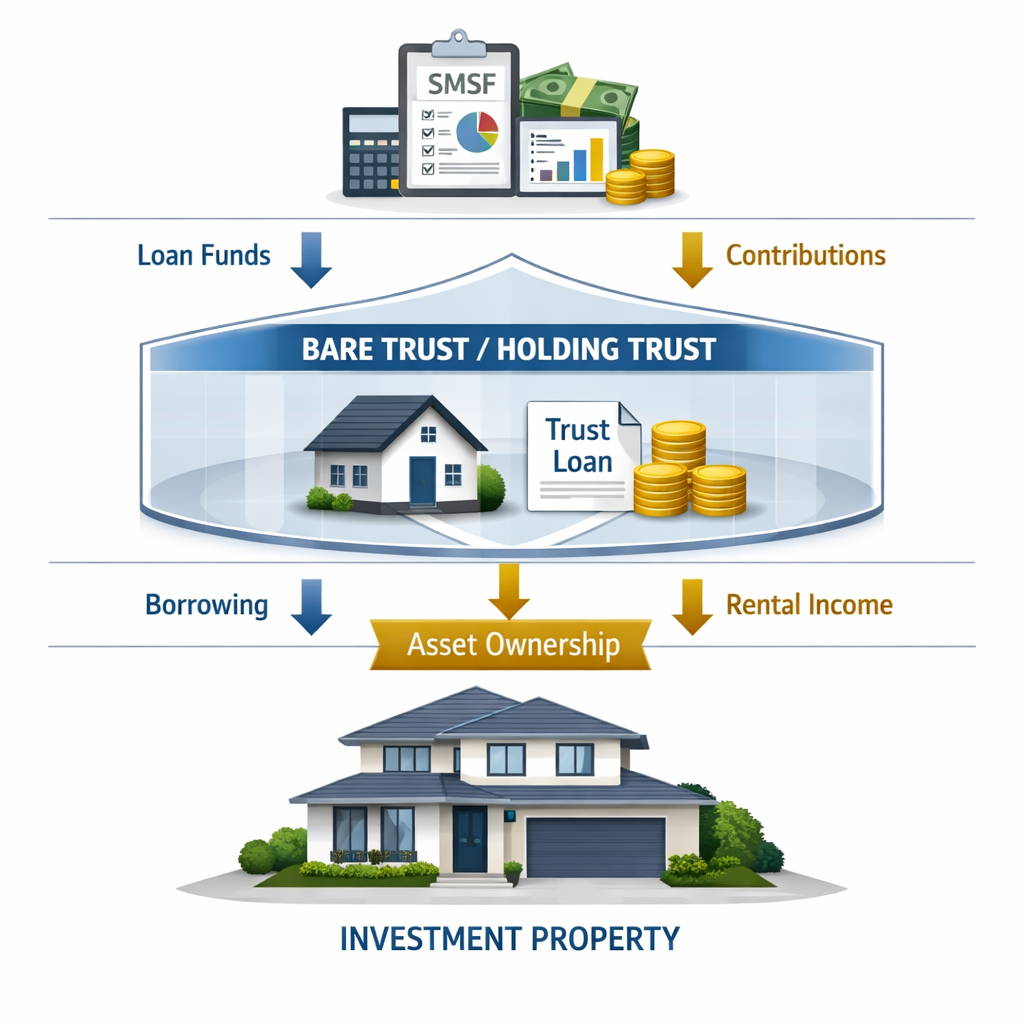
Here’s how the mechanics work in practice: When your SMSF trustee secures an LRBA, the borrowed funds are used to purchase an asset that’s held in a separate trust—often called a “bare trust” or “holding trust”—distinct from your main SMSF structure. Your SMSF makes loan repayments from fund income and contributions, gradually acquiring beneficial ownership of the asset. Once the loan is fully repaid, the asset transfers completely into the SMSF’s name.
The “limited recourse” component provides crucial protection. If your SMSF defaults on the loan, the lender can only claim the specific asset used as security—they cannot pursue other assets within your superfund. This ring-fencing creates a safety net that traditional property investment loans don’t offer, as explained in detail by the ATO’s official LRBA guidelines, making LRBAs a more controlled way to leverage debt within your retirement strategy.
While residential and commercial properties dominate LRBA applications, the framework extends to other acquirable assets. Some specialized SMSF lenders offer financing for industrial properties, agricultural land, and even certain business real property arrangements. The critical requirement is that the asset must remain a “single acquirable asset”—you cannot use LRBA funds to purchase multiple properties in one transaction, nor can you make improvements to the property using borrowed money. Any renovations or developments must be funded from your SMSF’s existing cash reserves.
This structure may seem restrictive, but it actually promotes disciplined investment practices. By focusing on acquiring quality assets that can generate income to service the loan, SMSF trustees develop sustainable investment strategies rather than speculative approaches. The LRBA framework encourages long-term thinking—precisely the mindset that successful retirement planning requires.
The Features That Make Loan Solutions Truly Flexible
What separates ordinary SMSF loans from truly flexible financing solutions? The answer lies in the array of customizable features that allow trustees to align borrowing with their fund’s unique circumstances and investment objectives.
Repayment frequency stands as one of the most practical flexibility features. While standard mortgages typically require monthly repayments, sophisticated SMSF lenders offer weekly, fortnightly, or monthly options. This might seem like a minor detail, but it can significantly impact cash flow management. For example, if your SMSF receives rental income fortnightly, aligning loan repayments to the same schedule ensures funds are available when needed, reducing the risk of payment delays or the need to maintain excessive cash buffers.
Interest rate structures present another dimension of flexibility. SMSF investors can choose between fixed-rate loans, which provide certainty over repayment amounts for a set period, or variable-rate loans, which fluctuate with market conditions but often start at lower rates. Some lenders also offer split loans, where portions of the borrowing carry different interest treatments. This allows trustees to balance stability against the potential to capitalize on falling interest rates.
The current SMSF lending market offers competitive rates, with some specialized non-bank lenders providing residential LRBA financing from 6.99% and commercial property loans from 7.49%. These rates, combined with the right features, can make property investment through your superfund remarkably accessible.
Loan terms represent perhaps the most strategic element of flexibility. SMSF loans typically extend to 15, 20, 25, or even 30 years—significantly longer than many commercial lending arrangements. Longer loan terms reduce periodic repayment amounts, easing cash flow pressure on your fund. This becomes especially valuable if your SMSF is in the accumulation phase with members still years away from retirement. The extended timeline allows the investment to mature, rental income to grow, and capital appreciation to compound before the fund needs to transition to pension phase.
Smart SMSF investors also look for loan products that permit additional repayments without penalties. This feature enables trustees to pay down debt faster when the fund experiences strong contribution periods or when investment income exceeds projections. Conversely, some flexible loan solutions include redraw facilities, allowing trustees to access previously made additional payments if the fund faces unexpected expenses or compliance costs.
Interest-only repayment periods offer yet another layer of strategic flexibility. While principal-and-interest loans build equity faster, interest-only arrangements keep periodic repayments low, preserving capital within the fund for other investment opportunities or compliance requirements. This approach works particularly well in the early years of property investment when rental yields might be modest or when the fund is managing multiple investment obligations simultaneously.
Funding Strategies and Cash Flow: The Practical Realities
Implementing flexible loan solutions requires more than just understanding features—it demands careful consideration of funding strategies and ongoing cash flow management. SMSF trustees must ensure their fund can service debt obligations while maintaining sufficient liquidity for operational expenses, compliance costs, and benefit payments as members approach retirement.
The concept of gearing—using borrowed funds to invest—introduces considerations of positive and negative gearing into SMSF strategy. Positive gearing occurs when the rental income from your investment property exceeds all associated costs, including loan interest, property management fees, insurance, and maintenance. This scenario generates surplus cash flow that can be retained within the fund, used to accelerate loan repayment, or reinvested in additional assets.
Negative gearing, conversely, happens when investment costs exceed rental income. The shortfall must be covered from other sources within your SMSF—typically member contributions or income from other investments. While negative gearing can deliver significant tax benefits in personal property investment due to offset against employment income, the dynamics differ within an SMSF context. Since concessional contributions are taxed at just 15%, and investment earnings within the fund also face this favorable rate, the tax advantages of negative gearing are less pronounced than in personal investing.
This doesn’t mean negative gearing within an SMSF is inadvisable—it simply requires careful planning. If your fund has multiple income streams, such as dividends from share portfolios or distributions from managed funds, these can support a negatively geared property investment. The strategy works best when you’re confident that capital appreciation will outweigh the temporary cash flow deficit, and when your fund has sufficient contribution capacity to cover shortfalls without straining member finances.
Diversification becomes absolutely critical when introducing debt into your SMSF structure. Relying solely on rental income from a single property to service an LRBA creates vulnerability to vacancy periods, market downturns, or unexpected property expenses. Smart SMSF investors maintain diversified portfolios, ensuring their fund holds a mix of growth assets, income-producing investments, and defensive positions that can collectively support loan obligations even if one asset underperforms.
Cash flow modeling should extend beyond simple income-versus-expense calculations. Trustees need to project scenarios that account for interest rate increases (even with fixed-rate loans, rates eventually reset), potential rental vacancies of three to six months, unexpected property maintenance costs, and the rising compliance expenses that naturally accompany SMSF administration. Building these contingencies into your funding strategy prevents situations where loan defaults threaten your fund’s complying status or force the premature sale of assets at disadvantageous times.
Professional package benefits and relationship-based pricing offered by some SMSF lenders can significantly enhance cash flow management. These arrangements often bundle competitive rates with offset accounts, professional expense rebates, and priority service—features that collectively reduce the cost of borrowing and improve the fund’s overall financial efficiency.
Navigating Tax and Regulatory Requirements
The flexibility of SMSF loan solutions comes with equally important responsibilities around tax compliance and regulatory adherence. Understanding these requirements isn’t optional—it’s the foundation upon which successful SMSF property investment is built.
The Australian Taxation Office maintains strict oversight of SMSFs, and any borrowing arrangement must comply with both superannuation legislation and tax law. The fundamental requirement is that your SMSF’s trust deed explicitly permits borrowing through LRBAs. Not all trust deeds include this provision, particularly older documents created before the introduction of LRBA legislation. Before pursuing any loan application, trustees must confirm their deed allows borrowing, and if necessary, arrange for deed amendments through their SMSF administrator or legal advisor.
The “sole purpose test” represents the cornerstone of all SMSF activities, including property investment through borrowed funds. This test requires that your fund is maintained solely to provide retirement benefits to members (or benefits to dependents upon member death). Any use of SMSF assets that provides current-day benefits to members or their relatives violates this test and can result in significant penalties, including loss of concessional tax treatment.
In practical terms, this means the property your SMSF purchases through an LRBA cannot be accessed or used by members or their relatives, a critical compliance requirement detailed in our comprehensive compliance guide. You cannot holiday in an SMSF-owned beach house, nor can your adult children rent an SMSF property at below-market rates. The investment must be conducted at arm’s length, with rental arrangements and property management handled as purely commercial transactions.
Lending regulations add another layer of requirements. SMSFs are prohibited from lending money to members or their relatives, regardless of loan terms or security arrangements. Similarly, your SMSF cannot provide financial assistance, including guarantees or security, to members or related parties. While your SMSF is borrowing from external lenders to build its portfolio, it cannot extend loans outward to connected parties.
The ATO has established safe harbor rates for LRBAs to prevent related-party lending arrangements from being structured with non-commercial interest rates. For the 2025-26 financial year, these rates are set at 8.95% for real property acquisitions and 10.95% for other acquirable assets. While most SMSF trustees borrow from commercial lenders at market rates (often significantly below these safe harbor benchmarks), those engaging in related-party lending must ensure their arrangements meet or exceed these minimum rates to avoid compliance issues.
Tax treatment within SMSFs differs substantially from personal property investment, creating both advantages and considerations. During the accumulation phase, rental income and capital gains are taxed at the concessional rate of 15%, with capital gains eligible for a one-third discount (resulting in an effective 10% rate) if assets are held for more than twelve months. Once the fund transitions to pension phase, investment earnings become entirely tax-free—a remarkable advantage that makes the early-stage cash flow challenges of LRBA investment worthwhile for long-term wealth building.
Compliance doesn’t end with establishing the loan correctly. SMSF trustees must maintain meticulous records of all transactions, obtain annual audits from approved SMSF auditors, and submit complying annual returns to the ATO. The costs of administration—typically ranging from $2,000 to $4,000 annually for funds with property holdings—must be factored into cash flow projections and overall investment viability assessments.
Weighing the Advantages Against the Risks
Every investment strategy carries both opportunities and challenges, and flexible SMSF loan solutions are no exception. Understanding both sides of this equation enables trustees to make informed decisions aligned with their risk tolerance and retirement objectives.
The advantages begin with leverage itself. By borrowing to invest, your SMSF can acquire assets worth significantly more than its current cash holdings, amplifying both potential returns and wealth accumulation. A fund with $250,000 in cash might purchase a single modest property outright, but with an LRBA, that same fund could potentially acquire property worth $500,000 or more, doubling the asset base available to generate returns.
Asset diversification represents another substantial benefit. Many SMSFs remain heavily concentrated in listed securities—shares and managed funds—creating exposure to market volatility. Adding property through flexible loan arrangements introduces an asset class with different risk characteristics, rental income stability, and inflation-hedging properties. This diversification can smooth overall fund performance and reduce volatility during market downturns.
The tax advantages within SMSFs magnify over time. While paying 15% tax on rental income during accumulation might seem modest compared to the potential 47% marginal rate in personal property investment, the real magic happens in pension phase. Once members retire and the fund begins paying pensions, investment earnings become completely tax-free. This means rental income flows through untouched, and when the property is eventually sold, capital gains attract zero tax—creating a powerful wealth preservation mechanism.
However, these advantages must be balanced against legitimate risks and challenges. Cash flow pressure tops the list of concerns. Unlike diversified share portfolios that can be partially liquidated quickly if funds are needed, property investments are illiquid. If your SMSF faces unexpected benefit payment obligations or compliance costs while holding a negatively geared property, the fund may struggle to meet its obligations without forced asset sales at potentially unfavorable times.
The risk of property market downturns cannot be ignored. While Australian property has delivered strong long-term returns, regional markets experience cycles of growth and contraction. An SMSF that purchases at a market peak or in a declining area may face years of underperformance, with the property failing to appreciate while the fund continues servicing debt obligations.
Compliance costs and administrative complexity increase substantially when your SMSF holds debt-financed property. Beyond standard SMSF administration, you’ll face property-specific expenses including council rates, insurance, property management fees, maintenance reserves, and potential vacancy costs. The separate trust structure required for LRBAs adds legal and accounting expenses. These costs can exceed $5,000 annually before even accounting for loan interest, making LRBA arrangements most suitable for funds with substantial asset bases.
Regulatory risk exists, though it’s manageable with proper professional guidance. The ATO regularly reviews SMSF compliance, and errors in structuring or operating LRBAs can result in penalties ranging from administrative sanctions to complete loss of the fund’s complying status—a catastrophic outcome that would subject the entire fund balance to top marginal tax rates.
Perhaps most critically, LRBAs require long-term commitment. Unlike share investments that can be adjusted quarterly or annually, property holdings demand multi-year horizons to justify transaction costs and allow market appreciation to materialize. Trustees must be confident in their fund’s ability to service debt and hold the asset through market cycles—typically a minimum commitment of five to seven years, though many successful SMSF property investors maintain holdings for fifteen years or longer.

Practical Implementation: Your Roadmap to SMSF Loan Success
Transforming the concept of flexible loan solutions into practical reality requires a systematic approach. SMSF trustees benefit from following a structured implementation process that addresses legal, financial, and operational considerations.
The first essential step involves reviewing your SMSF trust deed to confirm borrowing is permitted. As mentioned earlier, not all trust deeds include LRBA provisions, and attempting to borrow without proper deed authority can invalidate the arrangement and trigger compliance breaches. If your deed requires updating, engage your SMSF administrator or specialized legal advisor to arrange appropriate amendments before proceeding with any loan applications.
Simultaneously, evaluate your fund’s investment strategy—the document that guides all SMSF investment decisions. This strategy must be reviewed annually and updated whenever circumstances change. Introducing property investment through borrowed funds represents a significant strategic shift that should be formally documented, including assessment of how the investment aligns with member retirement objectives, risk tolerance, and overall portfolio diversification goals.
With documentation confirmed, the next phase involves engaging with suitable lenders. Not all financial institutions offer SMSF lending, and among those that do, product features, rates, and service quality vary substantially. Some trustees work with traditional banks that offer SMSF products within their wider lending portfolios, while others prefer specialized non-bank SMSF lenders who focus exclusively on this market segment.
Specialized SMSF lenders often provide distinct advantages including higher approval rates for complex situations, flexible income assessment that acknowledges the unique nature of superfund cash flow, and dedicated relationship managers who understand SMSF compliance intricacies. These lenders may also offer faster approval timeframes—often one to three business days for straightforward applications—enabling trustees to act quickly when attractive property opportunities arise.
Decision-making criteria for lender selection should extend beyond interest rates alone. Consider the full package: What repayment frequency options are available? Does the loan include offset accounts or redraw facilities? Are there penalty-free additional repayment provisions? What is the maximum loan-to-value ratio offered? Does the lender require extensive asset holdings as a prerequisite, or will they consider smaller funds with strong contribution capacity?
Most SMSF lenders require minimum fund assets between $200,000 and $250,000, ensuring the fund maintains sufficient liquidity and can meet ongoing compliance obligations. They’ll also assess your fund’s ability to service loan repayments, considering current income, expected contributions, and other investment returns. Preparing comprehensive financial documentation—including recent fund financial statements, tax returns, and member contribution history—streamlines the approval process and demonstrates professional fund management.
Once lender selection is complete and pre-approval obtained, you’ll need to establish the holding trust structure required for LRBA compliance. This typically involves engaging a legal professional experienced in SMSF property transactions to create the bare trust documentation, ensure proper security arrangements, and coordinate settlement procedures. While this adds upfront cost, it’s a critical investment in compliance that protects your fund’s status.
Property selection deserves careful analysis beyond standard investment due diligence. Since SMSF property cannot be personally used and must be maintained solely for retirement purposes, focus on investment-grade assets with strong rental demand, solid capital growth prospects, and low maintenance requirements. Consider engaging quantity surveyors for depreciation schedules—while the SMSF cannot claim personal tax deductions, depreciation reduces the fund’s taxable income, improving overall returns.
Following settlement, implement robust governance processes. Establish systematic procedures for loan repayment management, rental income processing, property expense tracking, and regular fund monitoring. Engage qualified SMSF auditors annually, maintain meticulous records of all transactions, and ensure timely submission of all compliance documentation to the ATO.
Regular strategy reviews—ideally annually, but at minimum every two to three years—allow trustees to assess whether the LRBA continues serving the fund’s objectives. As members approach retirement, consider whether the loan should be accelerated to reduce debt before pension phase, or whether maintaining leverage remains optimal given the fund’s overall position.
Building Your Retirement Future With Strategic Flexibility
The journey toward retirement security extends across decades, requiring strategies that balance current constraints with future aspirations. Flexible loan solutions within the SMSF framework represent more than mere financing mechanisms—they’re strategic tools that empower trustees to optimize investment timing, diversify holdings, and accelerate wealth accumulation in ways that align with each fund’s unique circumstances.
The SMSFs that thrive over coming decades will be those whose trustees embrace informed, strategic approaches to leverage. This means understanding that flexibility isn’t about maximizing debt or chasing speculative returns, but rather about accessing the right borrowing structure, with appropriate features, at the optimal time in your fund’s lifecycle. It’s about recognizing that loan flexibility—whether through varied repayment schedules, competitive interest structures, or extended loan terms—provides options that allow your fund to navigate market cycles, member life changes, and evolving retirement objectives.
At Aries Financial, our philosophy centers on empowering SMSF trustees through expertise, integrity, and innovative financial solutions. We understand that your superannuation represents more than numbers on a statement—it’s the foundation of your retirement lifestyle, the security of your family’s future, and the culmination of decades of disciplined saving. That understanding drives our commitment to providing not just competitive lending rates starting from 6.24%, but comprehensive support throughout your SMSF property investment journey.
Our specialized focus on SMSF lending means we’ve developed deep expertise in the compliance requirements, strategic considerations, and practical implementation challenges that trustees face. We maintain fast approval timeframes because we recognize that property opportunities don’t wait for lengthy bureaucratic processes. We offer relationship-based pricing because we believe long-term partnerships deliver better outcomes than transactional interactions.
Most importantly, we’re committed to education and transparency. Building wealth through strategic SMSF investment requires understanding—understanding of how LRBAs work, what flexibility truly means in practical terms, how to balance opportunity against risk, and how to implement solutions that remain robust across changing market conditions and regulatory environments.
The path to retirement wealth doesn’t require breaking the bank—it requires breaking through traditional thinking about what’s possible with strategic leverage, professional guidance, and flexible financial solutions tailored to your fund’s specific needs. Whether you’re an experienced SMSF trustee considering your first property investment or a seasoned investor seeking to refinance existing holdings under more favorable terms, the landscape of loan flexibility offers opportunities worth exploring.
Your retirement future deserves more than passive investment strategies that leave wealth accumulation to chance. It deserves the active, informed approach that flexible SMSF loan solutions enable—the approach that smart investors across Australia are already using to build substantial retirement wealth without compromising their fund’s financial stability or compliance standing.
The question isn’t whether loan flexibility can enhance your SMSF strategy—it’s whether you’re ready to explore how the right lending solution, properly implemented with expert guidance, might transform your retirement trajectory. At Aries Financial, we’re here to help you answer that question and, if appropriate, navigate the implementation journey with confidence, clarity, and the strategic expertise that successful SMSF investing demands.