Self-Managed Super Fund trustees face a critical decision when considering borrowing to expand their investment portfolio. The ability to smsf borrow through Limited Recourse Borrowing Arrangements (LRBA) represents both an opportunity and a responsibility that demands careful navigation of legal frameworks and compliance requirements.
Limited Recourse Borrowing Arrangements have transformed how SMSF trustees approach property investment within their retirement funds. Since the introduction of this borrowing mechanism, thousands of Australian trustees have leveraged their super to acquire investment properties, commercial real estate, and other valuable assets. However, the power to borrow comes with strict legal boundaries that every trustee must understand before signing any loan agreement.
The significance of understanding your legal rights cannot be overstated. When you smsf borrow, you’re not just taking out a standard mortgage—you’re entering a specialized lending structure governed by superannuation law, trust law, and tax regulations. A single misstep can result in substantial penalties, loss of tax concessions, or even disqualification of your entire fund. For trustees managing their retirement savings, these risks demand thorough preparation and knowledge.
Before committing to an LRBA, trustees must grasp the fundamental legal rights that protect their fund while acknowledging the restrictions that limit their borrowing capacity. This knowledge forms the foundation for making informed investment decisions that align with both retirement goals and legal obligations. Understanding SMSF compliance fundamentals is essential before entering any borrowing arrangement. The lending restrictions aren’t arbitrary barriers—they exist to safeguard members’ retirement interests and maintain the integrity of the superannuation system.

Understanding the LRBA Structure and Asset Protection
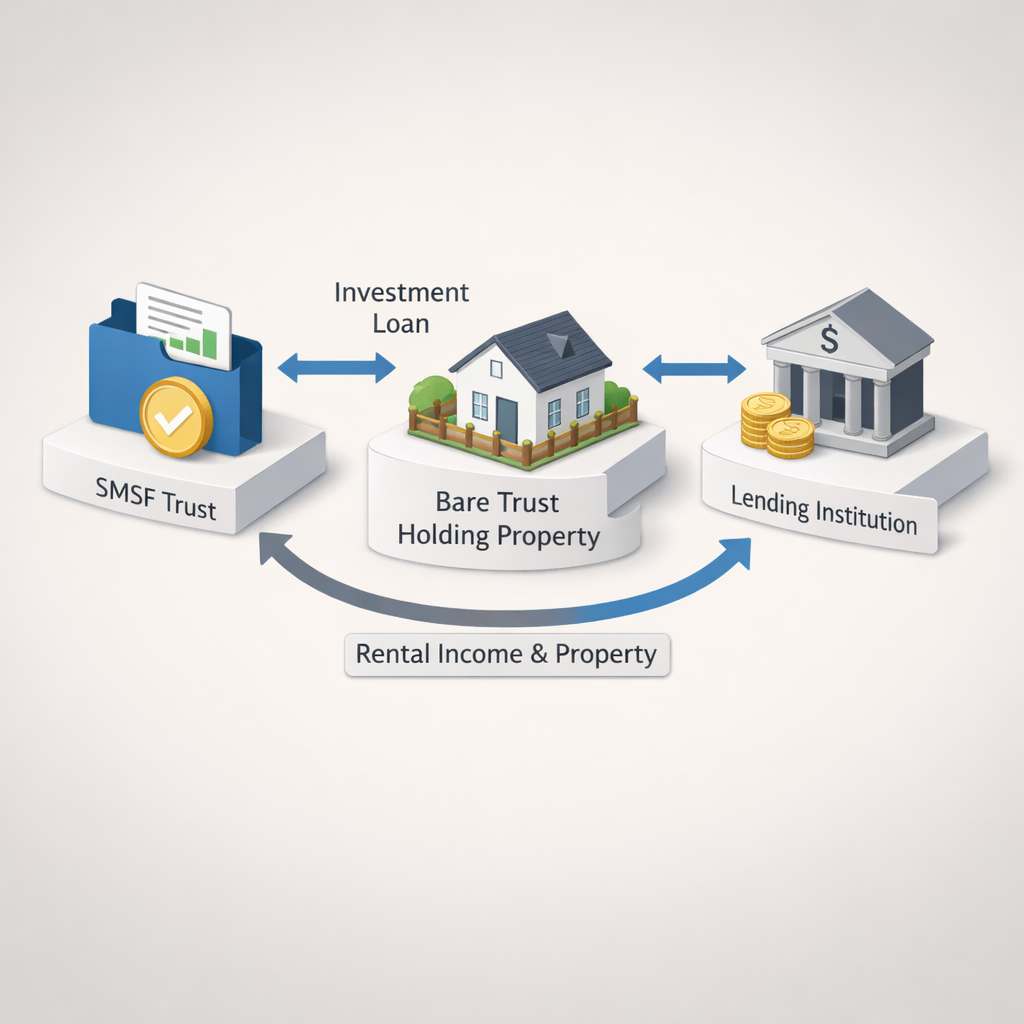
The legal structure of a Limited Recourse Borrowing Arrangement involves multiple parties and carefully defined roles. At its core, an LRBA requires the establishment of a separate trust—commonly called a holding trust or bare trust—that sits between the SMSF and the purchased asset.
Here’s how the structure works in practice. When your SMSF wants to smsf borrow to purchase property, the fund doesn’t hold legal title to the asset directly. Instead, a separate trustee (the custodian) holds the legal ownership on behalf of your SMSF. Your fund holds the beneficial interest, meaning it enjoys all the benefits of ownership—rental income, capital growth, and tax deductions—but without direct legal title until the loan is fully repaid.
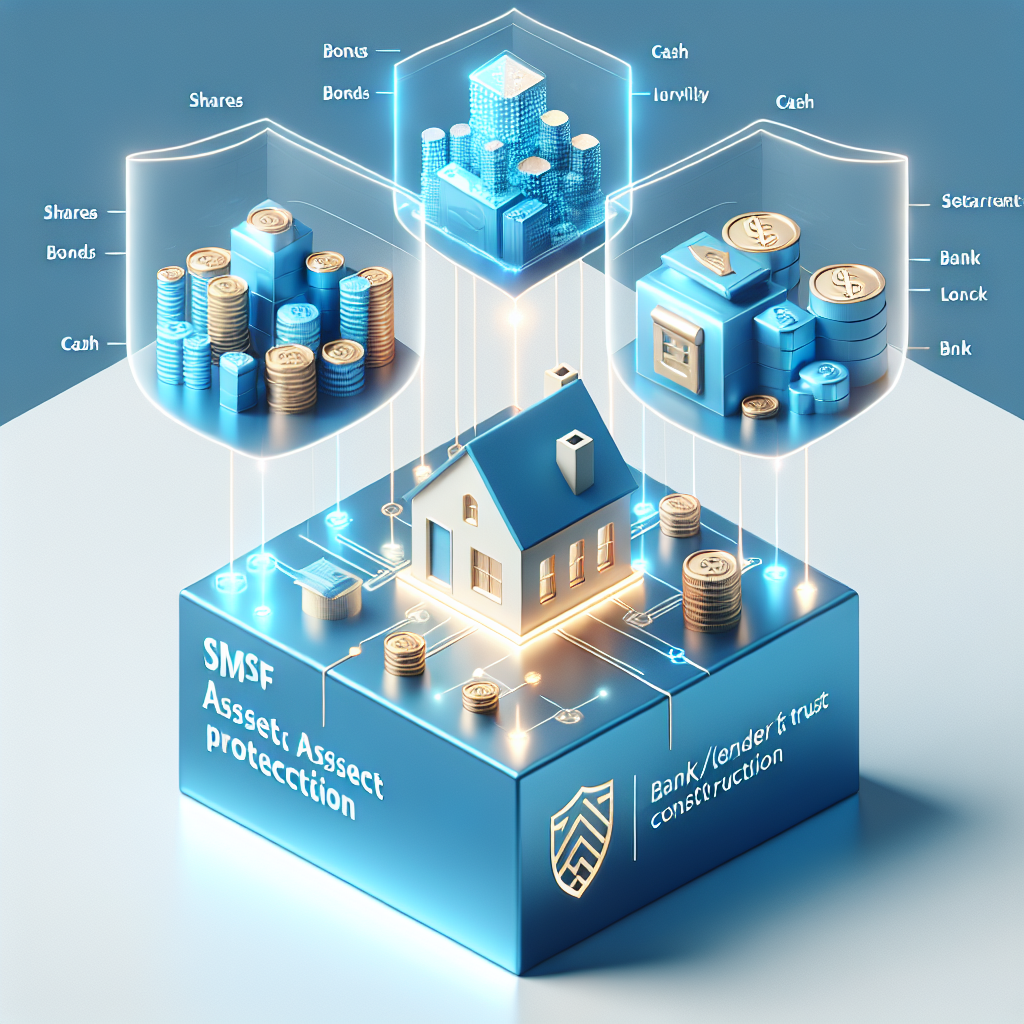
This structure creates a protective barrier for your SMSF’s other assets. The “limited recourse” element means that if your fund defaults on the loan, the lender’s claim is strictly confined to the asset held in the bare trust. Your SMSF’s other investments—shares, managed funds, cash—remain completely protected. The lender cannot pursue these assets to recover any shortfall, which fundamentally differs from standard property loans where all your assets might be at risk.
Consider Sarah, a 52-year-old business owner who used her SMSF to borrow $400,000 for a commercial property. The property was held in a bare trust with a corporate trustee acting as custodian. When her tenant unexpectedly vacated and she struggled to make loan repayments for several months, Sarah worried about her entire retirement savings. However, because of the LRBA structure, the lender’s recourse was limited to the commercial property itself. Her SMSF’s $200,000 in share investments remained completely protected, allowing her to eventually refinance without losing her broader portfolio.
The bare trust arrangement also carries specific legal responsibilities. The custodian trustee must be independent from the SMSF trustee and cannot be a member of the fund. This separation ensures proper governance and prevents conflicts of interest. Once the loan is fully repaid, the SMSF trustee has the legal right to acquire full ownership of the asset, at which point the bare trust is typically wound up and the property transferred directly into the SMSF’s name.
Permissible Assets and Legal Considerations
Not every asset qualifies for purchase under an LRBA. Superannuation law imposes strict limitations on what your SMSF can acquire when it decides to smsf borrow. Understanding these limitations is essential for maintaining compliance and protecting your fund’s concessional tax status.
The asset must be a “single acquirable asset” as defined by legislation. This typically includes residential property, commercial property, and certain collectibles or artworks. However, the single asset rule requires careful interpretation. A house and land package purchased off-the-plan generally qualifies as a single asset. Similarly, a commercial property with multiple tenancies under one title can be considered a single acquirable asset.
What complicates matters is the interaction with in-house asset rules. The ATO provides detailed guidance on LRBA compliance requirements that trustees must carefully review. Your SMSF cannot borrow to acquire assets from related parties in most circumstances. If you own a commercial property personally and want your SMSF to purchase it, this transaction would violate the related-party rules unless it meets strict exemptions, such as being listed shares or business real property at market value.
The in-house asset rules limit investments in related entities to 5% of your fund’s total assets. When your SMSF borrows to acquire an asset from a related party without meeting exemptions, that asset counts toward this 5% threshold. Exceeding this limit triggers compliance issues and potential penalties. Trustees must conduct thorough market valuations and ensure any related-party transactions occur at arm’s length commercial terms.
Legal considerations extend beyond the acquisition itself. The asset cannot be improved or developed while under an LRBA without potentially breaching the single asset rule. For instance, if your SMSF borrows to buy a vacant block of land, you cannot then build a house on it using the same borrowing arrangement. The construction would create a different asset from what was originally borrowed for, contravening the legislation.
Michael’s experience illustrates this complexity. His SMSF borrowed $350,000 to purchase a dated office building, planning to renovate and increase rental returns. However, his advisor correctly identified that substantial renovations would breach the single asset rule under the LRBA. Michael had to wait until the loan was fully repaid before undertaking the improvements, delaying his renovation plans by three years but keeping his fund compliant.
Trustees must also verify that the investment satisfies the sole purpose test—ensuring the fund is maintained solely to provide retirement benefits. Acquiring a holiday home your family uses personally would fail this test, even if structured through an LRBA. The asset must be held for genuine investment purposes with clear intention to generate returns for fund members.
Lending Restrictions and Borrowing Limits
Superannuation law imposes specific lending restrictions that govern how and when an SMSF can smsf borrow. These rules form a protective framework designed to prevent trustees from over-leveraging their retirement savings or engaging in risky financial arrangements.
The primary restriction is that SMSFs are generally prohibited from borrowing money, with LRBAs representing a carefully controlled exception. This exception requires strict adherence to structural requirements. The borrowing must be for acquiring a single acquirable asset, held on trust, with limited recourse to that asset alone. Any deviation from this structure renders the arrangement non-compliant.
Short-term borrowing represents another exception to the general prohibition. Your SMSF can borrow for up to 90 days to meet benefit payment obligations or settlement of securities transactions. For example, if a member requests a lump sum payment but the fund’s liquid assets are temporarily tied up in pending share sales, the SMSF can borrow short-term to meet this obligation. However, this borrowing must be temporary and specifically for these purposes—it cannot be used for investment purposes or extended beyond the 90-day limit.
The law doesn’t impose a maximum loan-to-value ratio (LVR) for SMSF borrowing, but lenders typically restrict LRBAs to 70-80% LVR. This commercial limitation reflects the lender’s assessment of risk given the limited recourse nature of the loan. As a trustee, you should understand that while you legally could borrow at higher ratios if a lender offered it, the higher leverage increases your fund’s financial vulnerability.
Investment caps present another consideration. While there’s no specific dollar limit on how much your SMSF can borrow under an LRBA, the borrowing must remain prudent relative to your fund’s size and investment strategy. A $100,000 fund borrowing $500,000 would raise serious questions about prudential investment management, even if technically structured correctly.
The borrowing cannot be obtained from a related party under most circumstances. Your SMSF cannot borrow from you personally, from other members, or from companies you control. This restriction prevents conflicts of interest and ensures commercial lending terms. Limited exceptions exist for related-party loans where the lender is a regulated financial institution, but even these require careful structuring and documentation.
Consider Robert’s situation. His SMSF had $180,000, and he wanted to purchase a $450,000 investment property. A commercial SMSF lender approved a 70% LVR loan, requiring Robert’s fund to contribute $135,000 as a deposit, with $315,000 borrowed. The lender’s assessment considered the fund’s capacity to service the loan from rental income and existing assets, ensuring the borrowing remained sustainable without jeopardizing retirement benefits.
Trustees must also understand that refinancing an existing LRBA is permissible, but the same strict structural requirements apply. You cannot refinance to increase the loan amount for improvements to the property or to release equity for other investments. The refinancing must relate solely to the original acquired asset, maintaining the limited recourse structure.
Compliance Framework and Trustee Responsibilities
The compliance framework surrounding SMSF borrowing carries significant weight, with both administrative and legal penalties for trustees who breach the rules. Understanding your responsibilities as a trustee is fundamental to successfully managing an LRBA while protecting your fund’s compliant status.
Individual trustees and corporate trustees face different but equally serious responsibilities. If your fund has individual trustees, each trustee is personally liable for compliance breaches. This means you could face personal penalties ranging from $1,375 for minor administrative failures to $16,500 for more serious contraventions. Criminal penalties exist for the most egregious breaches, including imprisonment for deliberate misconduct involving superannuation assets.
Corporate trustees provide some liability protection, as the company itself—rather than individuals directly—bears primary responsibility for compliance. However, directors of corporate trustees can still face disqualification and penalties if they knew about or were involved in compliance breaches. This structure doesn’t eliminate personal responsibility; it restructures it through corporate law.
The Australian Taxation Office oversees SMSF compliance and has substantial investigative powers. The ATO can request documentation, conduct audits, and impose penalties for non-compliance. When you smsf borrow through an LRBA, you’re subject to heightened scrutiny because borrowing arrangements represent higher-risk compliance areas.
Reporting requirements demand accurate documentation of all borrowing arrangements. Your fund’s annual financial statements must clearly show the LRBA structure, the asset held on trust, the loan liability, and all related income and expenses. Your SMSF auditor will specifically examine the borrowing arrangement for compliance with legal requirements. Any non-compliance must be reported to the ATO, potentially triggering regulatory action.
The consequences of non-compliance can be severe. A fund deemed non-compliant may lose its concessional tax treatment, meaning investment earnings are taxed at 45% rather than 15%. For a fund with substantial assets, this tax penalty alone could cost tens of thousands of dollars annually. The ATO may also impose administrative penalties, require rectification, or in extreme cases, disqualify trustees from managing their SMSF.
Emma learned this lesson the hard way. Her SMSF borrowed to purchase a residential property that she occasionally used for weekend getaways. During a routine audit, this personal use was discovered, triggering a sole purpose test breach. The ATO deemed her fund non-compliant for the relevant income year, resulting in $23,000 in additional tax and $4,400 in administrative penalties. Emma had to sell the property and faced three years of enhanced ATO monitoring.
Trustees must maintain meticulous records of all transactions related to the LRBA. This includes the loan agreement, the bare trust deed, correspondence with lenders, property valuations, rental income records, and expense receipts. These documents prove compliance and provide protection if the ATO questions any aspect of the arrangement.
Your investment strategy must explicitly address borrowing and explain how the LRBA aligns with the fund’s risk profile and retirement objectives. This documented strategy demonstrates thoughtful decision-making and prudent fund management. Failing to update your investment strategy before entering an LRBA represents a compliance breach in itself.
Practical Guidance for Trustees Considering LRBAs
If you’re considering using your SMSF to smsf borrow, following practical steps can protect your fund while maximizing the arrangement’s benefits. These strategies reflect lessons learned from thousands of trustees who have successfully navigated LRBA structures.
First and foremost, seek professional guidance before proceeding. SMSF borrowing involves complex intersections of superannuation law, trust law, tax law, and lending regulations. A qualified SMSF advisor or specialist lawyer can review your specific circumstances, identify potential compliance issues, and structure the arrangement correctly from the outset. The cost of professional advice—typically $2,000 to $5,000 for comprehensive LRBA setup—is minimal compared to the penalties for non-compliance or the value of your retirement savings at stake.
Work with SMSF lending specialists who understand the unique requirements of limited recourse borrowing. Not all lenders offer SMSF loans, and those who do have varying levels of expertise. Specialist SMSF lenders can provide competitive interest rates, understand the compliance requirements, and structure loan documentation that satisfies both banking and superannuation law. Rates starting from 6.24% PI are now available from specialized non-bank lenders who focus exclusively on this market.
Monitor ongoing compliance throughout the life of the loan. Your obligations don’t end when the loan settles. You must ensure ongoing adherence to all SMSF rules, including maintaining adequate cash flow for loan repayments, keeping the asset in the bare trust until the loan is repaid, and not making unauthorized improvements to the property. Set calendar reminders for key compliance dates and review your LRBA arrangement at least annually.
Maintain comprehensive records from day one. Create a dedicated file—physical or digital—containing every document related to your LRBA. Include the loan application, loan agreement, bare trust deed, property purchase contract, transfer documents, insurance policies, rental agreements, and all financial transactions. This documentation provides protection during audits and makes annual reporting straightforward.
Ensure investment eligibility before committing to purchase. Conduct thorough due diligence on any asset you plan to acquire through SMSF borrowing. Obtain independent valuations, verify that the asset qualifies as a single acquirable asset, confirm no related-party issues exist, and ensure the investment aligns with your documented investment strategy. This upfront verification prevents costly mistakes that might only surface during your annual audit.
Plan for contingencies in your cash flow management. What happens if your property becomes vacant for several months? Can your SMSF continue making loan repayments from other income sources or existing capital? Build financial buffers into your planning—ideally maintaining at least six months of loan repayments in liquid assets within your fund. This buffer protects against forced asset sales or loan defaults during temporary income disruptions.
James demonstrated this prudent approach when his SMSF borrowed $380,000 to purchase an industrial property. Before proceeding, he obtained specialist SMSF legal advice ($3,200), worked with an SMSF lending specialist who offered 6.2% PI rates, and ensured his fund maintained $35,000 in cash reserves—enough to cover eight months of loan repayments. When his tenant relocated after 18 months, James’s fund comfortably managed the four-month vacancy period without financial stress, eventually securing a new tenant at higher rent.
Consider the exit strategy from the outset. How long do you plan to hold the property? What are the tax implications of selling while still holding the asset in the bare trust versus after full repayment? Understanding these considerations helps you make informed decisions about loan terms, repayment strategies, and long-term fund management.
Review and update your SMSF trust deed to ensure it permits borrowing under LRBAs. Older trust deeds may not include provisions for limited recourse borrowing arrangements, as these became available only in 2007. Having your trust deed reviewed and potentially updated—typically costing $600 to $1,500—ensures your fund has the legal authority to enter into borrowing arrangements.
Empowering Your SMSF Journey with Knowledge and Expertise
The decision to smsf borrow represents a significant step in managing your retirement investments. Understanding your legal rights, acknowledging the restrictions, and maintaining strict compliance aren’t just regulatory boxes to tick—they’re fundamental to protecting your financial future and maximizing the potential of your SMSF.
At Aries Financial, we recognize that successful SMSF lending requires more than competitive interest rates and quick approvals. Our philosophy of integrity, expertise, and empowerment guides trustees through every stage of their borrowing journey. We believe that informed trustees make better investment decisions, which is why education and transparency form the cornerstone of our service.
Our integrity commitment means providing honest advice about whether SMSF borrowing suits your specific circumstances. Not every trustee should leverage their super, and we’d rather guide you toward the right decision than simply process a loan application. This approach builds long-term relationships based on trust rather than transactional interactions.
The expertise we bring reflects deep knowledge of SMSF regulations, property investment strategies, and lending structures. Our team understands the nuances of bare trusts, the importance of single asset rules, and the compliance frameworks that govern SMSF borrowing. This expertise translates into properly structured loans, competitive rates from 6.24% PI, and fast approvals within 1-3 business days—without compromising on legal compliance or risk management.
Most importantly, our empowerment philosophy ensures you’re equipped with knowledge to make confident decisions. We don’t just process your loan; we help you understand the legal rights you hold as a trustee, the restrictions that protect your fund, and the ongoing compliance obligations that safeguard your retirement benefits.
When you understand that limited recourse protects your fund’s other assets, that the sole purpose test prevents personal use of SMSF property, and that compliance monitoring is an ongoing trustee responsibility, you’re empowered to manage your SMSF borrowing successfully. This knowledge transforms the LRBA from a complex legal structure into a practical tool for building retirement wealth.
The journey to successful SMSF property investment begins with understanding your legal rights and restrictions. Armed with this knowledge, supported by specialist expertise, and committed to maintaining compliance, you can confidently leverage your super to acquire valuable assets that grow your retirement savings. The restrictions exist not to prevent your success but to ensure that success serves its true purpose—securing your financial future in retirement.
Whether you’re considering your first SMSF property purchase or refinancing an existing LRBA, remember that knowledge, compliance, and professional support form the foundation of successful SMSF borrowing. Your retirement deserves nothing less than a strategy built on integrity, guided by expertise, and designed to empower your financial independence for decades to come.