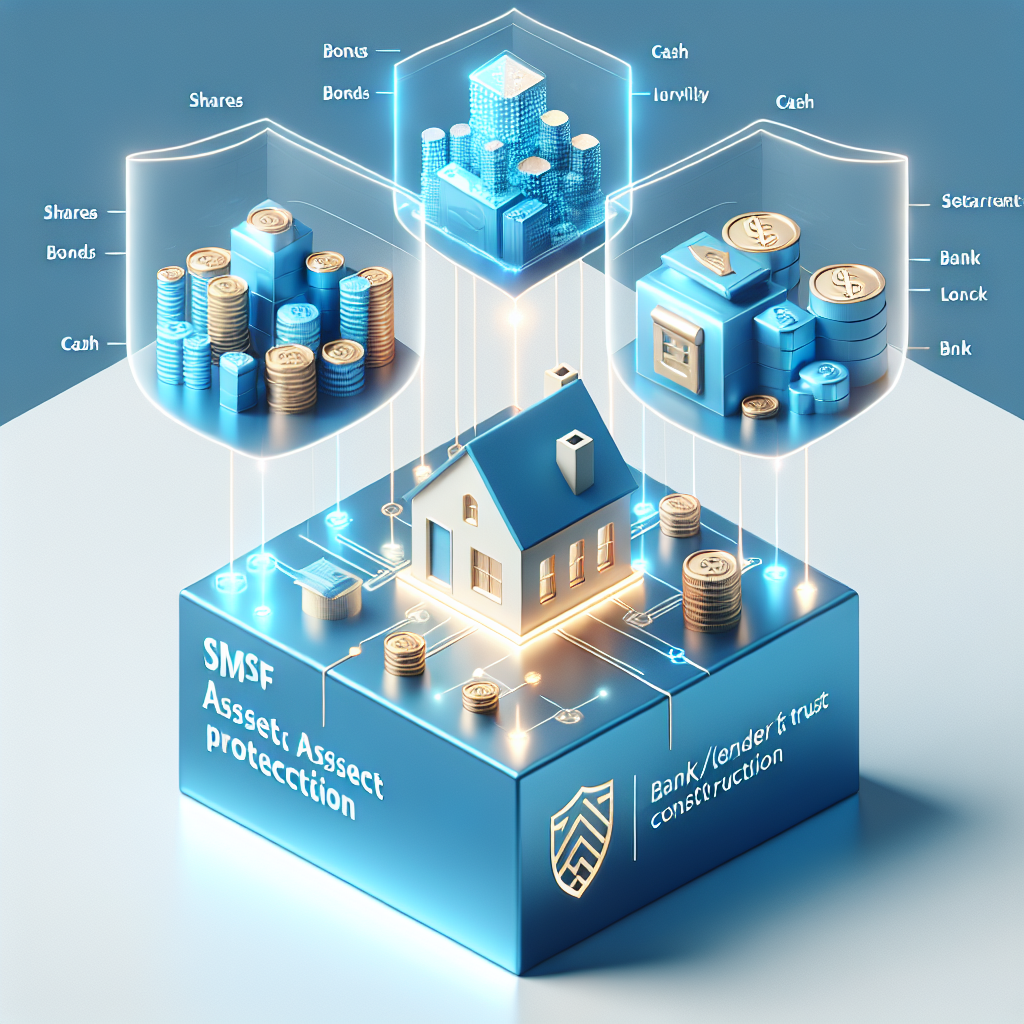
For Australia’s growing community of self-managed super fund trustees, property investment remains one of the most compelling wealth-building strategies available. With over 600,000 SMSFs currently operating across the country, and more than half holding property assets, understanding the nuances of SMSF lending has never been more critical. At the heart of this strategy lies the Limited Recourse Borrowing Arrangement—a powerful tool that enables trustees to leverage their superannuation to acquire property while protecting their fund’s other assets.
An SMSF LRBA is not just another loan product. It represents a carefully structured approach to property acquisition that balances opportunity with compliance, growth with protection. For SMSF trustees, property investors, financial advisors, and mortgage brokers, grasping how LRBAs work and what drives their interest rates can mean the difference between a strategic investment that accelerates retirement wealth and a costly misstep that undermines long-term financial security.
The significance of understanding SMSF LRBA interest rates extends beyond simple cost comparison. These rates reflect the specialized nature of SMSF lending, where lenders assess risk differently than traditional residential mortgages. They influence cash flow, determine the viability of investment properties, and ultimately shape the trajectory of retirement portfolios. In today’s market, where interest rates have fluctuated significantly and compliance requirements have tightened, making informed decisions about SMSF lending has become paramount.

How SMSF LRBAs Work in Practice
The mechanics of a Limited Recourse Borrowing Arrangement are elegantly simple yet legally precise. When an SMSF trustee identifies a property investment opportunity, the fund borrows money through a separate trust structure known as a holding trust or bare trust. This structure is the cornerstone of LRBA compliance—it ensures the borrowed asset remains legally separate from the SMSF’s other assets until the loan is fully repaid.
Here’s how it unfolds: The SMSF enters into a loan agreement where the lender’s recourse is limited solely to the property being purchased. The property is held in the bare trust, with the SMSF as the beneficial owner. As the fund makes loan repayments from its income—whether from rental returns, contributions, or other fund earnings—it builds equity in the property. Once the loan is discharged, the property transfers from the bare trust into the SMSF’s direct ownership.
The limited recourse aspect provides a safety net that traditional property loans don’t offer. If the investment underperforms and the loan defaults, the lender cannot pursue the SMSF’s other assets—only the property securing the loan is at risk. For a trustee with a diverse portfolio including shares, cash, and other investments, this protection is invaluable. It allows strategic expansion into property markets without exposing the entire retirement nest egg to the volatility of a single asset.
Consider a practical example: An SMSF with $500,000 in assets identifies a $600,000 residential investment property. Using an LRBA, the fund contributes $180,000 as a deposit (30% LVR is common for SMSF loans) and borrows the remaining $420,000. The rental income covers most of the loan repayments, while the fund’s other $320,000 in shares and cash remains completely protected. Even if property values decline and the investment becomes problematic, the lender’s claim stops at the property itself.
This structure explains why LRBAs have become increasingly attractive for sophisticated SMSF trustees. They enable portfolio diversification into tangible assets, provide potential capital growth alongside rental income, and offer tax-effective investment structures—all while maintaining a firewall between the borrowed asset and the fund’s existing wealth.
Understanding SMSF LRBA Interest Rates
SMSF LRBA interest rates don’t exist in isolation—they reflect a complex interplay of factors that distinguish this specialized lending from conventional mortgages. Currently, as of 2025, SMSF loan rates typically start from around 6.74% per annum for residential properties with strong loan-to-value ratios, though rates can extend to 7.50% or higher depending on individual circumstances.
The Australian Taxation Office publishes annual safe harbour interest rates that serve as compliance benchmarks. For the 2025-26 financial year, the safe harbour rate for LRBAs used to acquire real property stands at 8.95%, down from 9.35% in the previous year. These benchmarks aren’t mandatory interest rates—they’re upper limits that, when adhered to, provide trustees with certainty that their loan won’t be challenged as a non-arm’s length arrangement. Loans priced below these benchmarks enjoy a presumption of compliance.
Several key factors influence where your SMSF LRBA interest rate lands on this spectrum. Asset type matters significantly. Residential properties typically attract more favorable rates than commercial premises because lenders view them as lower risk with more stable valuations and deeper secondary markets. A residential apartment in a capital city might secure a rate of 6.74%, while a specialty commercial property could face rates approaching 7.50% or more.
The loan-to-value ratio plays a crucial role. Lenders reward larger deposits with better pricing. An SMSF borrowing at 60% LVR will almost always receive a more competitive rate than one stretching to 80% LVR. This makes sense from a risk perspective—the larger the deposit, the greater the buffer against property value fluctuations, and the less exposure the lender carries.
Loan structure also impacts pricing. Interest-only loans, which many SMSF trustees prefer to maximize cash flow and investment flexibility, may carry slightly higher rates than principal-and-interest arrangements. The term length, whether fixed or variable, and even the existence of features like offset accounts or redraw facilities can all nudge rates in different directions.
Your SMSF’s financial position influences lending decisions too. A fund with strong, consistent income from contributions and existing investments presents less risk than one relying entirely on uncertain rental returns to service debt. Lenders assess the fund’s capacity to make repayments across various scenarios, and this assessment directly affects the rate they’re willing to offer.

Comparing SMSF Lenders Effectively
Finding the right SMSF lender requires looking beyond the headline interest rate. The most expensive loan isn’t always the one with the highest percentage—it’s the one that costs the most across its entire lifespan. Effective comparison demands evaluating the all-in cost, which includes establishment fees, ongoing account-keeping charges, valuation costs, legal fees, and the interest rate itself.
Start by identifying lenders who genuinely specialize in SMSF lending. The major banks offer SMSF loans, but they often price them conservatively and impose stricter lending criteria. Non-bank lenders like Aries Financial have built their expertise specifically around SMSF lending, often delivering more competitive rates, higher LVRs, and faster approval timeframes. Where a major bank might take three to four weeks to approve an SMSF loan, specialist lenders can provide conditional approval within 1-3 business days.
When comparing lenders, examine their maximum LVR offerings. Some cap lending at 70% of property value, while others extend to 80%. This seemingly small difference can significantly impact your investment capacity. An 80% LVR means accessing a $800,000 property with a $160,000 deposit, versus needing $240,000 at 70% LVR—that’s an $80,000 difference that could determine whether a particular investment proceeds.
Scrutinize the fee structure carefully. Establishment fees can range from $750 to $2,000 or more. Annual account fees might add $300 to $600 to your yearly costs. Legal fees for establishing the bare trust structure typically run $1,000 to $1,500. A lender advertising a rate 0.20% lower than a competitor but charging $1,000 more in upfront fees might not represent better value, especially for shorter-term loans.
Loan features deserve attention too. Does the lender offer offset accounts linked to your SMSF loan? This feature allows your fund’s cash reserves to offset the loan balance, reducing interest charges without technically making additional repayments. Are there redraw facilities that let you access extra repayments if needed? What about flexibility in making additional repayments without penalty? These features might not matter initially, but they provide valuable flexibility as your investment strategy evolves.
Consider the lender’s appetite for different property types. Some lenders readily finance standard residential properties but hesitate at apartments in buildings with commercial ground floors, properties in regional areas, or commercial premises. If your investment strategy targets any of these asset classes, ensure your chosen lender actively supports them before investing time in the application process.
Don’t overlook the importance of customer service and expertise. An SMSF loan involves unique compliance requirements and ongoing regulatory obligations. A lender with deep SMSF knowledge can guide you through these complexities, flag potential issues before they become problems, and structure arrangements that maximize tax efficiency while maintaining compliance. This expertise often proves more valuable than saving a fraction of a percent on the interest rate.
Compliance and Regulatory Requirements
The flexibility and protection that LRBAs offer comes with a trade-off: strict compliance requirements that trustees must navigate carefully. The Superannuation Industry (Supervision) Act governs these arrangements, and contraventions can result in severe penalties, including the imposition of penalty taxes and potential disqualification of trustees.
The in-house asset rule represents one of the most critical compliance boundaries. Your SMSF cannot have in-house assets that comprise more than 5% of the fund’s total asset value. An in-house asset includes loans to, or investments in, related parties. While the LRBA itself doesn’t create an in-house asset if structured correctly, related transactions can. For instance, borrowing from a related party at non-commercial rates, or leasing SMSF property to a related party at below-market rates, can trigger breaches.
The sole purpose test underpins all SMSF activities. Every investment, including property acquired through an LRBA, must be made solely to provide retirement benefits to members. You cannot live in SMSF property, use it for personal purposes, or allow related parties to access it on preferential terms. The property must be maintained and operated on purely commercial, arm’s length terms.
Proper structuring of the bare trust is non-negotiable. The trust deed must comply with Division 13.3A of the SIS Act, clearly defining the relationship between the SMSF as beneficial owner and the bare trustee. Any deviation from this prescribed structure can invalidate the arrangement, potentially causing the entire loan to be treated as a contravention.
Record-keeping requirements for SMSF property investments are extensive. Trustees must maintain detailed documentation of all transactions, including loan agreements, bare trust deeds, property valuations, rental agreements, maintenance expenses, and repayment records. These documents form the evidence base for demonstrating compliance during audits and ATO reviews.
The consequences of non-compliance can be financially devastating. Contraventions of the in-house asset rule can result in the excess assets being treated as an unauthorized investment, triggering penalty taxes of up to 45%. More serious breaches might lead to the fund being declared non-complying, causing the entire fund balance to be taxed at the highest marginal rate—potentially destroying decades of retirement savings in a single tax event.
This complexity underscores why professional guidance isn’t optional for SMSF property investment—it’s essential. Working with experienced SMSF advisors, qualified accountants, and specialist lenders ensures your LRBA structure meets all regulatory requirements while optimizing your investment outcomes.
Key Considerations for Your SMSF Decision
When evaluating SMSF lending options, alignment between your loan choice and your broader investment strategy should drive your decision-making. A property investment that looks attractive in isolation might prove problematic when viewed through the lens of your fund’s overall risk profile, cash flow requirements, and member demographics.
Start by honestly assessing your risk tolerance. Property investment through an SMSF offers potential for capital growth and rental income, but it also introduces concentration risk, liquidity constraints, and leverage. If property already comprises a significant portion of your fund’s assets, adding more through borrowing might tip your portfolio into an unbalanced position. Conversely, if your fund is cash-heavy with minimal growth assets, a strategic property acquisition could provide the diversification and capital growth potential you need.
Cash flow management becomes critical with LRBA arrangements. Unlike shares that can be sold quickly to meet unexpected liquidity needs, property is illiquid. Your fund must generate sufficient income to meet loan repayments consistently, even if rental income falters or property remains vacant. Factor in maintenance costs, property management fees, insurance, and rates—these ongoing expenses can quickly erode returns if not carefully budgeted. Many experienced trustees maintain a cash buffer equivalent to 6-12 months of loan repayments to weather unexpected challenges.
Consider your time horizon. Property investment suits SMSFs with longer timeframes to retirement, where short-term market volatility can be absorbed and capital growth has time to compound. For funds approaching pension phase or already paying income streams, the illiquidity of property can create complications when members need to drawdown regular payments.
The compliance burden deserves realistic consideration too. SMSF property investment requires active management—arranging maintenance, dealing with tenants, ensuring insurance remains current, obtaining annual valuations, and maintaining meticulous records. Some trustees thrive on this involvement; others find it burdensome. Understanding your capacity and willingness to fulfill these obligations is crucial before committing to an LRBA.
Proactive comparison shopping pays dividends in SMSF lending. Interest rates, lending criteria, and product features vary significantly across lenders. A trustee who accepts the first loan offer without exploring alternatives often leaves thousands of dollars on the table over the loan’s life. Invest time in obtaining multiple quotes, understanding each lender’s strengths, and negotiating terms where possible. This diligence typically saves far more than the hours invested.
The Aries Financial Approach
At Aries Financial, we’ve built our business on a simple philosophy: that integrity, expertise, and empowerment should define every client relationship. These aren’t just words on a website—they’re the principles that guide how we structure loans, advise clients, and build long-term partnerships.
Integrity means putting your interests first, always. We never recommend LRBA structures that don’t align with your fund’s circumstances, even if it means walking away from business. We believe in transparent pricing, clear communication, and honest advice about both opportunities and risks. When you work with Aries Financial, you get straight answers about what’s achievable, what’s optimal, and what to avoid.
Our expertise in SMSF lending is comprehensive and hard-won. We understand the regulatory landscape intimately, stay current with legislative changes, and know how to navigate the complexities that can trip up inexperienced lenders. This depth of knowledge translates into loan structures that maximize your investment potential while maintaining bulletproof compliance. Our ability to provide conditional approval within 1-3 business days reflects systems and processes refined over thousands of SMSF transactions.
Empowerment is perhaps our most important contribution. We don’t just process loan applications—we educate trustees about how LRBAs work, what drives interest rates, and how to make informed decisions that serve your long-term retirement goals. An empowered trustee makes better decisions, achieves better outcomes, and builds greater wealth over time.
When you choose Aries Financial as your SMSF lender, you’re selecting a partner who understands that competitive rates starting from 6.24% PI are important, but they’re not the only factor in successful property investment. You’re gaining access to specialists who genuinely understand SMSF compliance, who can guide you through complex scenarios, and who remain committed to your success long after settlement.
The path to maximizing your retirement investment potential through strategic property acquisition starts with choosing the right SMSF lender. It continues with making informed decisions about loan structures, interest rates, and compliance requirements. And it culminates in building a diversified portfolio that delivers the retirement lifestyle you’ve worked decades to achieve. With the right expertise, the right loan structure, and a commitment to integrity and compliance, your SMSF can become the powerful wealth-building vehicle it was designed to be.