Self-Managed Super Funds have become increasingly popular among Australians seeking greater control over their retirement savings. With approximately 600,000 SMSFs managing over $870 billion in assets, property investment through superannuation represents one of the most significant wealth-building strategies available. The appeal is clear: leverage your retirement savings to acquire tangible assets, benefit from rental income, and potentially achieve capital growth—all within a tax-advantaged structure.
However, this path to building wealth isn’t without its hazards. Every year, thousands of SMSF trustees make costly mistakes that result in penalties, compliance breaches, and substantial financial losses. Some errors can trigger immediate tax consequences of up to 45%, while others gradually erode the fund’s value through excessive costs or poor investment decisions. The Australian Taxation Office reports that property-related compliance failures remain among the most common reasons for SMSF penalties, with fines reaching tens of thousands of dollars for serious breaches.
Understanding the potential pitfalls before you invest isn’t just about avoiding penalties—it’s about protecting your retirement future. A single mistake in SMSF property investment can set your retirement plans back years or even decades. The good news? Most of these errors are entirely preventable when you know what to watch for and have the right guidance. At Aries Financial Pty Ltd, we’ve witnessed firsthand how informed trustees who understand compliance requirements and investment fundamentals can successfully navigate SMSF property investment while those who rush in unprepared often face devastating consequences.

Understanding Limited Recourse Borrowing Arrangements: The Foundation of SMSF Property Investment
Limited Recourse Borrowing Arrangements represent one of the most powerful yet misunderstood tools in SMSF property investment. Introduced to allow superfunds to borrow money for asset acquisition, LRBAs enable trustees to leverage their retirement savings and purchase property they couldn’t otherwise afford. However, the structure requirements are precise, and deviating from them—even slightly—can result in your entire arrangement becoming non-compliant.
The fundamental principle of an LRBA is straightforward: your SMSF borrows money to purchase a single acquirable asset, which must be held in a separate holding trust (often called a bare trust) until the loan is fully repaid. This structure protects the other assets in your SMSF—if something goes wrong with the investment and you default on the loan, the lender’s recourse is limited to only the asset purchased, not your entire superannuation balance.
But here’s where many trustees stumble. The “single asset” requirement is more restrictive than it sounds. You cannot purchase a property and then subdivide it. You cannot acquire a house and granny flat under one title and treat them separately. The asset must remain as originally purchased until the debt is cleared. One trustee learned this the hard way when he purchased a dual-occupancy property intending to eventually split the titles—an action that would have violated LRBA rules and potentially disqualified the entire investment.
The holding trust arrangement must also maintain strict compliance with superannuation laws. The trustee of the bare trust holds legal ownership of the property, but your SMSF holds the beneficial interest. This means your SMSF enjoys all the benefits of ownership—rental income, capital growth, tax advantages—while the legal title remains separate until you’ve paid off the loan. The documentation establishing this relationship must be watertight, clearly defining the roles, responsibilities, and beneficial ownership structure.
Perhaps most critically, your LRBA must be conducted on arms-length terms. This means the interest rate, loan structure, repayment terms, and security arrangements must reflect what an independent lender would offer in the open market. You cannot offer yourself favorable terms that wouldn’t be available commercially. When family members or related parties are involved in lending arrangements, the ATO scrutinizes these transactions intensely to ensure they genuinely reflect market conditions. A loan charging 2% interest when market rates sit at 6% will immediately raise red flags and likely trigger an audit.
At Aries Financial Pty Ltd, we structure our SMSF loans to inherently meet arms-length requirements, with competitive rates starting from 6.24% and clear, transparent terms that satisfy regulatory expectations. Our expertise ensures your borrowing arrangement ticks every compliance box from day one, protecting your investment and your peace of mind.
The In-House Asset Trap: When Related-Party Transactions Backfire
The in-house asset rules exist for a fundamental reason: to prevent SMSFs from being used primarily to benefit related parties rather than to provide retirement benefits for members. These rules represent one of the most commonly violated provisions in SMSF property investment, often because trustees don’t fully understand what constitutes an in-house asset or how easily they can breach the 5% threshold.
An in-house asset is essentially any investment where your SMSF lends money to, or invests in, a related party—including fund members, their relatives, or entities they control. The legislation caps the total market value of in-house assets at 5% of your fund’s total assets. Exceed this limit, and you’re in breach, triggering potential penalties and requiring immediate rectification.
Property investments create unique in-house asset challenges. While your SMSF can own residential property, it cannot lease that property to any fund member or their relatives. This prohibition is absolute. You cannot live in the property, your children cannot rent it, and your parents cannot use it as their residence. Doing so transforms a legitimate investment into a prohibited related-party transaction.
One trustee discovered this rule after purchasing a beachside apartment through his SMSF and allowing his adult daughter to rent it at below-market rates. He reasoned that she was paying rent, so it wasn’t technically “free” use. The ATO disagreed. Not only did he face penalties for the prohibited transaction, but the arrangement also triggered in-house asset consequences that required him to either evict his daughter or have the SMSF divest the property—both financially and emotionally costly outcomes.
Commercial property presents a different scenario. Your SMSF can lease commercial property to your own business, but this must occur strictly on arms-length terms. The rent must reflect genuine market value, the lease must be formally documented, and the arrangement must be reviewed regularly to ensure ongoing compliance. Even then, if the business you operate is structured in certain ways, the investment might still fall afoul of in-house asset rules.
The risks extend beyond obvious related-party leasing. Providing loans to members or related parties, investing in units or shares of entities controlled by members, and even certain types of financial assistance can create in-house assets. What seems like a clever strategy to keep money “in the family” can quickly become a compliance nightmare that jeopardizes your entire fund’s concessional tax treatment.
The consequences of breaching in-house asset rules aren’t trivial. Your fund loses its complying status, potentially subjecting the entire fund balance to the highest marginal tax rate rather than the concessional 15% rate. The ATO can impose administrative penalties, and you’re required to rectify the breach—often forcing you to sell assets at inopportune times or under unfavorable market conditions.
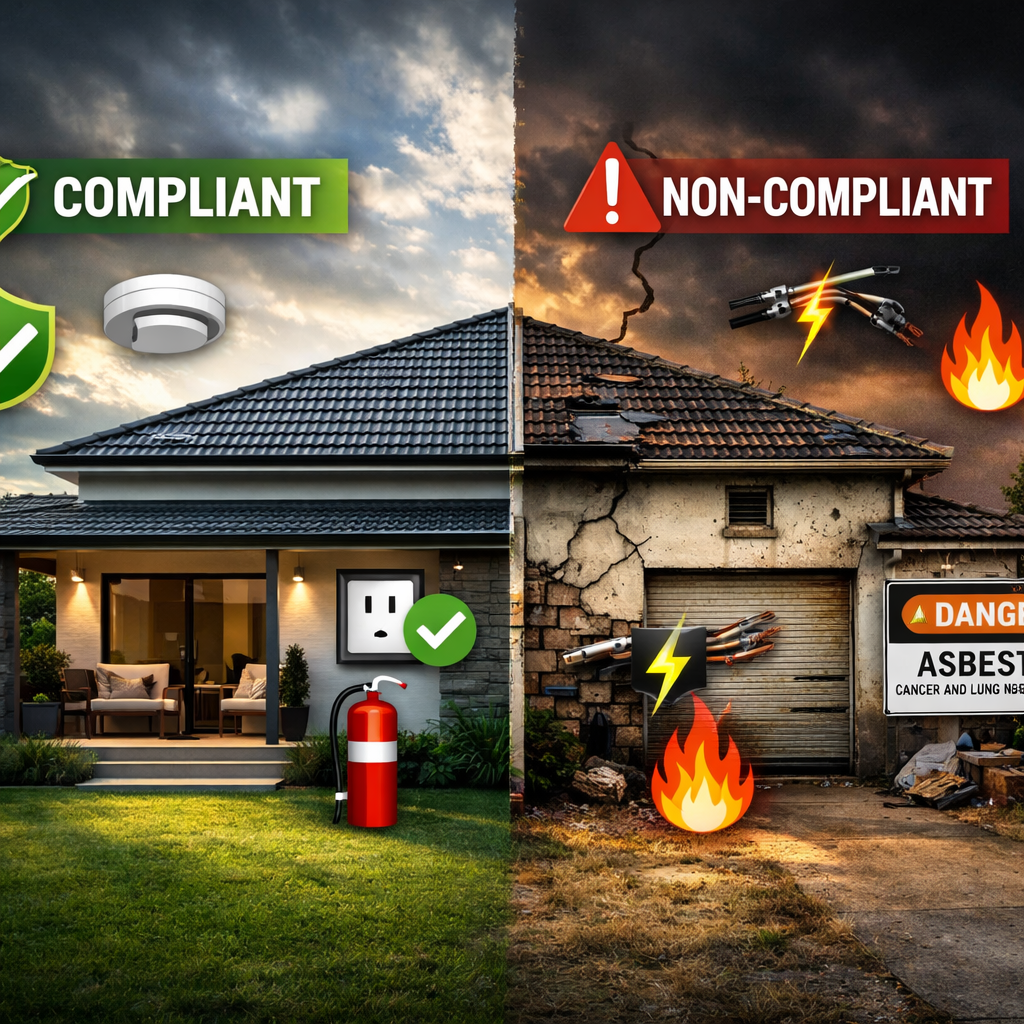
Five Critical Mistakes That Destroy SMSF Property Investments
Beyond the structural compliance issues, trustees frequently make operational and strategic errors that undermine their property investments. These mistakes might not trigger immediate compliance breaches, but they erode returns, create unnecessary risks, and can ultimately cost thousands of dollars or more.
⚠️ Mistake #1: Purchasing Property from Related Parties
The prohibition on acquiring residential property from related parties is absolute and non-negotiable. Your SMSF cannot purchase your family home, your investment property, or any residential real estate from you, your spouse, your children, or any related party. Period. Yet every year, trustees attempt variations of this transaction, often with disastrous results. Some genuinely don’t understand the rule; others convince themselves that unique circumstances in their situation somehow create an exception. Neither ignorance nor creative reasoning protects you from the consequences. Commercial property can be purchased from related parties under strict conditions, but residential property cannot—under any circumstances. This mistake alone can disqualify your entire fund.
⚠️ Mistake #2: Misunderstanding LRBA Structure Requirements
Many trustees underestimate the complexity of properly structuring an LRBA. They assume a simple loan agreement suffices, not realizing that the holding trust documentation, beneficial interest assignments, and ongoing administrative requirements demand precision. We’ve seen cases where trustees signed contracts in the wrong name—using the SMSF name instead of the bare trust entity—creating legal complications that took months and thousands of dollars to resolve. Others failed to properly document the holding trust arrangement, leaving themselves exposed to challenges about who actually owns the property. The single acquirable asset rule also trips up many investors who assume they can make improvements or subdivisions without consequence. Any material change to the asset’s character during the loan term can breach LRBA requirements.
⚠️ Mistake #3: Underestimating Total Investment Costs
Property investment through an SMSF costs more than property investment personally. Beyond the purchase price and loan repayments, you face specialized legal documentation fees, ongoing compliance costs, property management expenses, maintenance costs that must be paid from fund assets, and potentially higher interest rates than residential mortgages. Some trustees drain their SMSF’s cash reserves on the purchase, leaving insufficient liquidity to cover these ongoing expenses. Others discover too late that their rental income doesn’t cover all costs, forcing them to make additional contributions (within contribution caps) just to keep the fund solvent. Without adequate reserves, a single unexpected repair or period of vacancy can create serious financial stress for the fund.
⚠️ Mistake #4: Violating the Sole Purpose Test
Every SMSF must be maintained solely to provide retirement benefits to members. When property investments provide current-day benefits to members or related parties—such as allowing personal use, providing favorable lease terms, or serving primarily as a lifestyle asset rather than an investment—they risk violating this fundamental principle. A farm property that members use for weekend getaways, a holiday house that’s available for family vacations, or commercial premises leased to a member’s business at below-market rent all potentially breach the sole purpose test. The line isn’t always clear, which is why documentation of your investment rationale and adherence to market-based terms becomes essential evidence that the investment serves retirement purposes.
⚠️ Mistake #5: Inadequate Due Diligence and Documentation
Property investment demands thorough research, but SMSF property investment demands even more rigorous due diligence because of compliance requirements. Trustees who skip building inspections, fail to verify rental yields, or don’t research local market conditions expose themselves to poor investment outcomes. More critically, those who don’t maintain proper documentation—loan agreements, trust deeds, minutes recording investment decisions, evidence of arms-length dealings—leave themselves vulnerable during ATO audits. We’ve encountered situations where trustees made entirely legitimate investments but couldn’t prove compliance because they lacked documentation. In these cases, the absence of evidence becomes evidence of absence, leading to adverse findings despite good intentions.
Practical Governance: Protecting Your SMSF Investment
Avoiding SMSF mistakes isn’t about perfect foresight—it’s about implementing solid governance practices that catch issues before they become problems. The most successful SMSF trustees treat their fund with the same professional rigor that large superannuation funds employ, scaled appropriately for their circumstances.
Start by engaging independent, qualified advisers who specialize in SMSF property investment. This isn’t an area for generalists or DIY approaches. Your adviser team should include an SMSF specialist accountant who understands property investments, a lawyer experienced in SMSF documentation and property transactions, and potentially a financial adviser who can assess whether property investment aligns with your broader retirement strategy. At Aries Financial Pty Ltd, we work alongside these advisers, providing the lending expertise while ensuring all compliance requirements are met through our fast 1-3 day approval process.
Ensure every contract, agreement, and title document is correctly named. Your SMSF doesn’t directly own property acquired through an LRBA—the holding trust does. This means contracts of sale, settlement documents, and title registration must reflect the bare trust entity as owner. A mistake here creates legal complications that can be expensive and time-consuming to rectify, potentially delaying settlement or creating ownership disputes. Have your lawyer review every document before signing.
Maintain meticulous documentation of every decision and transaction. Your SMSF should hold minutes recording why you decided to invest in a particular property, how you determined it met investment strategy objectives, evidence that you obtained the property at market value (such as independent valuations), and records proving all dealings occurred on arms-length terms. This documentation isn’t bureaucratic busy-work—it’s your protection during audits and evidence of your commitment to compliance.
Conduct regular portfolio reviews, at least annually and preferably quarterly. Your investment strategy isn’t a static document created once and forgotten; it’s a living framework that should guide ongoing decisions. Review whether your property investment still aligns with your retirement objectives, whether your overall portfolio remains appropriately diversified, whether rental yields meet expectations, and whether any changes in your circumstances require strategy adjustments. These reviews also provide opportunities to identify compliance issues early, when they’re easier and less expensive to address.
Maintain adequate liquidity in your SMSF at all times. A common rule of thumb suggests holding 10-15% of fund value in liquid assets, but property-heavy SMSFs may need more. Remember that you need cash for loan repayments, property expenses, compliance costs, and potentially member benefits as retirement approaches. Running out of liquidity forces you to make suboptimal decisions—selling assets during market downturns or being unable to seize investment opportunities—that can significantly impact long-term returns.
Building Retirement Wealth the Right Way
SMSF property investment offers genuine opportunities to build substantial retirement wealth when approached with knowledge, discipline, and appropriate professional support. The strategies that work reliably aren’t complicated or exotic—they’re grounded in solid investment principles, strict compliance adherence, and realistic expectations about costs and returns.
Avoiding the pitfalls outlined in this article isn’t about eliminating all risk from property investment; that’s neither possible nor desirable. It’s about eliminating unnecessary risks—the compliance breaches, structural errors, and governance failures that destroy value without providing any compensating benefit. These mistakes don’t enhance returns; they simply create problems that could have been avoided with better information and guidance.
The difference between successful and unsuccessful SMSF property investors often comes down to their approach in the first weeks of considering an investment. Those who rush in, motivated by enthusiasm or time pressure, frequently encounter the mistakes discussed here. Those who proceed methodically—educating themselves, engaging qualified advisers, ensuring proper structure, and maintaining ongoing compliance—tend to build wealth steadily and sustainably.
At Aries Financial Pty Ltd, we’ve built our reputation as Australia’s trusted SMSF lending specialist by helping trustees navigate these challenges with confidence. Our commitment to integrity means we’ll tell you when a proposed investment creates compliance concerns, even if it costs us a loan transaction. Our expertise in SMSF regulations ensures your borrowing arrangement meets every requirement from the start. And our focus on empowerment means we don’t just provide loans—we educate and guide clients toward informed decisions that maximize their financial future.
Your retirement deserves the protection that comes from avoiding these costly pitfalls. Whether you’re considering your first SMSF property investment or evaluating your existing portfolio, understanding these traps and implementing sound governance practices makes the difference between a retirement fund that struggles and one that thrives. With competitive SMSF loan solutions starting from 6.24% PI and fast approvals within 1-3 business days, we provide the lending foundation for your property investment while ensuring compliance and long-term success remain at the forefront.
The path to retirement wealth through SMSF property investment isn’t obstacle-free, but it’s well-mapped. Avoid these five critical traps, implement robust governance, and work with specialists who prioritize your long-term success over short-term transactions. Your future self will thank you for the diligence you demonstrate today.