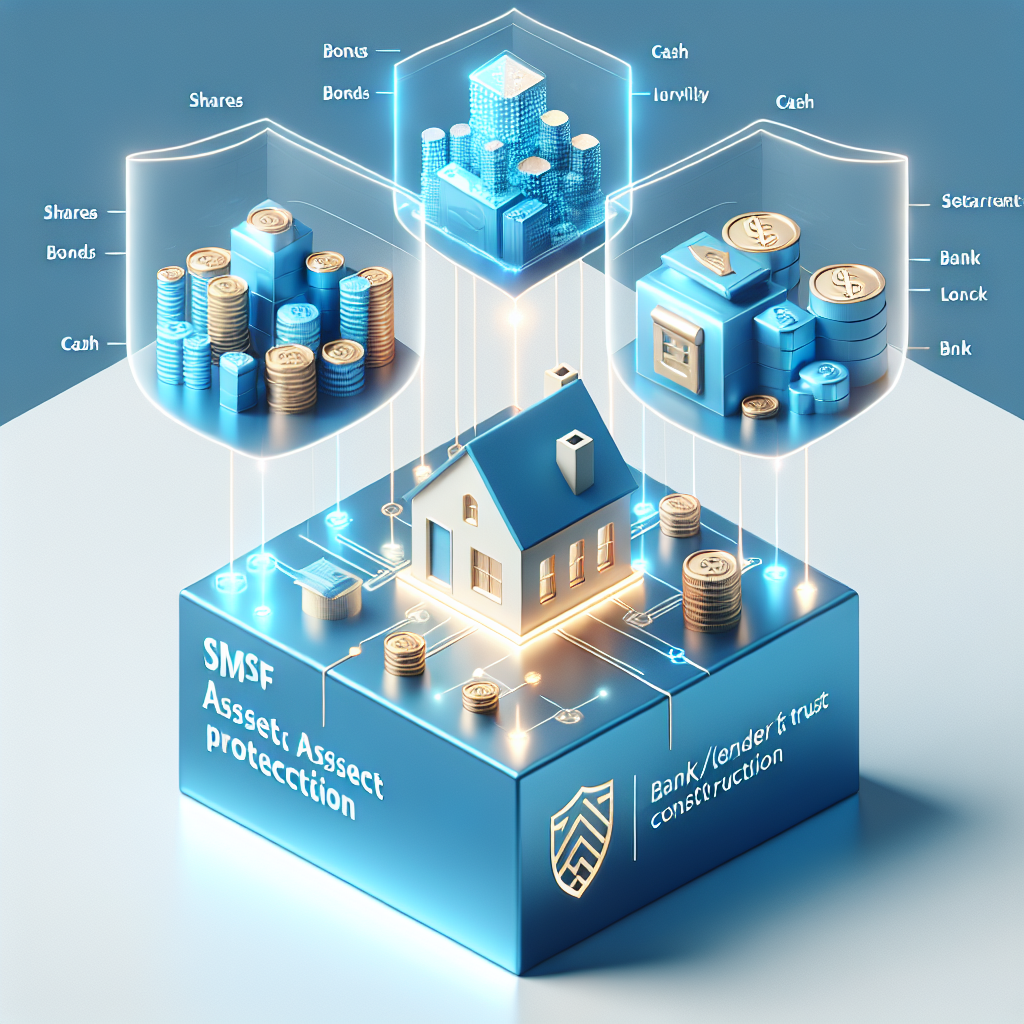
When it comes to building wealth through your self-managed super fund, the traditional path isn’t always the only path. While many SMSF trustees are familiar with direct property purchases and limited recourse borrowing arrangements, there’s another strategy that deserves attention: SMSF unit trust borrowing. This approach offers a unique blend of flexibility, asset protection, and investment potential that could reshape how you think about growing your retirement savings.
Understanding the Foundation: How SMSF Borrowing Really Works
Before exploring unit trust borrowing, it’s essential to understand the mechanics behind SMSF borrowing itself. Under Australian superannuation law, SMSFs face strict restrictions on borrowing money. The general rule is simple: SMSFs cannot borrow. However, there’s a critical exception that has opened doors for countless property investors—the limited recourse borrowing arrangement, or LRBA.
An LRBA allows your SMSF to borrow funds to acquire a single asset, typically property, while protecting the other assets within your fund. ⚙️ Here’s how it works in practice: the borrowed funds are used to purchase an asset, which is then held in a separate trust structure—often called a bare trust or holding trust—until the loan is fully repaid. During this period, your SMSF holds the beneficial interest in the asset and receives any income it generates, but legal ownership remains with the trustee of the holding trust.

🔐 The “limited recourse” aspect is what makes this arrangement compliant with superannuation law. If something goes wrong and your SMSF cannot repay the loan, the lender’s recourse is limited to the single asset held in the bare trust. Your other SMSF assets remain protected, quarantined from the lending arrangement. This structure has made property investment accessible to SMSF trustees since these arrangements were formally legislated in 2007.
The setup requires careful attention to detail. The asset must be held on trust until the loan is repaid, and once repayment is complete, ownership transfers to your SMSF. Throughout this process, your fund must maintain proper documentation, ensure the arrangement meets all statutory requirements, and keep the asset separate from other fund holdings.
The Alternative Path: Investing Through a Related Unit Trust
While direct property acquisition through an LRBA is straightforward, there’s another structure that offers distinct advantages: investing in property through a related unit trust. This approach changes the investment vehicle without abandoning the core principles of leveraged property investment.
A unit trust is essentially a structure where the trust holds assets—such as property—and issues units to investors representing their proportional ownership. Your SMSF can purchase up to 100% of the units in a unit trust, provided that unit trust meets specific eligibility requirements under superannuation law.
⚡ The eligibility criteria are critical. The unit trust must be a “related party” to your SMSF, which typically means it’s established specifically for investment purposes by you as the SMSF trustee. However, simply being related isn’t enough. The unit trust must operate solely as an investment vehicle and cannot carry on a business. This distinction is important: a unit trust that passively holds rental property is generally acceptable, while one actively developing or trading properties would likely breach the rules.
Within this framework, your SMSF acquires property indirectly by purchasing units in the trust, which then owns the physical asset. This creates a layer of separation between your SMSF and the property itself, offering benefits we’ll explore shortly. The structure also allows for more flexible arrangements when multiple parties want to invest together, as the unit trust can issue different classes of units or accommodate multiple unit holders.
The beauty of this arrangement is that units in a related unit trust are not classified as in-house assets under superannuation law, provided the unit trust meets the eligibility requirements. This means your SMSF can invest substantially in the unit trust without triggering the 5% in-house asset limit that applies to other related-party investments.
How Unit Trust Borrowing Works for Your SMSF
When your SMSF invests through a unit trust structure and wants to use borrowed funds, the mechanics shift slightly from a traditional LRBA. Instead of your SMSF borrowing directly to purchase property, the unit trust itself may borrow to acquire the asset, or your SMSF may borrow to purchase the units. Either way, the loan recourse must align with LRBA principles.
Let’s walk through a typical scenario. Your SMSF decides to invest in commercial property but doesn’t have sufficient cash to make the full purchase. You establish a unit trust specifically for this investment. The unit trust then enters into a borrowing arrangement under an LRBA to acquire the commercial property. Your SMSF purchases the units in this trust, becoming the beneficial owner of both the units and, indirectly, the property held by the trust.
Alternatively, your SMSF could borrow funds directly to purchase units in a unit trust that already holds property. In this case, the units themselves become the single acquirable asset under the LRBA. The lending arrangement must still meet all the requirements of limited recourse borrowing: the borrowed funds must be used to acquire units that represent a single asset or collection of identical assets, and the lender’s recourse in the event of default must be limited to those units.
The process involves several moving parts. First, the unit trust must be properly established with a trust deed that clearly defines its purpose, beneficiaries, and operational rules. Your SMSF then subscribes for units, potentially using borrowed funds structured as an LRBA. The unit trust uses these funds to acquire property, or if it already holds property, your SMSF’s purchase of units gives it an ownership stake in the underlying asset.
Throughout this arrangement, income generated by the property flows through the unit trust to your SMSF based on its unit holding. Rental income becomes trust income, distributed to your SMSF either as cash flow or reinvested within the structure. The loan repayments are serviced either by your SMSF directly (if it borrowed to buy units) or by the unit trust (if the trust borrowed to buy property), using rental income and potentially additional contributions to your SMSF.
Eligibility and Compliance: Getting the Structure Right
The regulatory landscape surrounding SMSF unit trust borrowing is complex, and getting the structure wrong can have serious consequences. The Australian Taxation Office and APRA maintain strict oversight of these arrangements, and SMSF trustees must ensure their structure meets all statutory requirements.
⚠️ First and foremost, your SMSF’s trust deed must explicitly permit borrowing and investment in unit trusts. Many older trust deeds don’t include these provisions, so a deed update may be necessary before proceeding. This isn’t just a formality—operating outside your trust deed’s powers can result in your fund becoming non-compliant.
The unit trust itself must meet the “related party” requirements without violating the in-house asset rules. This means the trust must be established for genuine investment purposes and operate at arm’s length, even though it’s related to your SMSF. Proper documentation is essential: the unit trust needs its own trust deed, a separate Tax File Number, and potentially its own ABN.
The borrowing arrangement must satisfy all LRBA requirements. This includes ensuring the loan is on commercial terms, the lender has limited recourse only to the specific asset securing the loan, and the borrowing is used solely to acquire the permitted asset. Your SMSF must also maintain sufficient cash flow to service the loan without breaching the sole purpose test—your fund must always be maintained for the sole purpose of providing retirement benefits to members.
📊 Regular valuations are another compliance requirement. The assets held by the unit trust must be valued at market value for your SMSF’s financial statements, and these valuations should be conducted by qualified professionals at appropriate intervals. This ensures your fund’s financial position is accurately reported and helps prevent breaches of regulatory limits.
📄 Documentation standards are high. You’ll need to maintain loan agreements, unit trust deeds, purchase documents, financial statements for both your SMSF and the unit trust, and records of all transactions. In an audit, these documents demonstrate that your arrangement meets legal requirements and operates as intended.
The Benefits: Why Consider Unit Trust Borrowing?
SMSF unit trust borrowing offers several distinct advantages that make it worth considering for your investment strategy. These benefits extend beyond simple property acquisition to encompass risk management, flexibility, and strategic wealth building.
🎯 Diversification sits at the top of the list. By investing through a unit trust structure, your SMSF can gain exposure to property markets without tying up all its capital in a single direct holding. This allows you to maintain a balanced investment portfolio while still accessing the growth potential of property. For SMSF trustees who want property exposure but also need liquidity for other opportunities, the unit trust structure provides that balance.
📈 Gearing benefits amplify your investment potential. Just as with direct property LRBAs, borrowing through a unit trust structure allows your SMSF to acquire assets worth more than your current super balance. 💡 A real-world example illustrates this: an SMSF with $200,000 in cash can purchase units in a trust that holds a $400,000 property by borrowing $200,000. Over time, as the property appreciates and the loan is repaid, your SMSF benefits from growth on the full $400,000 asset, not just the initial $200,000 contribution. This leverage can significantly accelerate wealth accumulation when property markets perform well.

🛡️ Asset protection represents another key advantage. The unit trust structure creates an additional layer of separation between your SMSF and the physical property. If issues arise with the property—such as tenant disputes or maintenance problems—the unit trust bears the direct exposure, not your SMSF. Similarly, if your SMSF faces challenges unrelated to the property investment, the asset held in the unit trust remains separate and protected.
🔄 Flexibility in ownership and management also emerges as a benefit. Unit trusts can more easily accommodate multiple investors if you later decide to bring in other parties. They can also simplify estate planning, as units can be distributed or transferred more efficiently than direct property holdings. For SMSF trustees who value strategic options, this flexibility is valuable.
💰 Tax effectiveness deserves mention as well. Income generated by the unit trust and distributed to your SMSF is typically taxed at the concessional superannuation rates—maximum 15% for accumulation phase funds, and 0% for pension phase funds. Capital gains can also be managed tax-effectively within this structure, particularly if the property is held for more than 12 months, qualifying for the one-third discount on capital gains tax.
The Risks: What You Need to Watch Out For
Despite its benefits, SMSF unit trust borrowing carries risks that demand careful consideration. Understanding these potential pitfalls is essential for making an informed decision about whether this strategy suits your circumstances.
⚠️ Compliance risk tops the list of concerns. The rules governing SMSF borrowing and unit trust investments are complex, and mistakes can be costly. If your arrangement doesn’t meet all the requirements—perhaps because the unit trust is structured incorrectly or the borrowing doesn’t qualify as a proper LRBA—your SMSF could face penalties, loss of tax concessions, or even disqualification. The ATO has consistently demonstrated its willingness to pursue non-compliant arrangements, and the consequences can be severe.
📋 Administrative complexity adds another layer of challenge. Managing an SMSF is already more involved than simply contributing to a retail super fund. Adding a unit trust structure and borrowing arrangement multiplies the complexity. You’ll need to maintain separate financial records for both your SMSF and the unit trust, coordinate between multiple entities, ensure all transactions are properly documented, and stay on top of changing regulations. This typically requires professional assistance, which adds to your costs.
📉 Market risk remains ever-present. Property values can decline as well as rise, and if your leveraged property investment falls in value, your SMSF could face difficulties servicing the loan. Unlike your family home, an investment property generates income to help cover costs, but vacancies, tenant defaults, or market downturns can disrupt cash flow. If rental income proves insufficient to cover loan repayments, your SMSF must have other cash reserves to make up the shortfall—without the option of making emergency withdrawals that would breach the preservation rules.
🔒 Liquidity concerns emerge when your SMSF’s capital is tied up in property and units. Unlike listed shares that can be sold within days, property sales take months, and selling units in a private unit trust may be even more challenging if there’s no ready market for them. This illiquidity can create problems if your SMSF needs cash for other purposes, such as paying member benefits when someone retires.
💸 Cost considerations shouldn’t be overlooked. Unit trust borrowing involves multiple layers of fees: loan establishment and ongoing interest, unit trust establishment and administration, separate accounting and audit fees for the trust, legal costs for proper documentation, and professional advice to ensure compliance. These costs can eat into investment returns, particularly in the early years before capital growth materializes.
⚠️ Concentration risk also warrants attention. If your SMSF invests heavily in property through unit trusts, you may become overly exposed to a single asset class. Property markets can be cyclical, and having too much of your retirement savings concentrated in property—even if diversified across multiple properties or locations—leaves you vulnerable if that sector underperforms.
Making It Work: Practical Steps for SMSF Trustees
If you’ve weighed the benefits and risks and decided that SMSF unit trust borrowing aligns with your retirement goals, proper implementation is crucial. Success depends on thorough planning, professional guidance, and ongoing management.
Start by engaging qualified professionals. This isn’t an area for DIY approaches. You’ll need a specialized SMSF advisor or accountant who understands the technical requirements of unit trust borrowing, a lawyer experienced in SMSF and trust law to draft compliant documents, and potentially a mortgage broker specializing in SMSF lending. At Aries Financial, we’ve seen countless examples where professional guidance made the difference between a successful investment and a compliance nightmare.
Review and update your SMSF’s investment strategy to ensure unit trust borrowing aligns with your fund’s objectives, risk tolerance, and liquidity needs. Your investment strategy must demonstrate that this approach is appropriate for your members’ circumstances and retirement goals. This document needs to address how the investment fits within your broader portfolio, how you’ll service the loan, and what your exit strategy looks like.
Establish the unit trust properly with a professional trust deed that clearly defines its purpose, investment powers, and relationship with your SMSF. The deed must specify that the trust will operate solely as an investment vehicle and won’t conduct business activities. Obtain a separate TFN for the unit trust and ensure it’s properly registered with the ATO.
Structure the borrowing arrangement carefully. Whether your SMSF borrows to buy units or the unit trust borrows to buy property, the loan must meet all LRBA requirements. Work with a lender experienced in SMSF lending—specialist lenders like Aries Financial understand these complex arrangements and can structure loans that satisfy both commercial and regulatory requirements. 💰 Our SMSF loan solutions start from 5.99% PI, with approvals typically completed within 1-3 business days, allowing you to move quickly when the right property opportunity arises.
Plan your cash flow meticulously. Calculate all costs—loan repayments, property expenses, trust administration, audit fees—and ensure your SMSF has sufficient income or contribution capacity to cover them. Build in a buffer for vacancies, unexpected repairs, or periods of reduced rental income. ⚠️ Remember that your SMSF must always maintain enough liquidity to meet its obligations, including paying member benefits if required.
Implement robust record-keeping systems from day one. Maintain separate files for your SMSF and the unit trust, document every transaction, save all correspondence with professionals, and create a calendar of important compliance dates. Good records make audits smoother and help you stay on top of your obligations.
Review and monitor regularly. At least annually, review property valuations, assess your investment strategy’s continued appropriateness, check compliance with all regulatory requirements, and evaluate whether the unit trust structure is still serving its intended purpose. Markets change, regulations evolve, and your personal circumstances shift—regular reviews ensure your strategy remains aligned with your goals.
The path to building wealth through SMSF unit trust borrowing isn’t without its challenges, but for trustees who approach it with proper planning, professional guidance, and ongoing diligence, it can be a powerful strategy for maximizing retirement investment potential. The key lies in understanding both the opportunities and the obligations, then structuring your approach to capture the benefits while managing the risks.
At Aries Financial, our expertise in SMSF lending compliance and commitment to fast, reliable service has helped countless trustees navigate these complex arrangements successfully. We believe in empowering our clients through education and guidance, ensuring you have the knowledge and support to make informed decisions about your financial future. Whether unit trust borrowing is right for your SMSF depends on your unique circumstances—but understanding how it works is the first step toward making that determination with confidence. Contact our team to discuss your specific SMSF investment strategy today.