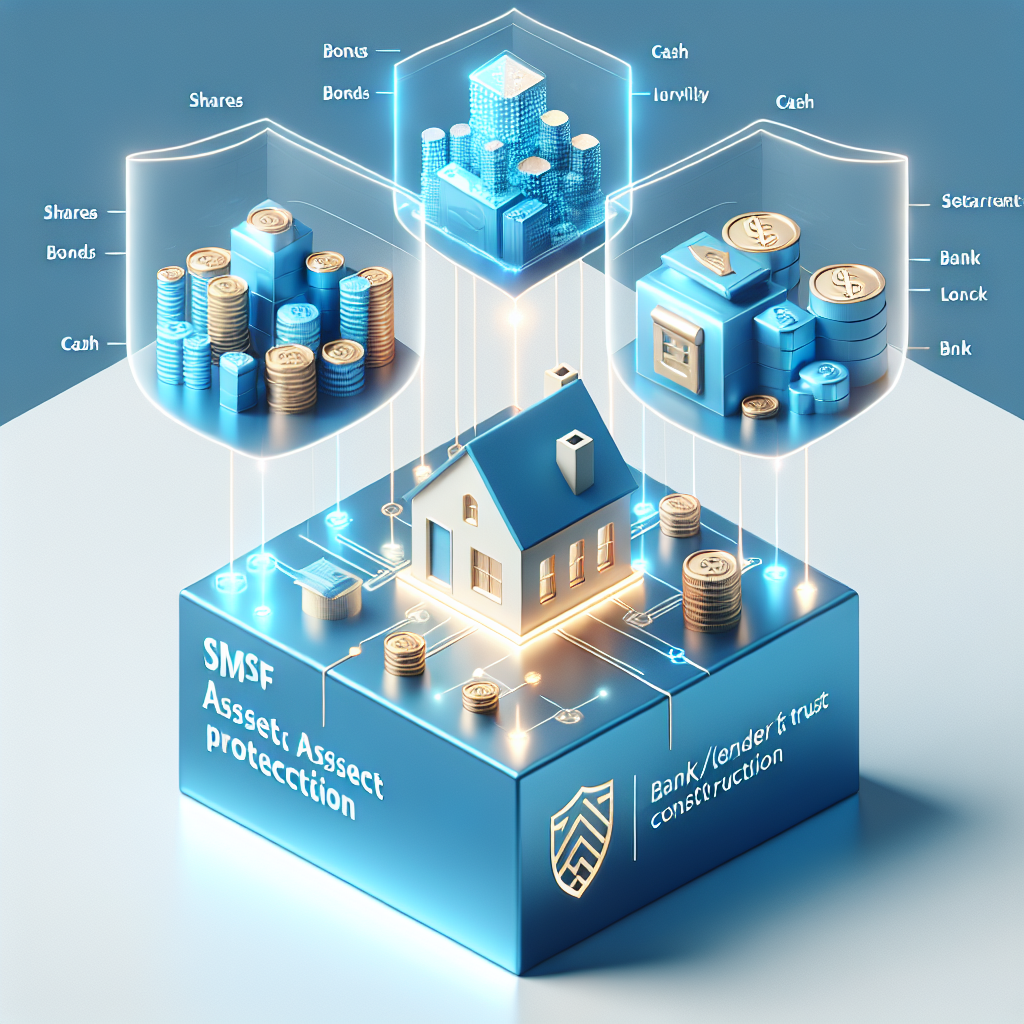
Imagine buying an investment property where, if things go wrong, your lender can only claim that specific property—not your home, not your car, not your other investments. This is the fundamental promise of limited recourse borrowing, a financial structure that acts like a firewall between a single investment and your broader wealth. For SMSF Trustees and Property Investors, understanding this concept isn’t just academic—it’s essential for protecting what you’ve spent years building while still pursuing growth opportunities.
Limited recourse borrowing operates on a simple principle: your liability is limited to the asset you’re financing. Think of it like renting a car with full insurance coverage. If something happens to that vehicle, you’re only responsible up to a certain point—your personal assets remain untouched. In the investment world, this structure allows you to leverage opportunities without putting your entire financial life on the line. For those managing Self-Managed Super Funds or building property portfolios, this distinction between recourse and non-recourse debt can mean the difference between calculated risk-taking and reckless exposure.
The concept becomes particularly relevant when we consider Limited Recourse Borrowing Arrangements (LRBAs) within SMSFs. While superannuation funds are generally prohibited from borrowing money, LRBAs represent a carefully carved exception that enables SMSF trustees to use borrowed funds for property investment. This isn’t simply a loophole—it’s a deliberate policy mechanism designed to help Australians build retirement wealth through property while maintaining strict protections. At Aries Financial, we’ve seen countless clients leverage these arrangements to access higher-value investments that would otherwise remain beyond their reach, all while keeping their personal assets separate from their fund’s investment risks.
The Mechanics: How Limited Recourse Borrowing Actually Works
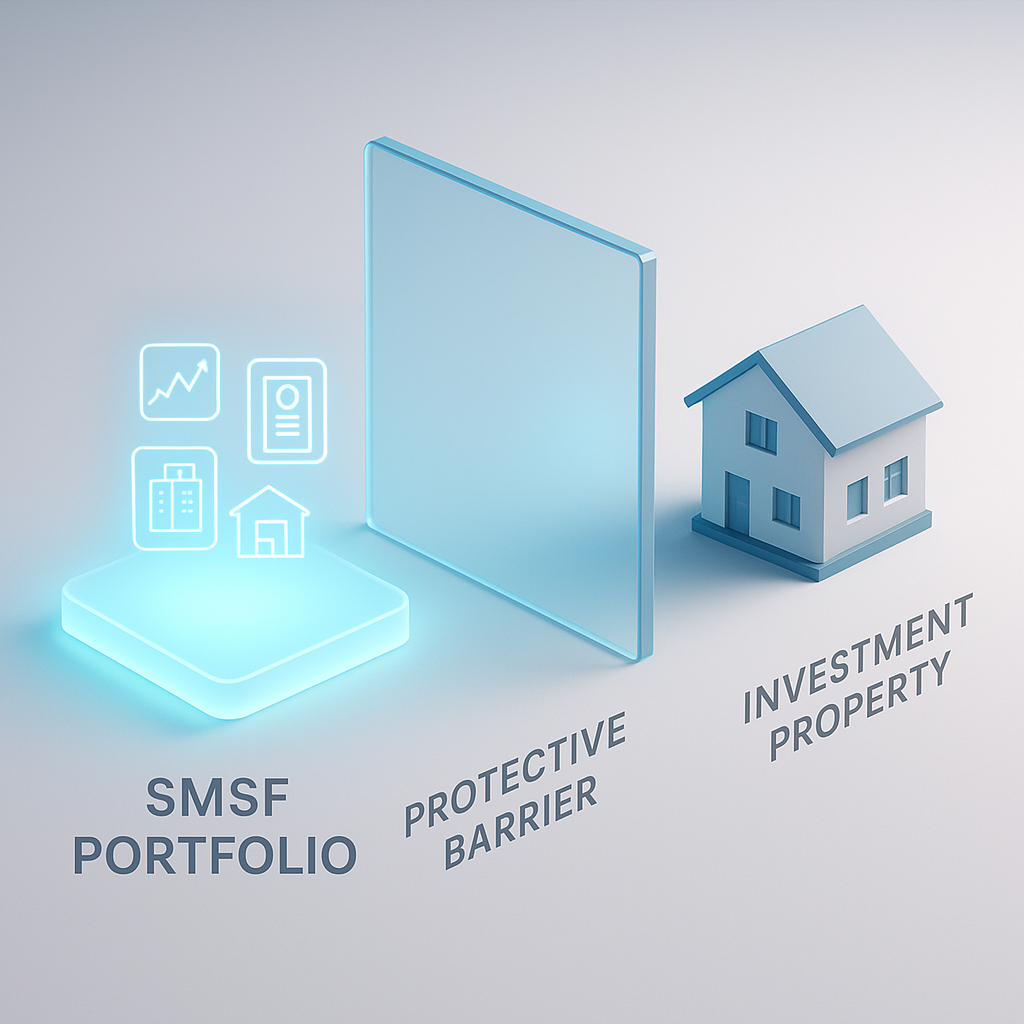
At the heart of any limited recourse borrowing arrangement sits a Special Purpose Vehicle (SPV), sometimes called a bare trust or custodian trust. This legal entity serves as a protective barrier, holding the purchased asset separately from both the SMSF’s other investments and the trustee’s personal wealth. When an SMSF borrows money to buy property through an LRBA, the property title is held by this SPV until the loan is fully repaid. The SMSF holds the beneficial interest—meaning it receives rental income and benefits from capital growth—but the legal ownership remains with the SPV.
This structure isn’t arbitrary. It creates what lawyers call “limited recourse,” meaning that if the SMSF defaults on the loan, the lender’s only remedy is to take possession of that specific property held in the SPV. They cannot pursue the SMSF’s other assets, they cannot claim the trustee’s personal property, and they cannot reach into other investments the fund might hold. The risk is isolated, contained within that single transaction.
The typical arrangement involves several parties working in concert. The SMSF trustee identifies a property for investment and approaches a specialist lender—often a non-bank lender like Aries Financial who understands the nuances of SMSF lending. The lender evaluates not just the property’s value but also the fund’s capacity to service the debt from contributions and rental income. Once approved, a bare trust is established with a custodian trustee (usually a separate entity) who holds legal title to the property. The SMSF enters into a loan agreement with the lender, and the property is purchased through this structure.
Project-specific contracts define every participant’s rights and obligations. The loan agreement specifies interest rates, repayment terms, and critically, the limited recourse nature of the debt. Most lenders will require regular rental income to service the loan, and some may request personal guarantees from SMSF members—though this somewhat undermines the limited recourse protection and should be carefully considered. The custodian agreement outlines how the bare trust operates, typically giving the SMSF trustee all beneficial rights while the custodian holds only bare legal title.
One crucial aspect often overlooked: the asset purchased must be a “single acquirable asset” under superannuation law. This means you cannot borrow to buy a block of multiple apartments that could be sold separately, though you could borrow to purchase an entire apartment building if it qualifies as a single asset. This requirement exists to maintain the integrity of the limited recourse structure—if assets could be subdivided and sold piecemeal, the recourse limitations become murky. For comprehensive guidance on ATO’s LRBA requirements, trustees should consult the official regulatory framework.
Advantages and Protections: Why Investors Choose Limited Recourse Structures
The primary advantage of limited recourse borrowing is precisely what the name suggests: risk isolation. When you purchase an investment property through an LRBA, you’re creating a legal structure where the worst-case scenario is losing that specific investment. If property markets decline dramatically and the asset becomes worth less than the outstanding loan, the lender cannot chase you personally for the shortfall. This protection is particularly valuable during economic uncertainty when property values might fluctuate significantly.
For SMSF trustees, this aligns perfectly with the goal of protecting retirement savings. Your super fund might hold shares, managed funds, term deposits, and other properties. If one leveraged property investment fails, those other assets remain secure. This compartmentalization allows for more confident risk-taking within appropriate boundaries—a philosophy that Aries Financial embraces in our approach to SMSF lending. We believe that financial growth shouldn’t require gambling with your entire future.
Beyond personal asset protection, limited recourse borrowing enables access to higher-value investments that might otherwise be impossible. Consider an SMSF with $300,000 in cash. Without borrowing, that fund is limited to properties at or below that price point in today’s market—often restricting opportunities to less desirable assets or locations. With an LRBA and an 80% loan-to-value ratio (increasingly available through specialist lenders in 2025), that same fund can potentially purchase property worth $1.5 million. The leverage amplifies both potential returns and the fund’s ability to acquire quality assets in growth areas.
The structure also provides tax efficiency within the superannuation environment. Interest paid on an LRBA loan is tax-deductible to the SMSF, reducing the fund’s overall tax burden. During the accumulation phase, any income and capital gains are taxed at just 15%, and once the fund enters pension phase, these taxes can drop to zero. This tax treatment, combined with the ability to claim interest deductions, makes limited recourse borrowing one of the most tax-effective property investment strategies available to Australians.
However, Financial Advisors and Mortgage Brokers must guide their clients through the potential risks inherent in these arrangements. While the lender’s recourse is limited, the SMSF itself still bears the full burden of loan repayments. If rental income proves insufficient and the fund lacks other income sources, the trustees may need to make additional contributions—within contribution cap limits—to service the debt. Failure to meet repayment obligations will still result in losing the property, even if personal assets remain protected.
Cash flow management becomes critical. Unlike personal property investment where you might temporarily subsidize a mortgage from salary, SMSFs have limited cash inflow options. The fund must generate sufficient income from contributions, rental returns, and potentially selling other assets to meet loan obligations. This limitation makes careful financial planning essential before entering an LRBA.
Compliance risks also loom large. SMSFs operate under strict regulatory oversight, and LRBAs must meet specific legal requirements to maintain their limited recourse status. If the arrangement is structured incorrectly—perhaps by failing to use a proper bare trust or by purchasing multiple divisible assets under a single loan—the entire structure could be deemed non-compliant. Understanding LRBA compliance rules is critical to avoiding severe penalties. This wouldn’t necessarily expose personal assets to the lender, but it could trigger severe penalties from the Australian Taxation Office, including loss of the fund’s tax-favored status.
At Aries Financial, we emphasize the importance of expertise in navigating these complex requirements. Our specialized knowledge of SMSF regulations ensures that every loan structure we support meets compliance standards while maximizing the protective benefits of limited recourse arrangements. This commitment to integrity in financial dealings isn’t just about following rules—it’s about ensuring our clients’ long-term security and success.
Practical Application: A Real-World Scenario
Let’s walk through a concrete example to make these concepts tangible. Imagine a successful business owner named Michael who has built his SMSF to a balance of $400,000 through regular concessional contributions and careful investment. He’s interested in purchasing a commercial property in a growth corridor near Brisbane, currently listed at $800,000. The property is fully leased to a national retail chain on a five-year lease, providing stable rental income of $60,000 annually.
Without borrowing, Michael’s fund cannot afford this property. But using a limited recourse borrowing arrangement, here’s how the structure would work:
Michael approaches Aries Financial for an LRBA loan. After assessing the property’s value, tenant quality, and the fund’s capacity, we approve a loan of $560,000 (70% LVR), leaving Michael’s fund to contribute $240,000 as deposit and costs. We establish a bare trust with a custodian trustee, which takes legal title to the property. The loan agreement specifies limited recourse terms—if default occurs, Aries Financial’s only remedy is taking possession of this specific commercial property.
The fund receives the $60,000 annual rent, from which it pays approximately $33,600 in interest (assuming a competitive rate of 6%) plus principal repayments. After accounting for property management, insurance, and other costs, the arrangement is cash flow positive, generating modest income while the property appreciates. Most importantly, if the property market collapses and the tenant vacates, leaving the property worth only $400,000 against a $500,000 loan balance, the lender’s recourse is limited to the property itself. Michael’s personal home, business assets, and the SMSF’s other $160,000 in investments remain completely protected.

This example illustrates how limited recourse structures work in practice for Business Owners and Entrepreneurs looking to invest strategically through their super funds. The arrangement provides leverage, cash flow, and long-term growth potential while containing downside risk to the specific investment. It’s a calculated approach to wealth building that balances ambition with protection—principles that guide every lending decision at Aries Financial.
The solar farm financing example often cited in infrastructure lending provides another perspective. When a renewable energy company wants to build a solar farm, they typically create an SPV specifically for that project. Lenders provide non-recourse financing to the SPV based on projected energy revenues. If the project fails—perhaps due to technological issues or unexpectedly poor solar conditions—lenders can only claim the solar farm and its revenues. They cannot pursue the parent company’s other assets or projects. This same risk isolation principle applies to SMSF property investment through LRBAs, just at a different scale.
Strategic Considerations for Your Investment Future
Limited recourse borrowing represents more than just a technical lending structure—it embodies a philosophy of empowered, protected wealth building. When structured correctly and used appropriately, these arrangements allow SMSF trustees, property investors, and business owners to pursue significant investment opportunities without exposing their entire financial lives to the risks inherent in any single asset.
The key is approaching these arrangements with integrity, expertise, and a clear understanding of both benefits and obligations. Limited recourse protection doesn’t eliminate risk; it contains it. You must still service the debt, maintain the property, ensure compliance with superannuation law, and make sound investment decisions. The structure protects you from worst-case scenarios but cannot protect you from poor planning or inadequate due diligence.
At Aries Financial, our commitment to transparency and education ensures clients understand exactly what they’re entering. Our competitive SMSF loan solutions, starting from 6.24% PI, reflect our belief that quality lending should be accessible without sacrificing protection or compliance. Our fast approval process—often within 1-3 business days—recognizes that investment opportunities require timely decisions, but speed never comes at the expense of proper structure and legal compliance.
For Financial Advisors and Mortgage Brokers guiding clients through these decisions, the message is clear: limited recourse borrowing within SMSFs can be a powerful wealth-building tool, but only when appropriate for the client’s circumstances. Consider the fund’s cash flow capacity, the quality and stability of the investment property, the client’s risk tolerance, and their broader retirement strategy. An LRBA isn’t suitable for every SMSF or every property purchase, but for the right combination of fund capacity and investment opportunity, it offers unmatched potential.
As you consider your own investment strategy, ask yourself: Am I maximizing my retirement wealth-building opportunities while adequately protecting what I’ve already built? Could limited recourse borrowing enable me to acquire better quality assets than I could purchase with cash alone? Do I have the cash flow capacity and risk tolerance to service debt within my SMSF? These questions, answered honestly with expert guidance, will reveal whether an LRBA aligns with your financial goals.
The Australian property market continues evolving, with specialist lenders now offering LVRs up to 80% in 2025, significantly expanding accessibility to limited recourse borrowing for qualified SMSF trustees. Learn more about SMSF borrowing strategies that maximize your investment potential. This increased flexibility, combined with continued strong demand for quality investment properties, suggests that LRBAs will remain a cornerstone strategy for sophisticated investors building retirement wealth through property.
Limited recourse borrowing, when understood and implemented correctly, exemplifies the intersection of ambition and prudence—pursuing growth opportunities while maintaining protective boundaries. It’s this balance that defines responsible wealth building and reflects the core values that drive our work at Aries Financial. Your financial future deserves both strategic vision and structural protection, and limited recourse borrowing arrangements, properly executed, deliver both.