If you’re a Self-Managed Super Fund (SMSF) trustee who has borrowed money to buy property through your fund, you need to understand Limited Recourse Borrowing Arrangements (LRBAs). This isn’t just another piece of regulatory jargon—it’s a structure that could either protect your retirement savings or land you in hot water with the Australian Taxation Office (ATO).
Think about it this way: you’ve worked hard to build your super balance, and now you want to leverage that wealth to acquire property. An LRBA lets you do exactly that, but only if you follow strict rules. Get it wrong, and you could face severe penalties, loss of concessional tax treatment, or even disqualification of your entire SMSF.
For SMSF trustees, property investors, financial advisors, mortgage brokers, business owners, and entrepreneurs, understanding LRBAs isn’t optional—it’s essential. The ATO has been increasingly vigilant about SMSF compliance, particularly around borrowing arrangements. With over 600,000 SMSFs in Australia managing more than $876 billion in assets, the stakes are incredibly high. Whether you’re already using an LRBA or considering one, knowing how to structure and maintain these arrangements correctly can mean the difference between maximizing your retirement wealth and triggering an ATO audit.

The purpose of this article is simple: to help you understand what an LRBA is, how it works, what can go wrong, and how to stay on the right side of the ATO’s regulations. Let’s dive into the specifics.
Understanding How LRBAs Actually Work
A Limited Recourse Borrowing Arrangement is exactly what its name suggests—a borrowing structure where the lender’s recourse is limited to the specific asset being purchased. In practical terms, if your SMSF defaults on the loan, the lender can only claim the property you purchased with that loan, not other assets within your super fund.
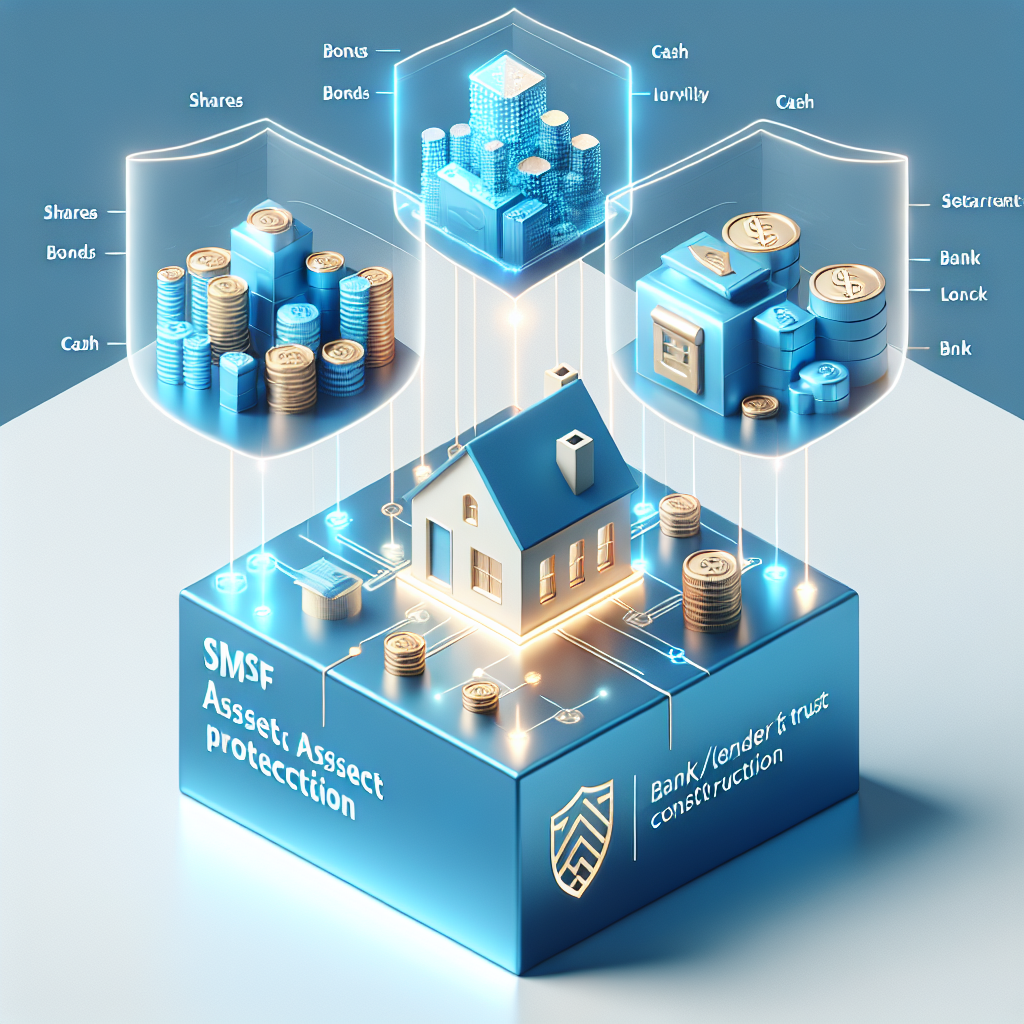
Here’s how the structure must work: your SMSF doesn’t hold the property directly while it’s still being paid off. Instead, a separate legal entity called a bare trust (also known as a holding trust) holds the legal title to the property. Your SMSF is the beneficial owner, meaning it receives all the benefits of ownership—rental income, capital growth, and eventual full ownership once the loan is repaid. But during the loan period, the bare trust acts as a protective barrier.
This structure exists for a specific reason. Superannuation law generally prohibits SMSFs from borrowing money because it’s considered too risky for retirement savings. The LRBA is a carefully constructed exception that balances investment opportunity with asset protection. The ATO allows it, but only under strict conditions.
Let’s break down what you need to get right. First, the borrowed funds must be used to acquire a single acquirable asset—typically residential or commercial property. You cannot use an LRBA to buy multiple properties under one loan, nor can you use it to renovate existing SMSF assets. The property must be new to your fund. If you already own a property in your SMSF, you cannot retrospectively apply an LRBA structure to it.
Documentation is absolutely critical. Your loan agreement must clearly state that it’s a limited recourse loan. This means the contract must explicitly limit the lender’s rights to the specific asset purchased. Without this clause, the ATO could deem your arrangement non-compliant. Similarly, the bare trust deed must be properly executed, naming your SMSF as the beneficiary and clearly defining the relationship between all parties.
Many trustees make the mistake of treating this documentation as a formality. It’s not. The ATO regularly reviews LRBA structures during audits, and poorly documented arrangements are low-hanging fruit for compliance officers. Every transaction—from the initial loan drawdown to each repayment—must be recorded in your SMSF’s financial statements and audited annually by a qualified SMSF auditor.
Another crucial point: the asset rules. Under an LRBA, the property cannot be fundamentally altered during the loan period. Minor repairs and maintenance are acceptable, but substantial improvements that change the character of the asset can breach the arrangement. For example, if you buy vacant land intending to build a house, that’s not allowed under an LRBA because the final asset (house and land) differs from the original asset (vacant land). This restriction catches many trustees off guard, so plan your property acquisition strategy carefully from the start.
Navigating Lender Relationships and Arm’s Length Requirements
One of the most scrutinized aspects of LRBAs is the relationship between your SMSF and the lender. The ATO is particularly focused on arrangements involving related parties—where trustees borrow from themselves, family members, or related entities. While such arrangements are permitted, they must pass the arm’s length test.
What does “arm’s length” actually mean? Imagine two unrelated parties negotiating a commercial transaction. They would discuss interest rates, loan terms, repayment schedules, and security arrangements based purely on commercial considerations. That’s arm’s length dealing. When you’re lending to your own SMSF, you must replicate that same commercial discipline.
Here’s a real-world scenario that illustrates why this matters: Sarah is both the trustee of her SMSF and a successful business owner. She lends $500,000 from her personal funds to her SMSF to purchase an investment property. To keep things “friendly,” she charges an interest rate of just 2%—well below the market rate of 6-7%. Sarah thinks she’s being generous to her future self. The ATO sees something different: a non-arm’s length income (NALI) arrangement that could result in the entire rental income from that property being taxed at the highest marginal rate of 45%, rather than the concessional 15% SMSF rate.
To avoid Sarah’s mistake, use the ATO’s safe harbour interest rates as a benchmark. These published rates provide a clear guideline for what the ATO considers acceptable for related party loans. Staying within these bounds doesn’t guarantee compliance with all other LRBA rules, but it significantly reduces your NALI risk.
Beyond interest rates, loan terms must also be commercial. This includes having a formal loan agreement, establishing a clear repayment schedule, and actually making those repayments on time. You cannot simply delay payments because it’s “family.” If you wouldn’t accept that behavior from an unrelated borrower, you can’t do it within your SMSF structure.
The same principle applies to security arrangements. If you’re using a related party lender, that lender cannot use the SMSF’s acquired asset as security for their own external borrowing. For instance, if you lend to your SMSF to buy a property, you cannot then use that property as collateral for a personal loan at your bank. This would create a prohibited security interest and breach the limited recourse provisions.
Offset accounts present another compliance challenge. Many lenders offer offset accounts as part of LRBA packages, allowing you to reduce interest costs by parking cash in a linked account. The ATO has stated that offset accounts can be acceptable if they’re “genuine”—meaning they operate as true offset facilities where the cash remains accessible and the interest reduction is calculated correctly. However, if the offset account is used to manipulate tax outcomes or circumvent SMSF contribution caps, you’ll face problems.
Timing is another factor that trips up trustees. When you establish an LRBA, all paperwork must be in place before settlement. You cannot acquire a property first and then retrospectively create the bare trust or loan documentation. The ATO views this as arranging the facts to suit your desired outcome rather than following proper legal structures.
Regular compliance reviews are not optional extras—they’re essential maintenance for your LRBA. At least annually, you should review your loan agreement terms, confirm interest rates remain within acceptable ranges, verify repayments are being made as scheduled, and ensure all documentation remains current. The ATO’s guidance on LRBAs evolves, and what was acceptable five years ago might need adjustment today.

Recognizing the Risks: What Attracts ATO Scrutiny
The ATO doesn’t audit every SMSF, but certain red flags dramatically increase your chances of unwanted attention. Understanding these risk factors helps you avoid becoming a target.
Improper LRBA structures are among the ATO’s top focus areas. One common mistake is using borrowed funds for purposes beyond the original asset acquisition. For example, some trustees draw down on their LRBA loan to pay for property renovations or to cover SMSF operating expenses. This violates the fundamental rule that LRBA funds must only be used to acquire the specific asset. If you need funds for improvements, those must come from the SMSF’s other resources or member contributions—never from the LRBA loan.
Another frequent pitfall involves related party transactions that lack commercial substance. Consider Mark, who owns a company. His company “sells” a property to his SMSF for $800,000 under an LRBA, despite the property’s market value being only $600,000. Mark’s company receives an inflated price, and his SMSF overpays. This is a textbook example of a non-arm’s length transaction. The ATO would likely investigate this arrangement, potentially applying market valuation and penalizing the SMSF for the excess payment.
The in-house asset rule presents subtle dangers. Generally, your SMSF cannot hold more than 5% of its assets as in-house assets (investments in related parties). When you have an LRBA with a related party lender, you must carefully monitor whether this loan creates or increases your in-house asset exposure. If your related party lender subsequently sells their lending rights to another related party, or if the loan terms are modified in ways that increase your SMSF’s exposure to related parties, you could inadvertently breach the 5% threshold.
Cross-collateralization is strictly prohibited yet surprisingly common. Some trustees own multiple investment properties in their SMSF and attempt to use one property as security for a loan to acquire another. This violates the single asset rule inherent in LRBAs. Each borrowed acquisition must be independently secured by that specific asset alone. Linking multiple properties under a single LRBA or using existing SMSF assets as additional security undermines the limited recourse protection and breaches super law.
Sole purpose test failures represent perhaps the most serious risk. Your SMSF exists solely to provide retirement benefits to members. Any arrangement that provides current-day benefits to members or related parties breaches this fundamental principle. For instance, if your SMSF uses an LRBA to buy a holiday house that you or your family use for personal vacations, even if you pay rent, you’ve likely violated the sole purpose test. The consequences can be severe—potentially leading to SMSF disqualification and all super benefits being taxed as assessable income.
Misconceptions about what’s permissible under LRBAs create additional risk. Some trustees believe they can use LRBA funds to make improvements that increase property value, reasoning that better returns serve their retirement goals. This logic fails because LRBA rules specifically prohibit using borrowed funds for anything beyond the initial asset acquisition. Others think they can substitute the purchased asset with a different one if market conditions change. This too is generally prohibited—if you want to sell the LRBA property and buy another, you typically need to repay the original loan first, then establish a new LRBA for the new property.
Here’s a scenario that combines several risk factors: James borrows $400,000 from his family trust to buy a commercial property in his SMSF. He charges below-market interest, delays some loan repayments when cash is tight, uses part of the loan to pay for property improvements, and doesn’t document everything properly. Within this single arrangement, James has created multiple compliance failures: non-arm’s length income risk from low interest rates, potential in-house asset issues from the related party loan, improper use of borrowed funds, and documentation deficiencies. When the ATO examines this arrangement during an audit, James faces substantial penalties and potential taxation at punitive rates.
The ATO’s data-matching capabilities have become increasingly sophisticated. They can compare property valuations, track loan interest rates against published benchmarks, identify related party transactions through ABN and TFN matching, and flag SMSFs with unusual cash flow patterns. If your LRBA arrangement contains irregularities, the ATO’s algorithms will likely identify your fund for review.
Building Your LRBA on a Foundation of Trust and Expertise
Getting your LRBA structure right from the start is not just about compliance—it’s about building a secure financial future. At Aries Financial, we’ve seen how proper LRBA structures can transform retirement outcomes when approached with integrity, expertise, and a genuine commitment to empowering SMSF trustees.
The foundation of any successful LRBA is trust—trust that your structure meets all legal requirements, trust that your lender operates ethically, and trust that you’re making informed decisions about your retirement wealth. This trust isn’t built on hope; it’s built on expertise. Understanding the intricacies of super law, staying current with ATO guidance, and structuring your borrowing arrangements with professional advice ensures you’re not just compliant today but positioned for long-term success.
Transparency is equally important. Every aspect of your LRBA should be clearly documented, easily auditable, and structured with commercial discipline. When you can explain your arrangement to your auditor, your financial advisor, and ultimately the ATO, you demonstrate the kind of proper governance that protects your retirement savings.
Education is your greatest asset in managing an SMSF with borrowing. The trustees who succeed are those who take time to understand what they’re doing and why. They ask questions, seek professional advice, and make informed decisions rather than simply following trends or relying on outdated information. Knowledge transforms compliance from a burden into a strategic advantage.
Starting your LRBA journey with competitive rates—from 6.24% for principal and interest loans—makes financial sense, but only when combined with proper structure and compliance. Fast approvals matter, but not at the expense of cutting corners on documentation or due diligence. The goal is to maximize your retirement investment potential through strategic property acquisition while maintaining the security and peace of mind that comes from knowing your arrangement can withstand ATO scrutiny.
If you’re considering an LRBA or reviewing an existing arrangement, ask yourself these questions: Is my loan agreement truly at arm’s length? Is my documentation complete and current? Am I using borrowed funds only for their intended purpose? Are my interest rates defensible? Am I making repayments as scheduled? Have I structured everything to pass the sole purpose test?
Your answers to these questions reveal whether your LRBA is built on solid ground or sitting on shaky foundations. The difference between these two scenarios often comes down to working with specialists who understand both the opportunities and the risks, who prioritize compliance alongside competitive rates, and who see their role as empowering you to make the best possible decisions for your financial future.
An LRBA done right can be a powerful tool for building retirement wealth. An LRBA done wrong can jeopardize everything you’ve worked to achieve. The choice between these outcomes often comes down to the expertise, integrity, and guidance you have access to when structuring your arrangement. Your retirement deserves nothing less than a borrowing strategy built on the strongest possible foundation of compliance, commercial substance, and professional oversight.